
Penny Dreadfuls, 1870 · page 28 of 392
The Works of George W. M. Reynolds — page 28: what you’re looking at
A restored page from Penny Dreadfuls, 1870. Page through the whole issue in the reader above.
📄 Transcribed text from this page (OCR, searchable)
Machine-transcribed from the original scan — historical spelling and the odd misread are preserved.
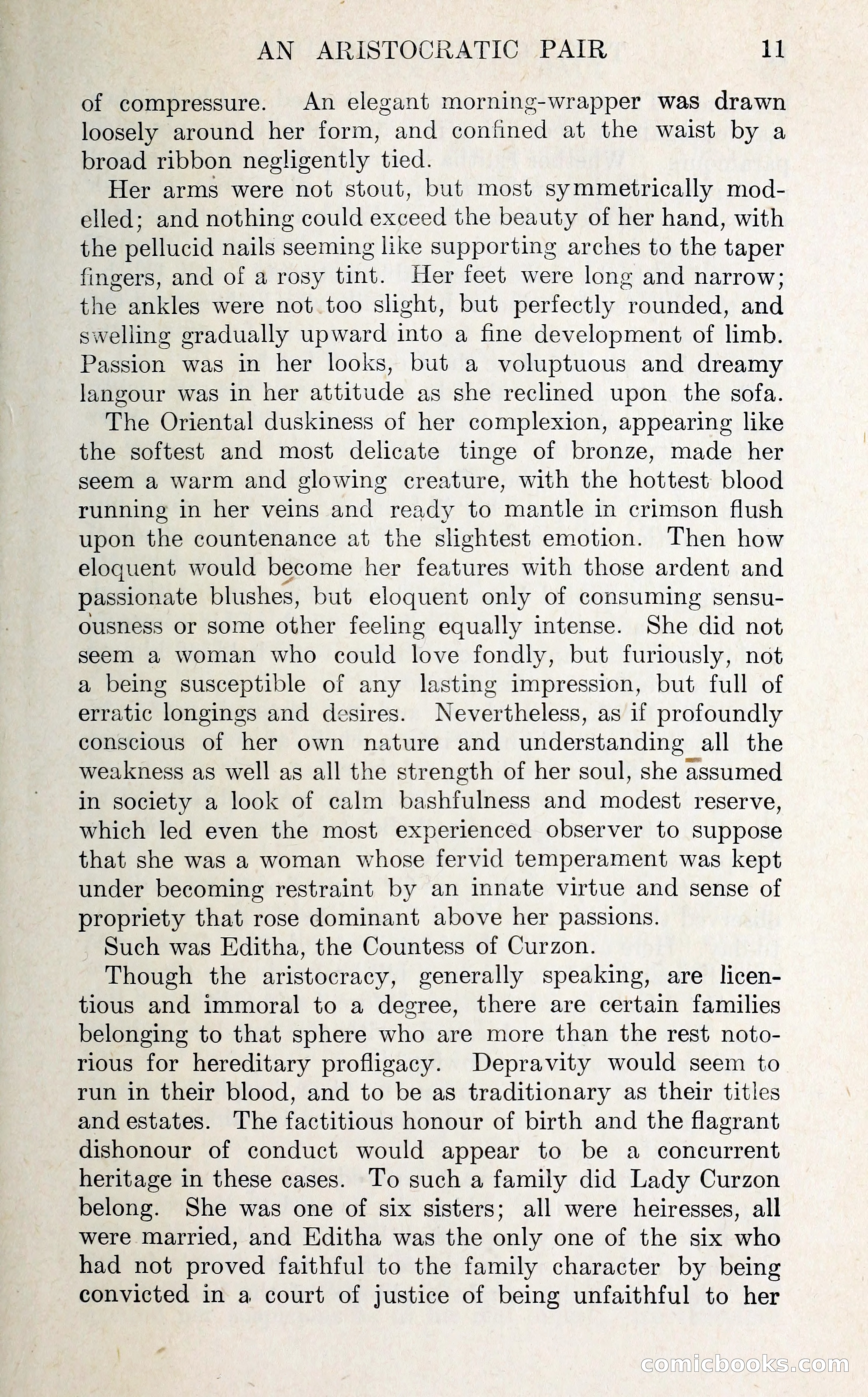
AN ARISTOCRATIC PAIR 11 of compressure. An elegant morning-wrapper was drawn loosely around her form, and contined at the waist by a broad ribbon negligently tied. Her arms were not stout, but most symmetrically mod- elled; and nothing could exceed the beauty of her hand, with the pellucid nails seeming like supporting arches to the taper fingers, and of a rosy tint. Her feet were long and narrow; the ankles were not too slight, but perfectly rounded, and swelling gradually upward into a fine development of limb. Passion was in her looks, but a voluptuous and dreamy langour was in her attitude as she reclined upon the sofa. The Oriental duskiness of her complexion, appearing like the softest and most delicate tinge of bronze, made her seem a warm and glowing creature, with the hottest blood running in her veins and ready to mantle in crimson flush upon the countenance at the slightest emotion. Then how eloquent would become her features with those ardent and passionate blushes, but eloquent only of consuming sensu- ousness or some other feeling equally intense. She did not seem a woman who could tive fondly, but furiously, not a being susceptible of any lasting impression, but full of erratic longings and desires. Nevertheless, as if profoundly conscious of her own nature and understanding all the weakness as well as all the strength of her soul, she assumed in society a look of calm bashfulness and modest reserve, which led even the most experienced observer to suppose that she was a woman whose fervid temperament was kept under becoming restraint by an innate virtue and sense of propriety that rose dominant above her passions. Such was Editha, the Countess of Curzon. Though the aristocracy, generally speaking, are licen- tious and immoral to a degree, there are certain families belonging to that sphere who are more than the rest noto- rious for hereditary profligacy. Depravity would seem to run in their blood, and to be as traditionary as their titles and estates. The factitious honour of birth and the flagrant dishonour of conduct would appear to be a concurrent heritage in these cases. To such a family did Lady Curzon belong. She was one of six sisters; all were heiresses, all were married, and Editha was the only one of the six who had not proved faithful to the family character by being convicted in a court of justice of being unfaithful to her ECORnNIEOOOKS (C(O)