
Penny Dreadfuls, 1870 · page 237 of 392
The Works of George W. M. Reynolds — page 237: what you’re looking at
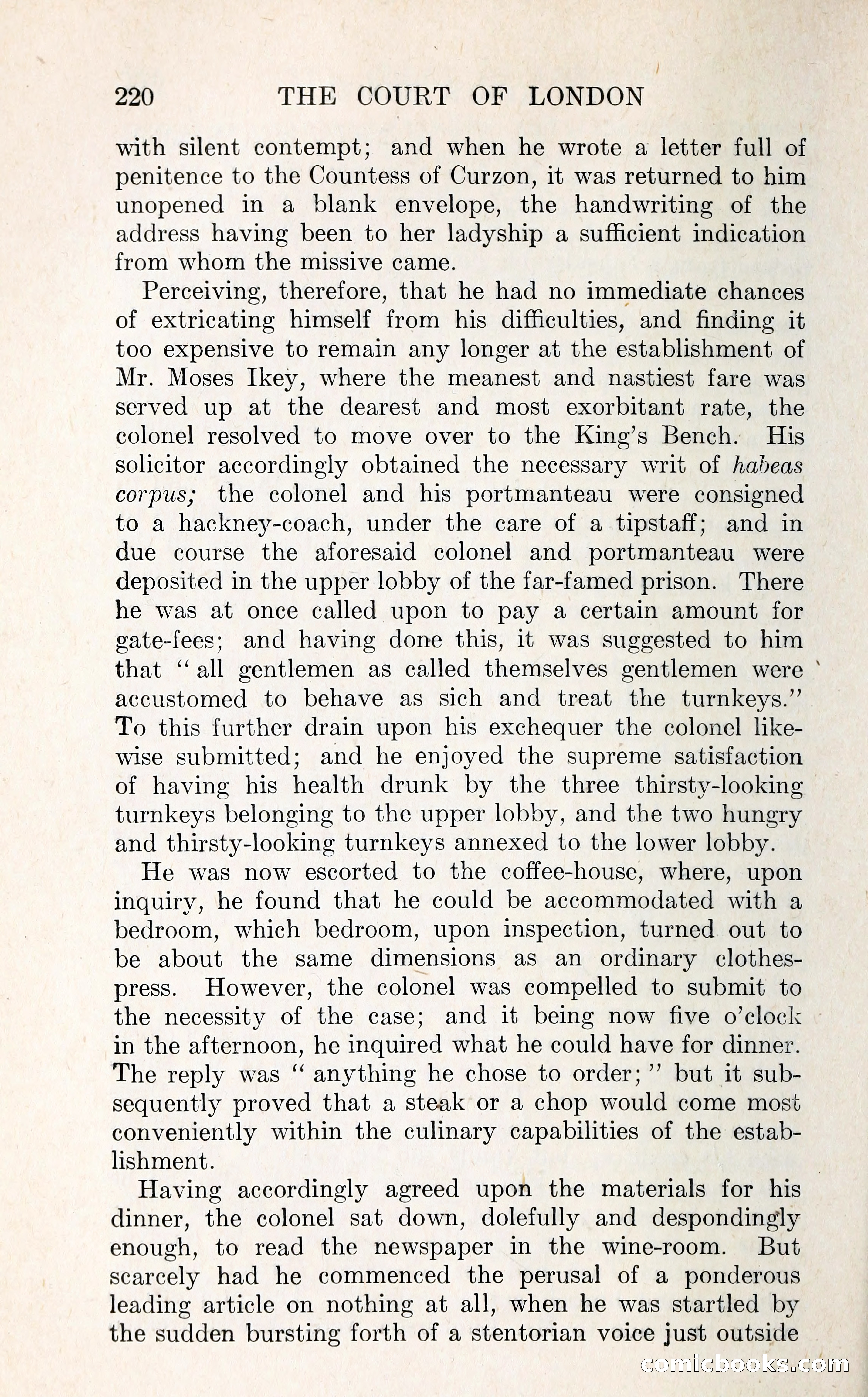
A restored page from Penny Dreadfuls, 1870. Page through the whole issue in the reader above.
📄 Transcribed text from this page (OCR, searchable)
Machine-transcribed from the original scan — historical spelling and the odd misread are preserved.
/ 220 THE COURT OF LONDON with silent contempt; and when he wrote a letter full of penitence to the Countess of Curzon, it was returned to him unopened in a blank envelope, the handwriting of the address having been to her ladyship a sufficient indication from whom the missive came. Perceiving, therefore, that he had no immediate chances of extricating himself from his difficulties, and finding it too expensive to remain any longer at the establishment of Mr. Moses Ikey, where the meanest and nastiest fare was served up at the dearest and most exorbitant rate, the colonel resolved to move over to the King’s Bench. His solicitor accordingly obtained the necessary writ of habeas corpus; the colonel and his portmanteau were consigned to a hackney-coach, under the care of a tipstaff; and in due course the aforesaid colonel and portmanteau were deposited in the upper lobby of the far-famed prison. There he was at once called upon to pay a certain amount for oate-fees; and having done this, it was suggested to him that ‘all gentlemen as called themselves gentlemen were accustomed to behave as sich and treat the turnkeys.”’ To this further drain upon his exchequer the colonel like- wise submitted; and he enjoyed the supreme satisfaction of having his health drunk by the three thirsty-looking turnkeys belonging to the upper lobby, and the two hungry and thirsty-looking turnkeys annexed to the lower lobby. He was now escorted to the coffee-house, where, upon inquiry, he found that he could be accommodated with a bedroom, which bedroom, upon inspection, turned out to be about the same dimensions as an ordinary clothes- press. However, the colonel was compelled to submit to the necessity of the case; and it being now five o’clock in the afternoon, he inquired what he could have for dinner. The reply was ‘“‘ anything he chose to order;”’ but it sub- sequently proved that a steak or a chop would come most conveniently within the culinary capabilities of the estab- lishment. Having accordingly agreed upon the materials for his dinner, the colonel sat down, dolefully and despondingly enough, to read the newspaper in the wine-room. But scarcely had he commenced the perusal of a ponderous leading article on nothing at all, when he was startled by the sudden bursting forth of a stentorian voice just outside - CONMICELOCOLKS4(€C) m