
Penny Dreadfuls, 1870 · page 235 of 392
The Works of George W. M. Reynolds — page 235: what you’re looking at
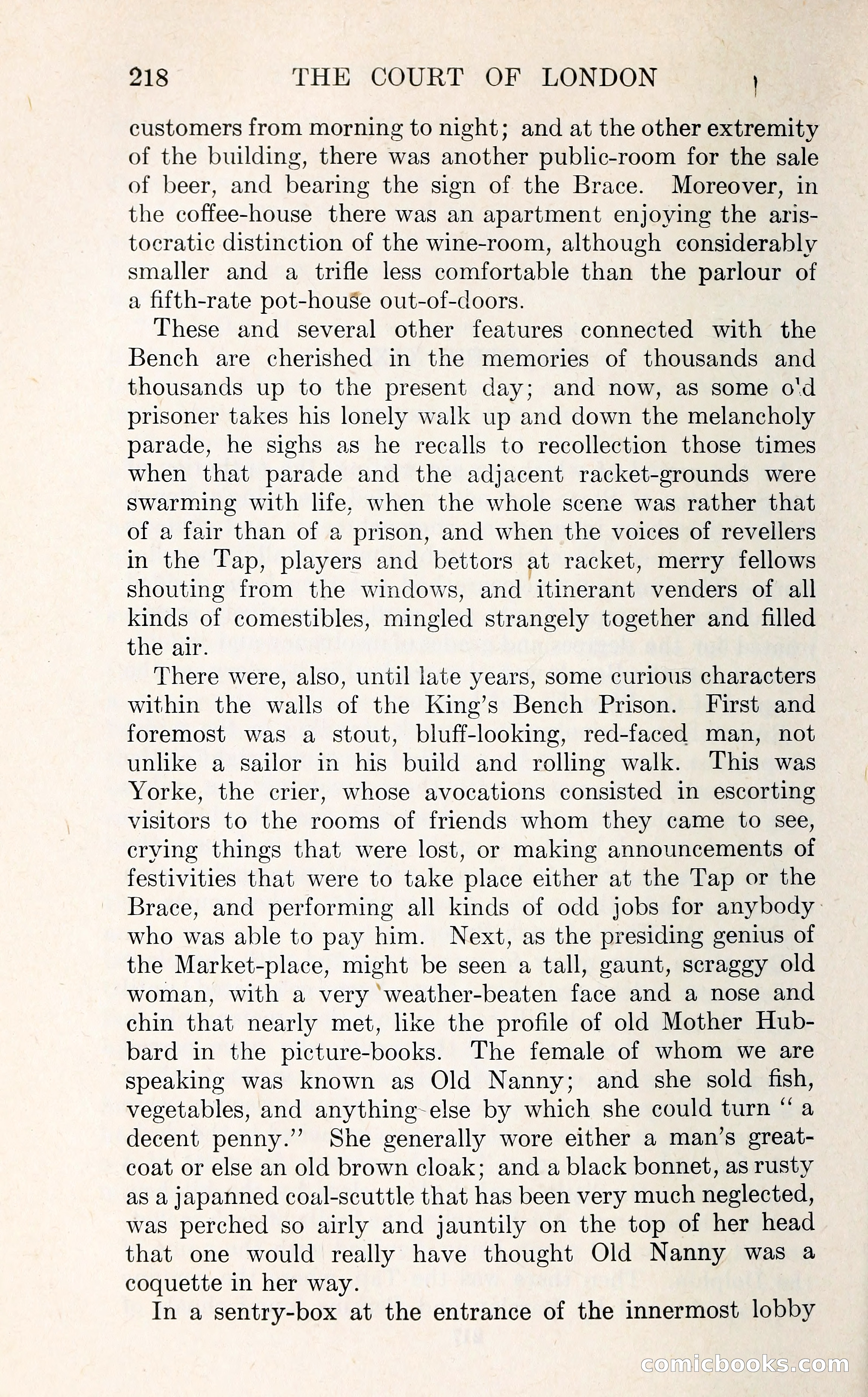
A restored page from Penny Dreadfuls, 1870. Page through the whole issue in the reader above.
📄 Transcribed text from this page (OCR, searchable)
Machine-transcribed from the original scan — historical spelling and the odd misread are preserved.
218 THE COURT OF LONDON . customers from morning to night; and at the other extremity of the building, there was another public-room for the sale of beer, and bearing the sign of the Brace. Moreover, in the coftee-house there was an apartment enjoying the aris- tocratic distinction of the wine-room, although considerably smaller and a trifle less comfortable than the parlour of a fifth-rate pot-houSe out-of-doors. These and several other features connected with the Bench are cherished in the memories of thousands and thousands up to the present day; and now, as some o'd prisoner takes his lonely walk up and down the melancholy parade, he sighs as he recalls to recollection those times when that parade and the adjacent racket-grounds were swarming with life, when the whole scene was rather that of a fair than of a prison, and when the voices of revellers in the Tap, players and bettors at racket, merry fellows shouting from the windows, and itinerant venders of all kinds of comestibles, mingled strangely together and filled the air. There were, also, until late years, some curious characters within the walls of the King’s Bench Prison. First and foremost was a stout, bluff-looking, red-faced man, not unlike a sailor in his build and rolling walk. This was Yorke, the crier, whose avocations consisted in escorting visitors to the rooms of friends whom they came to see, crying things that were lost, or making announcements oi festivities that were to take place either at the Tap or the Brace, and performing all kinds of odd jobs for anybody who was able to pay him. Next, as the presiding genius of the Market-place, might be seen a tall, gaunt, scraggy old woman, with a very ‘weather-beaten face and a nose and chin that nearly met, like the profile of old Mother Hub- bard in the picture-books. The female of whom we are speaking was known as Old Nanny; and she sold fish, vegetables, and anything-else by which she could turn “ a decent penny.’ She generally wore either a man’s great- coat or else an old brown cloak; and a black bonnet, as rusty as a japanned coal-scuttle that has been very much neglected, was perched so airly and jauntily on the top of her head that one would really have thought Old Nanny was a coquette in her way. In a sentry-box at the entrance of the innermost lobby Gomichookssco