
Penny Dreadfuls, 1870 · page 266 of 392
The Works of George W. M. Reynolds — page 266: what you’re looking at
A restored page from Penny Dreadfuls, 1870. Page through the whole issue in the reader above.
📄 Transcribed text from this page (OCR, searchable)
Machine-transcribed from the original scan — historical spelling and the odd misread are preserved.
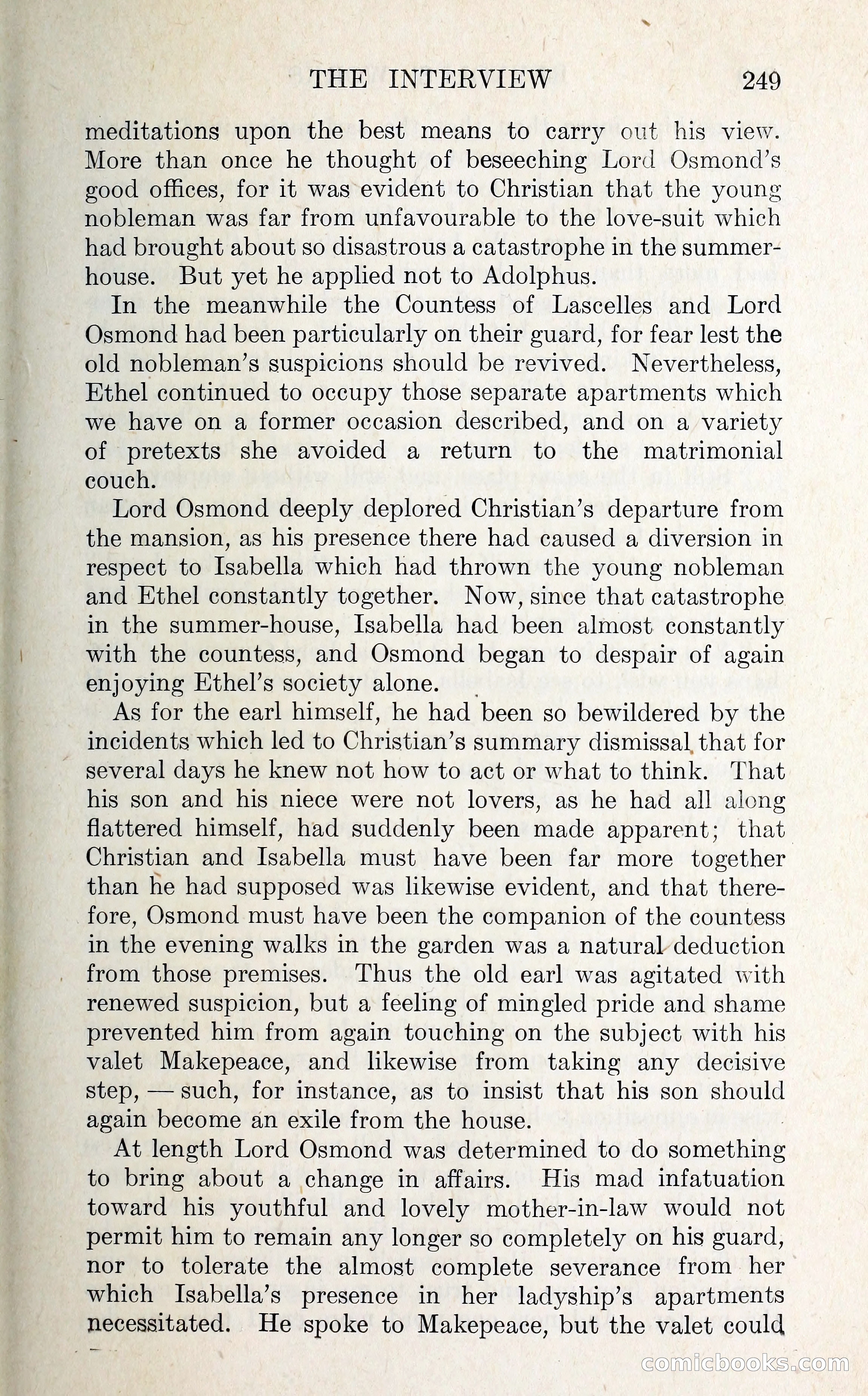
THE INTERVIEW 249 meditations upon the best means to carry out his view. More than once he thought of beseeching Lord Osmond’s good offices, for it was evident to Christian that the young nobleman was far from unfavourable to the love-suit which had brought about so disastrous a catastrophe in the summer- house. But yet he applied not to Adolphus. In the meanwhile the Countess of Lascelles and Lord Osmond had been particularly on their guard, for fear lest the old nobleman’s suspicions should be revived. Nevertheless, Ethel continued to occupy those separate apartments which we have on a former occasion described, and on a variety of pretexts she avoided a return to the matrimonial couch. Lord Osmond deeply deplored Christian’s departure from the mansion, as his presence there had caused a diversion in respect to Isabella which had thrown the young nobleman and Ethel constantly together. Now, since that catastrophe in the summer-house, Isabella had been almost constantly with the countess, and Osmond began to despair of again enjoying Ethel’s society alone. As for the earl himself, he had been so bewildered by the incidents which led to Christian’ S summary dismissal that for several days he knew not how to act or what to think. That his son and his niece were not lovers, as he had all along flattered himself, had suddenly been made apparent; that Christian and Isabella must have been far more together than he had supposed was likewise evident, and that there- fore, Osmond must have been the companion of the countess in the evening walks in the garden was a natural deduction from those premises. Thus the old earl was agitated with renewed suspicion, but a feeling of mingled pride and shame prevented him from again touching on the subject with his valet Makepeace, and likewise from taking any decisive step, — such, for instance, as to insist that his son should again elite an exile tin the house. At length Lord Osmond was determined to do damwethine to bring about a change in affairs. His mad infatuation toward his youthful and lovely mother-in-law would not permit him to remain any longer so completely on his guard, nor to tolerate the almost complete severance from her which Isabella’s presence in her ladyship’s apartments necessitated. He spoke to Makepeace, but the valet could GOmiGaooks CO