
Penny Dreadfuls, 1870 · page 393 of 392
Penny Blood Serial Fiction — page 393: what you’re looking at
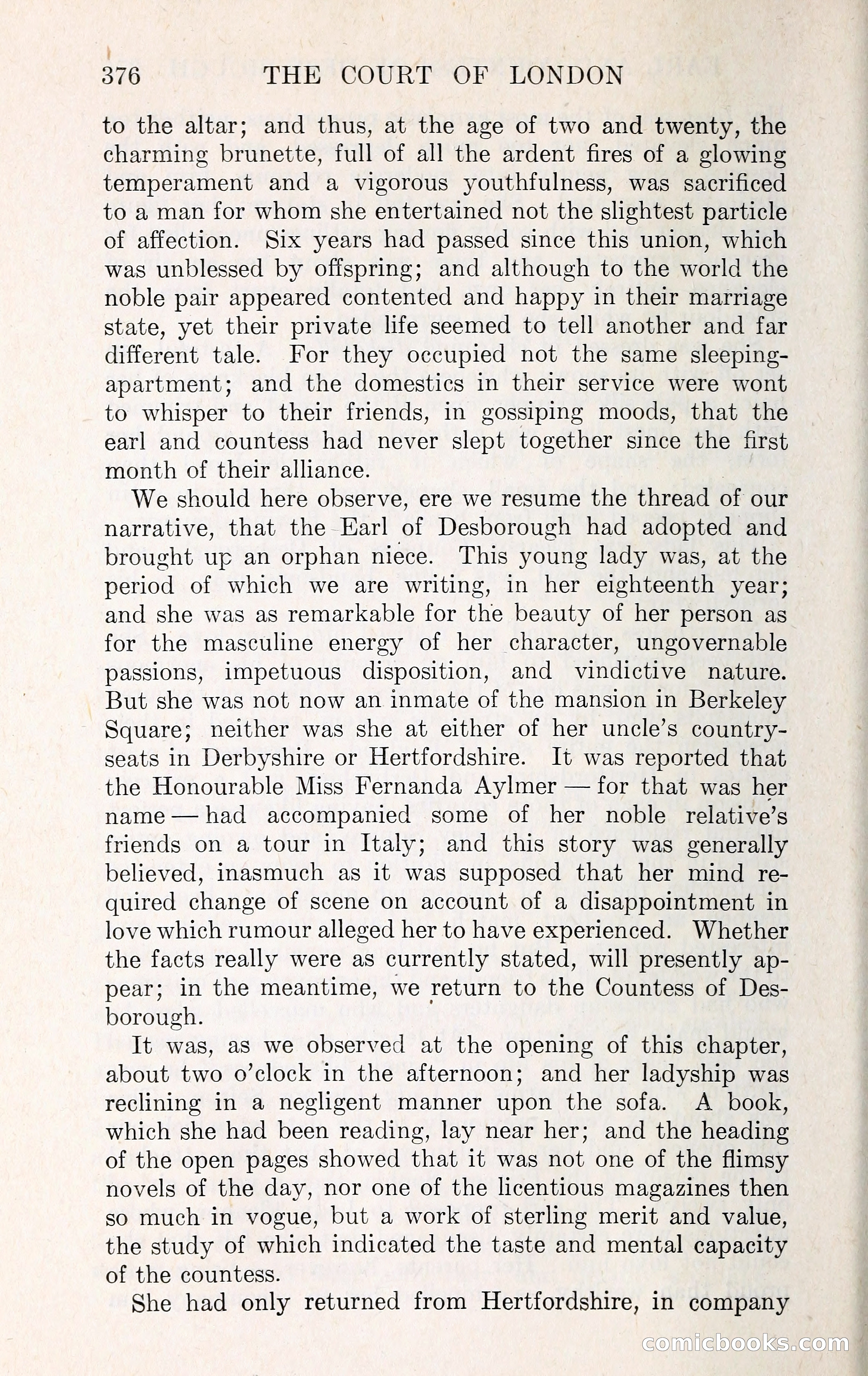
A restored page from Penny Dreadfuls, 1870. Page through the whole issue in the reader above.
📄 Transcribed text from this page (OCR, searchable)
Machine-transcribed from the original scan — historical spelling and the odd misread are preserved.
376 THE COURT OF LONDON to the altar; and thus, at the age of two and twenty, the charming brunette, full of all the ardent fires of a glowing temperament and a vigorous youthfulness, was sacrificed to a man for whom she entertained not the slightest particle of affection. Six years had passed since this union, which was unblessed by offspring; and although to the world the noble pair appeared contented and happy in their marriage state, yet their private life seemed to tell another and far different tale. For they occupied not the same sleeping- apartment; and the domestics in their service were wont to whisper to their friends, in gossiping moods, that the earl and countess had never slept together since the first month of their alliance. | We should here observe, ere we resume the thread of our narrative, that the Earl of Desborough had adopted and brought up an orphan niece. This young lady was, at the period of which we are writing, in her eighteenth year; and she was as remarkable for the beauty of her person as for the masculine energy of her character, ungovernable passions, impetuous disposition, and vindictive nature. But she was not now an inmate of the mansion in Berkeley Square; neither was she at either of her uncle’s country- seats in Derbyshire or Hertfordshire. It was reported that the Honourable Miss Fernanda Aylmer — for that was her name—had accompanied some of her noble relative’s friends on a tour in Italy; and this story was generally believed, inasmuch as it was supposed that her mind re- quired change of scene on account of a disappointment in love which rumour alleged her to have experienced. Whether the facts really were as currently stated, will presently ap- pear; in the meantime, we return to the Countess of Des- borough. It was, as we observed at the opening of this chapter, about two o’clock in the afternoon; and her ladyship was reclining in a negligent manner upon the sofa. A book, which she had been reading, lay near her; and the heading of the open pages showed that it was not one of the flimsy novels of the day, nor one of the licentious magazines then so much in vogue, but a work of sterling merit and value, the study of which indicated the taste and mental capacity of the countess. She had only returned from Hertfordshire, in company m GOmMmicdooks (E(0)