
Penny Dreadfuls, 1891 · page 58 of 251
The Widowed Bride — page 58: what you’re looking at
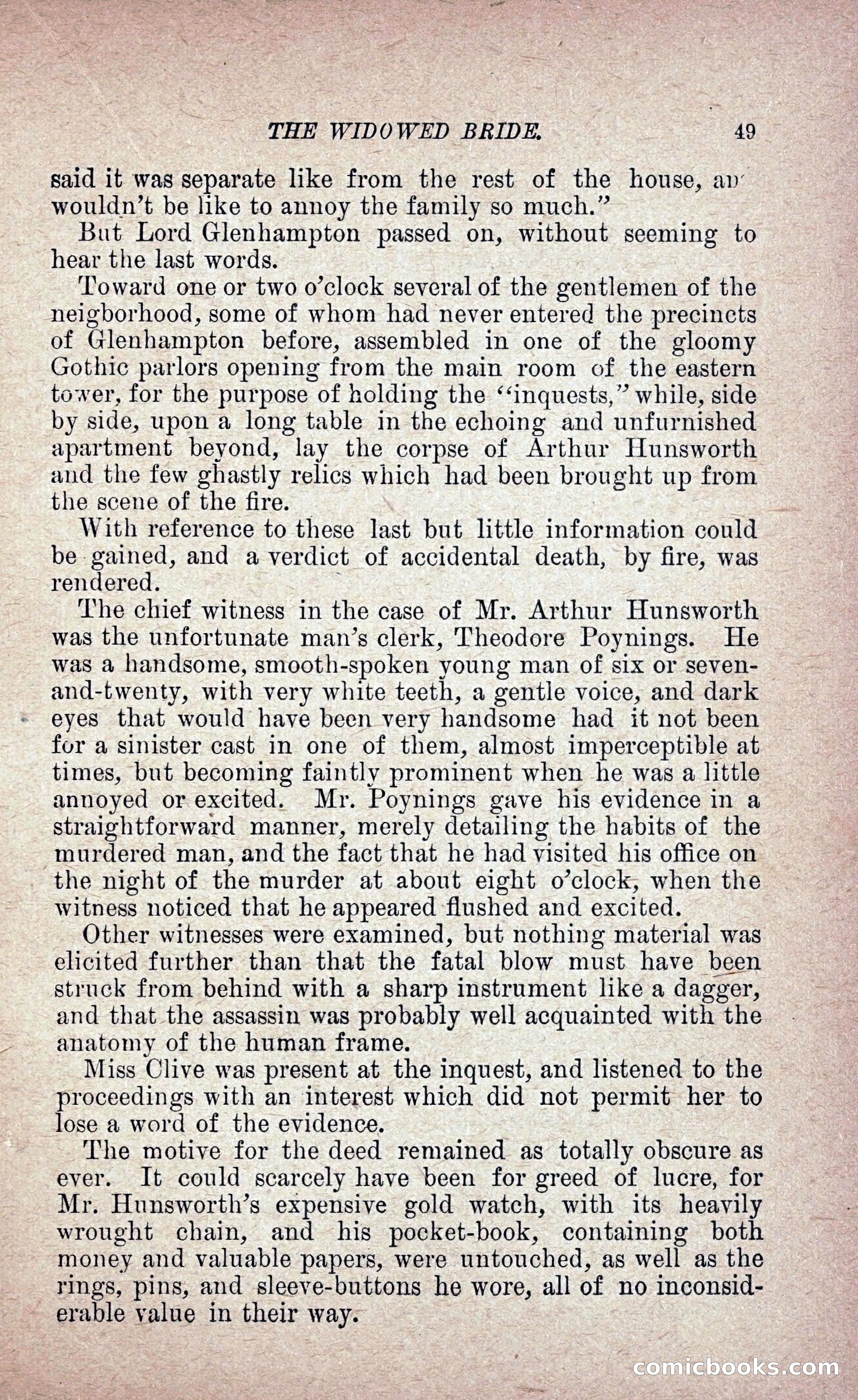
A restored page from Penny Dreadfuls, 1891. Page through the whole issue in the reader above.
📄 Transcribed text from this page (OCR, searchable)
Machine-transcribed from the original scan — historical spelling and the odd misread are preserved.
THE WIDOWED BRIDE. ) 49 said it was separate like from the rest of the house, an’ wouldn’t be like to annoy the family so much.” But Lord Glenhampton passed on, without seeming to hear the last words. Loward one or two o'clock several of the gentlemen of the neigborhood, some of whom had never entered the precincts of Glenhampton before, assembled in one of the gloomy Gothic parlors opening from the main room of the eastern tower, for the purpose of holding the ‘‘inquests,” while, side by side, upon a long table in the echoing and unfur nished apartment beyond, lay the corpse of Arthur Hunsworth and the few chastly relics which had been brought up from the scene of the fire. With reference to these last but little information could be gained, and a verdict of accidental death, by fire, was rendered. ‘lhe chief witness in the ¢ case of Mr. Arthur Hunsworth was the unfortunate man’s clerk, Theodore Poynings. He was a handsome, smooth-spoken young man of six or seven- and-twenty, with very white teeth, a gentle voice, and dark — eyes that would have been very handsome had it not been for a sinister cast in one of them, almost imperceptible at times, but becoming faintly prominent when he was a little annoyed or excited. Mr. Poynings gave his evidence in a straightforward manner, merely detailing the habits of the murdered man, and the fact that he had visited his office on the night of the murder at about eight o'clock, when the witness noticed that he appeared flushed and excited. Other witnesses were examined, but nothing material was elicited further than that the fatal blow must have been struck from behind with a sharp instrument like a dagger, and that the assassin was probably well acquainted with the anatomy of the human frame. Miss Clive was present at the inquest, and listened to the proceedings with an interest which did not permit her to lose a word of the evidence. The motive for the deed remained as totally obscure as ever. It could scarcely have been for greed of lucre, for Mr. Hunsworth’s expensive gold watch, with its heavily wrought chain, and his pocket-book, containing both money and valuable papers, were untouched, as well as the rings, pins, and sleeve-buttons he wore, all of no inconsid- erable value in their way. cComicbooks m