
Penny Dreadfuls, 1900 · page 252 of 321
Between Snow and Fire — page 252: what you’re looking at
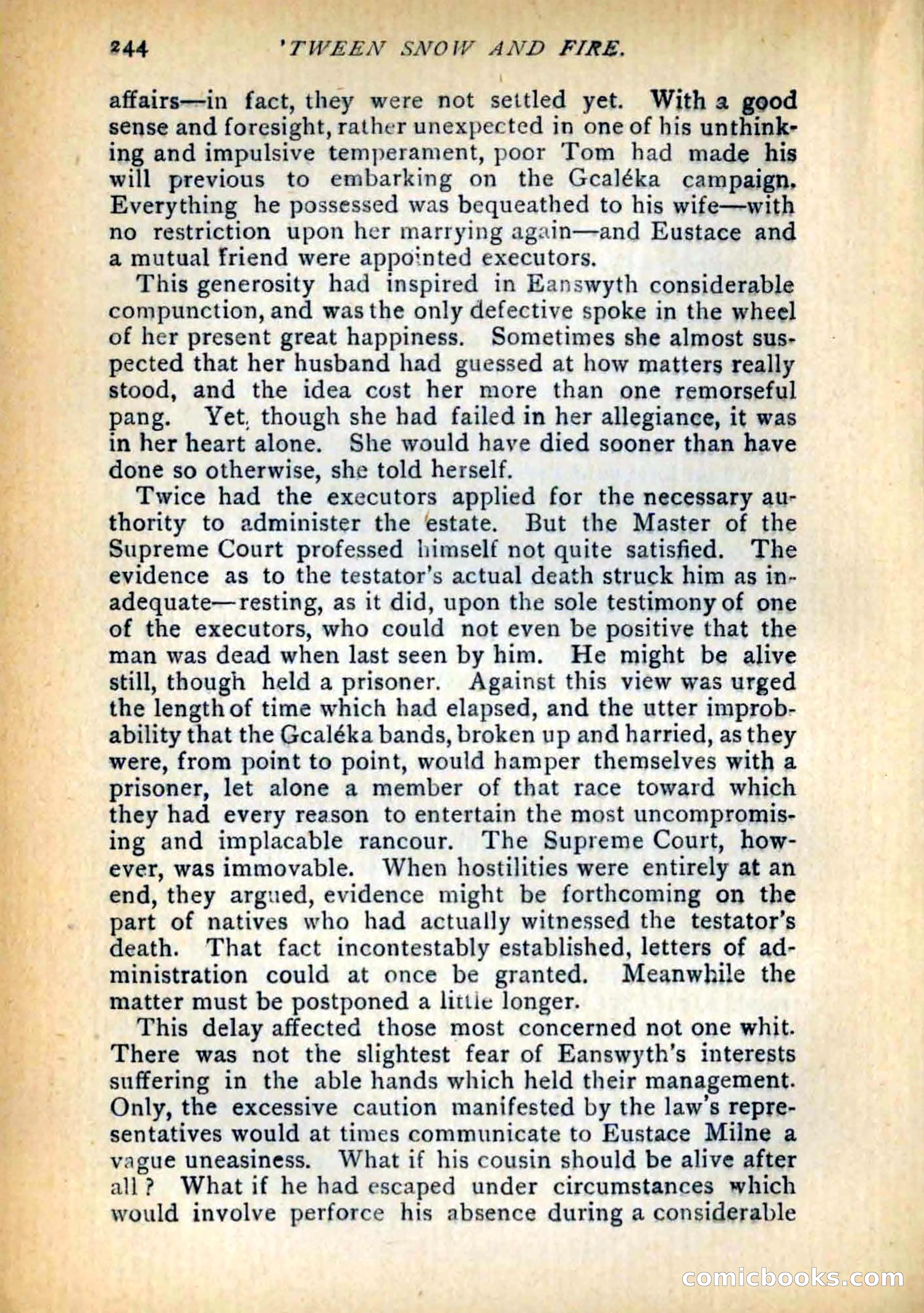
A restored page from Penny Dreadfuls, 1900. Page through the whole issue in the reader above.
📄 Transcribed text from this page (OCR, searchable)
Machine-transcribed from the original scan — historical spelling and the odd misread are preserved.
WEEN svo ir AND “FIRE. affairs—in fact, they were not settled yet. With a good sense and foresight, rather unexpected in one of his unthink- ing and impulsive temperament, poor Tom had made his will previous to embarking on the Gcaléka campaign, Everything he possessed was bequeathed to his wife—with no restriction upon her marrying again—and Eustace and a mutual friend were appotnted executors, This generosity had inspired in Eanswyth considerable compunction, and was the only defective spoke in the wheel of her present great happiness. Sometimes she almost sus- pected that her husband had guessed at how matters really stood, and the idea cost her more than one remorseful pang. Yet, though she had failed in her allegiance, it was in her heart alone. She would have died sooner than have done so otherwise, she told herself. Twice had the executors applied for the necessary au- thority to administer the estate. But the Master of the Supreme Court professed himself not quite satisfied. The evidence as to the testator’s actual death struck him as in- adequate—resting, as it did, upon the sole testimony of one of the executors, who could not even be positive that the man was dead when last seen by him. He might be alive still, though held a prisoner. Against this view was urged the length of time which had elapsed, and the utter improb- ability that the Gcaléka bands, broken up and harried, as they were, from point to point, would hamper themselves with a prisoner, let alone a member of that race toward which they had every reason to entertain the most uncompromis- ing and implacable rancour. The Supreme Court, how- ever, was immovable. When hostilities were entirely at an end, they argued, evidence might be forthcoming on the part of natives who had actually witnessed the testator’s death. That fact incontestably established, letters of ad- ministration could at once be granted. Meanwhile the matter must be postponed a little longer. This delay affected those most concerned not one whit. There was not the slightest fear of Eanswyth's interests suffering in the able hands which held their management. Only, the excessive caution manifested by the law's repre- _ sentatives would at times communicate to Eustace Milne a vague uneasiness. What if his cousin should be alive after all? What if he had escaped under circumstances which would involve perforce his absence during a considerable Gomilecboo Coir