
Penny Dreadfuls, 1900 · page 232 of 321
Between Snow and Fire — page 232: what you’re looking at
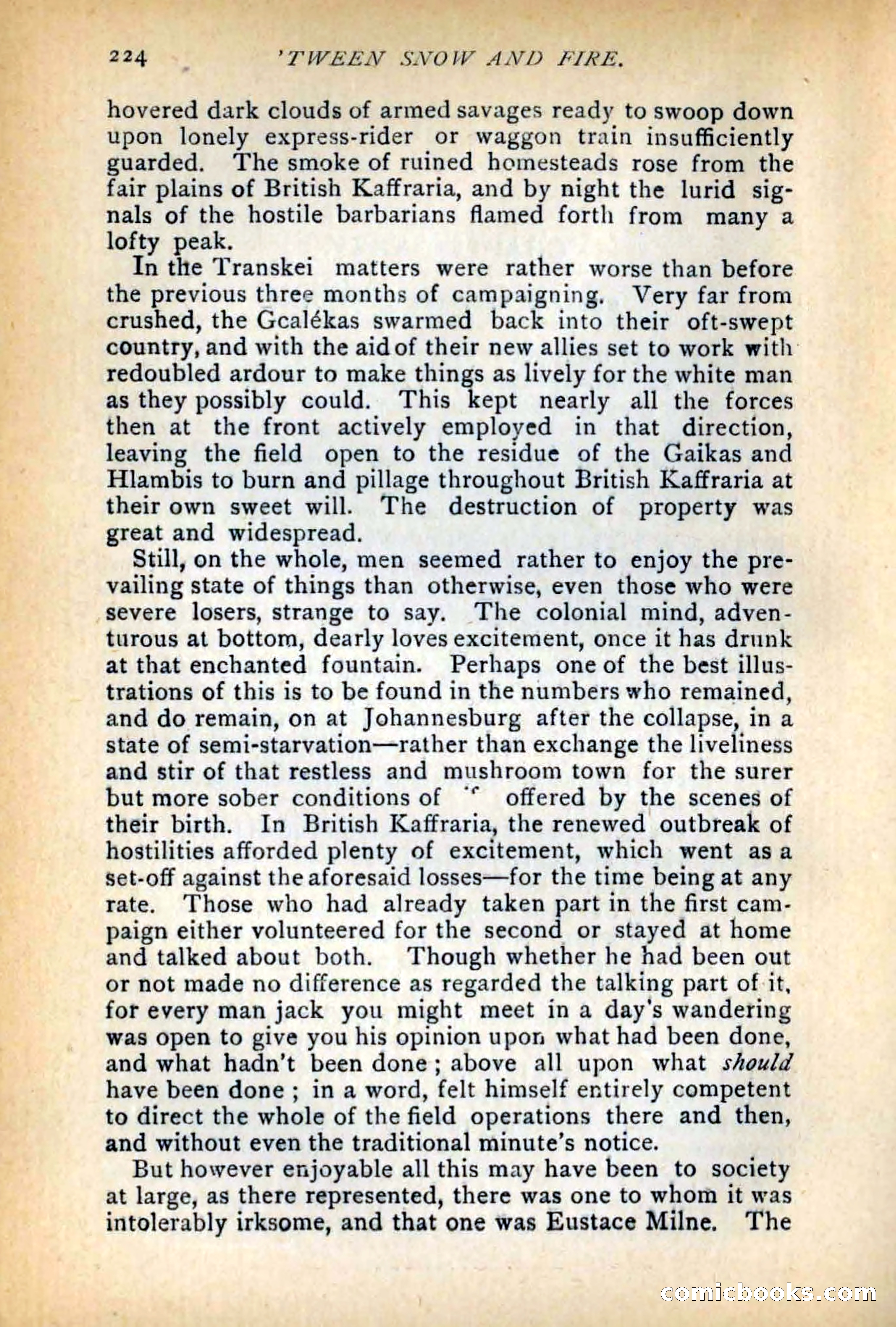
A restored page from Penny Dreadfuls, 1900. Page through the whole issue in the reader above.
📄 Transcribed text from this page (OCR, searchable)
Machine-transcribed from the original scan — historical spelling and the odd misread are preserved.
i wo a = i; . al * 6" ES a - : * seal - 294 5 ‘TWEEN SNOW AND FIRE, hovered dark clouds of armed savages ready to swoop down upon lonely express-rider or waggon train insufficiently guarded. The smoke of ruined homesteads rose from the fair plains of British Kaffraria, and by night the lurid sig- nals of the hostile barbarians flamed forth from many a lofty peak. In the Transkei matters were rather worse than before the previous three months of campaigning. Very far from crushed, the Gcalékas swarmed back into their oft-swept country, and with the aidof their new allies set to work with redoubled ardour to make things as lively for the white man as they possibly could. This kept nearly all the forces then at the front actively employed in that direction, leaving the field open to the residue of the Gaikas and Hlambis to burn and pillage throughout British Kaffraria at their own sweet will. The destruction of property was great and widespread. Still, on the whole, men seemed rather to enjoy the pre- vailing state of things than otherwise, even those who were severe losers, strange to say. The colonial mind, adven- turous at bottom, dearly loves excitement, once it has drunk at that enchanted fountain. Perhaps one of the best illus- trations of this is to be found in the numbers who remained, and do remain, on at Johannesburg after the collapse, in a state of semi-starvation—rather than exchange the liveliness and stir of that restless and mushroom town for the surer but more sober conditions of “ offered by the scenes of their birth. In British Kaffraria, the renewed outbreak of hostilities afforded plenty of excitement, which went asa set-off against the aforesaid losses—for the time being at any rate. Those who had already taken part in the first cam- paign either volunteered for the second or stayed at home and talked about both. Though whether he had been out or not made no difference as regarded the talking part of it, for every man jack you might meet in a day's wandering was open to give you his opinion upon what had been done, and what hadn’t been done; above all upon what should have been done; in a word, felt himself entirely competent to direct the whole of the field operations there and then, and without even the traditional minute’s notice. But however enjoyable all this may have been to society at large, as there represented, there was one to whom it was intolerably irksome, and that one was Eustace Milne. The Eomilecboo CS (e(o) m