
Penny Dreadfuls, 1848 · page 265 of 398
The Mysteries of the Court of London by Pauline Clarendon — page 265: what you’re looking at
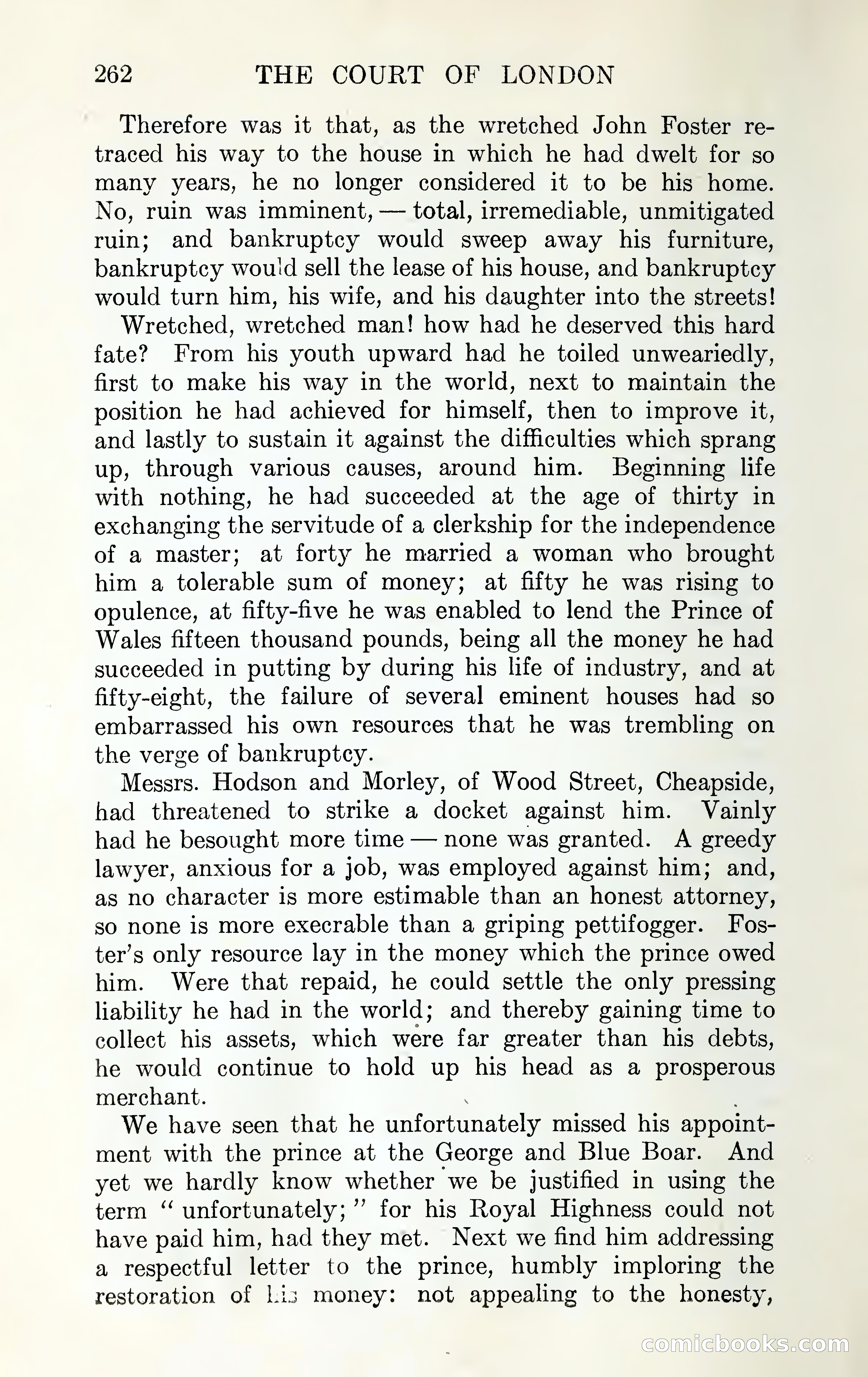
A restored page from Penny Dreadfuls, 1848. Page through the whole issue in the reader above.
📄 Transcribed text from this page (OCR, searchable)
Machine-transcribed from the original scan — historical spelling and the odd misread are preserved.
262 THE COURT OF LONDON Therefore was it that, as the wretched John Foster re- traced his way to the house in which he had dwelt for so many years, he no longer considered it to be his home. No, ruin was imminent, — total, irremediable, unmitigated ruin; and bankruptcy would sweep away his furniture, bankruptcy woud sell the lease of his house, and bankruptcy would turn him, his wife, and his daughter into the streets! Wretched, wretched man! how had he deserved this hard fate? From his youth upward had he toiled unweariedly, first to make his way in the world, next to maintain the position he had achieved for himself, then to improve it, and lastly to sustain it against the difficulties which sprang up, through various causes, around him. Beginning life with nothing, he had succeeded at the age of thirty in exchanging the servitude of a clerkship for the independence of a master; at forty he married a woman who brought him a tolerable sum of money; at fifty he was rising to opulence, at fifty-five he was enabled to lend the Prince of Wales fifteen thousand pounds, being all the money he had succeeded in putting by during his life of industry, and at fifty-eight, the failure of several eminent houses had so embarrassed his own resources that he was trembling on the verge of bankruptcy. Messrs. Hodson and Morley, of Wood Street, Cheapside, had threatened to strike a docket against him. Vainly had he besought more time — none was granted. A greedy lawyer, anxious for a Job, was employed against him; and, as no character is more estimable than an honest attorney, so none is more execrable than a griping pettifogger. Fos- ter’s only resource lay in the money which the prince owed him. Were that repaid, he could settle the only pressing liability he had in the world; and thereby gaining time to collect his assets, which were far greater than his debts, he would continue to hold up his head as a prosperous merchant. We have seen that he unfortunately missed his appoint- ment with the prince at the George and Blue Boar. And yet we hardly know whether we be justified in using the term ‘‘ unfortunately; ’’ for his Royal Highness could not have paid him, had they met. Next we find him addressing a respectful letter to the prince, humbly imploring the restoration of Lis money: not appealing to the honesty, CONNIE OOO KS (E(o)