
Penny Dreadfuls, 1890 · page 92 of 233
That Girl of Johnson's — page 92: what you’re looking at
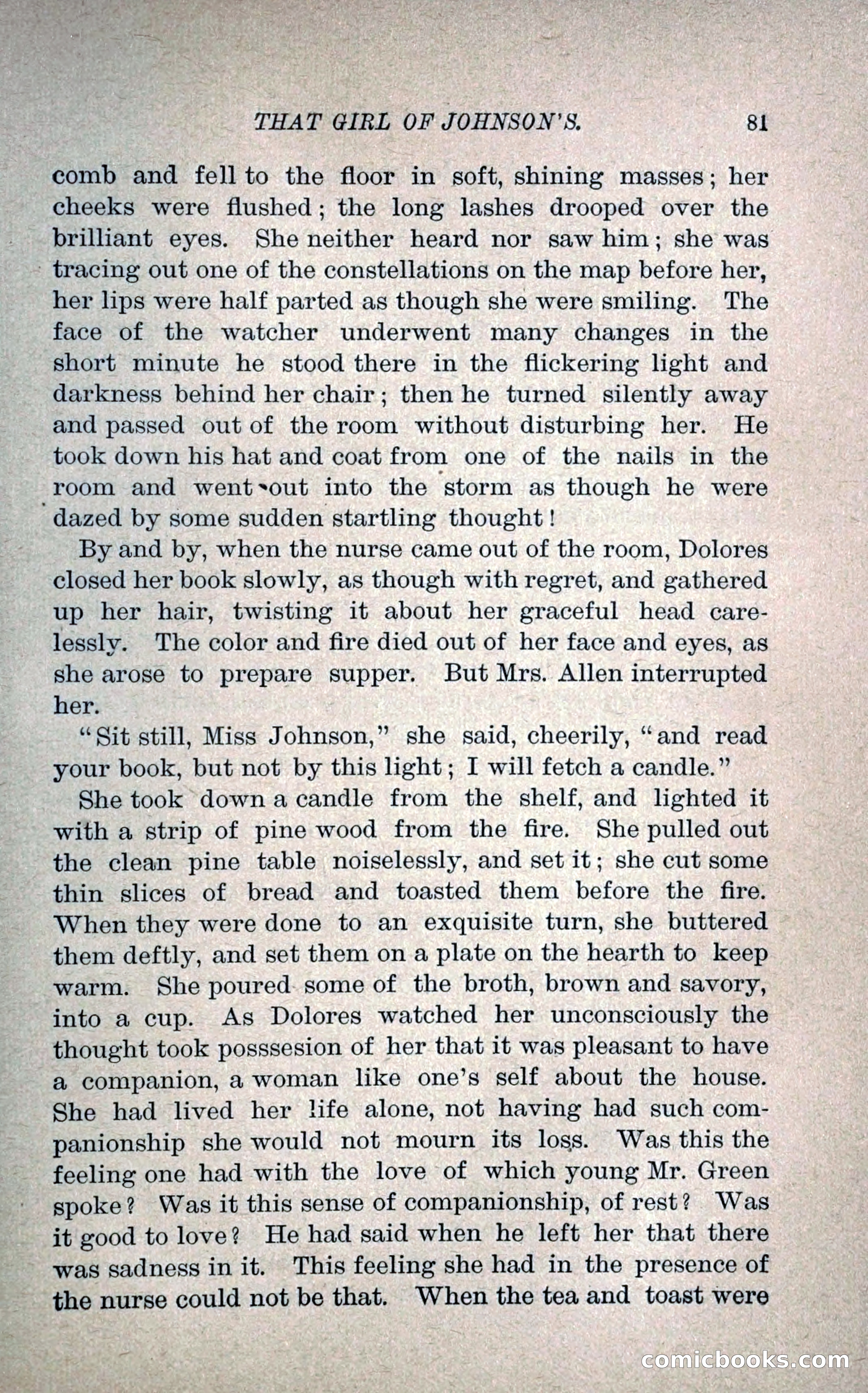
A restored page from Penny Dreadfuls, 1890. Page through the whole issue in the reader above.
📄 Transcribed text from this page (OCR, searchable)
Machine-transcribed from the original scan — historical spelling and the odd misread are preserved.
THAT GIRL OF JOHNSON'S. 81 comb and fell to the floor in soft, shining masses; her cheeks were flushed; the long lashes drooped over the brilliant eyes. She neither heard nor saw him; she was tracing out one of the constellations on the map before her, her lips were half parted as though she were smiling. The face of the watcher underwent many changes in the short minute he stood there in the flickering light and darkness behind her chair; then he turned silently away and passed out of the room without disturbing her. He took down his hat and coat from one of the nails in the room and went-sout into the storm as though he were dazed by some sudden startling thought! By and by, when the nurse came out of the room, Dolores closed her book slowly, as though with regret, and gathered up her hair, twisting it about her graceful head care- lessly. The color and fire died out of her face and eyes, as she arose to prepare supper. But Mrs. Allen interrupted her. “Sit still, Miss Johnson,” she said, cheerily, “and read your book, but not by this light; I will fetch a candle.” She took down a candle from the shelf, and lighted it with a strip of pine wood from the fire. She pulled out the clean pine table noiselessly, and set it; she cut some thin slices of bread and toasted them before the fire. When they were done to an exquisite turn, she buttered them deftly, and set them on a plate on the hearth to keep warm. She poured: some of the broth, brown and savory, into a cup. As Dolores watched her unconsciously the thought took posssesion of her that it was pleasant to have a companion, a woman like one’s self about the house. She had lived her life alone, not having had such com- panionship she would not mourn its logs. Was this the feeling one had with the love of which young Mr. Green spoke? Was it this sense of companionship, of rest? Was it good to love? He had said when he left her that there was sadness init. This feeling she had in the presence of the nurse could not be that. When the tea and toast were a (e(0) TY Gomicboo ‘S