
Penny Dreadfuls, 1900 · page 111 of 196
A Queer Race: The Story of a Strange People — page 111: what you’re looking at
A restored page from Penny Dreadfuls, 1900. Page through the whole issue in the reader above.
📄 Transcribed text from this page (OCR, searchable)
Machine-transcribed from the original scan — historical spelling and the odd misread are preserved.
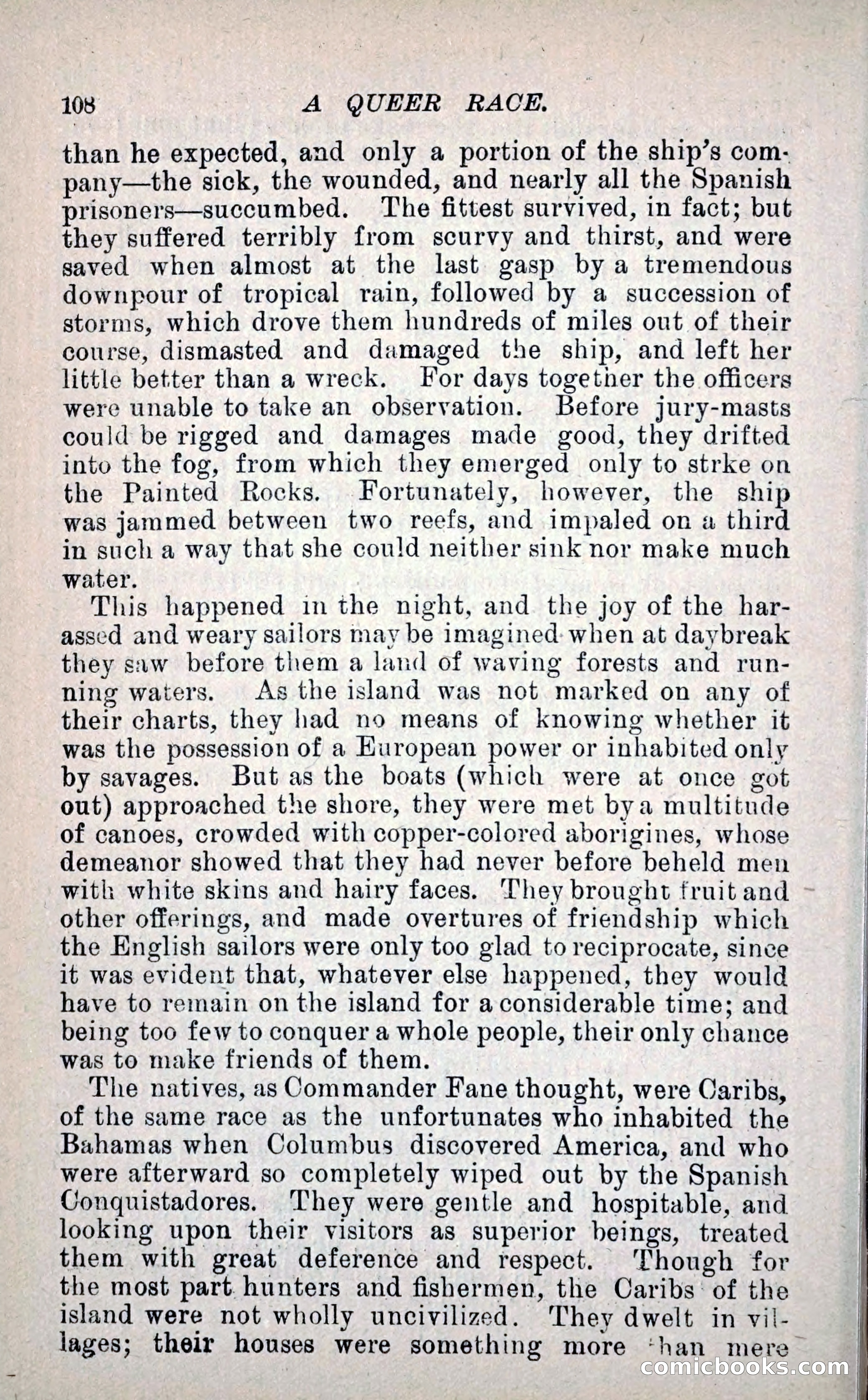
108 A QUEER RACE. than he expected, and only a portion of the ship’s com- pany—the sick, the wounded, and nearly all the Spanish prisoners—succumbed. ‘T'he fittest survived, in fact; but they suffered terribly from scurvy and thirst, and were saved when almost at the last gasp by a tremendous downpour of tropical rain, followed by a succession of storms, which drove them hundreds of miles out of their course, dismasted and damaged the ship, and left her little better than a wreck. For days together the officers were unable to take an observation. Before jury-masts could be rigged and damages made good, they drifted into the fog, from which they emerged only to strke on the Painted Rocks, Fortunately, however, the ship was jammed between two reefs, and impaled on a third in such a way that she could neither sink nor make much water. This happened in the night, and the joy of the har- assed and weary sailors may be imagined: when at daybreak they suw before them a land of waving forests and run- ning waters. As the island was not marked on any of their charts, they had no means of knowing whether it was the possession of a Huropean power or inhabited only by savages. But as the boats (which were at once got out) approached the shore, they were met bya multitude of canoes, crowded with copper-colored aborigines, whose demeanor showed that they had never before beheld men with white skins and hairy faces. They brought fruit and - other offerings, and made overtures of friendship which the English sailors were only too glad to reciprocate, since it was evident that, whatever else happened, they would have to remain on the island for aconsiderable time; and | being too few to conquer a whole people, their only chance was to make friends of them. The natives, as Commander Fane thought, were Caribs, of the same race as the unfortunates who inhabited the Bahamas when Columbus discovered America, and who were afterward so completely wiped out by the Spanish Conquistadores. ‘They were gentle and hospitable, and looking upon their visitors as superior beings, treated them with great deference and respect. | Though for the most part. hunters and fishermen, the Caribs: of the island were not wholly uncivilized. They dwelt in vil- lages; their houses were something more ‘han mere Gom C ooo) KS i )