
Penny Dreadfuls, 1857 · page 314 of 400
Pickwick Abroad; or, The Tour in France — page 314: what you’re looking at
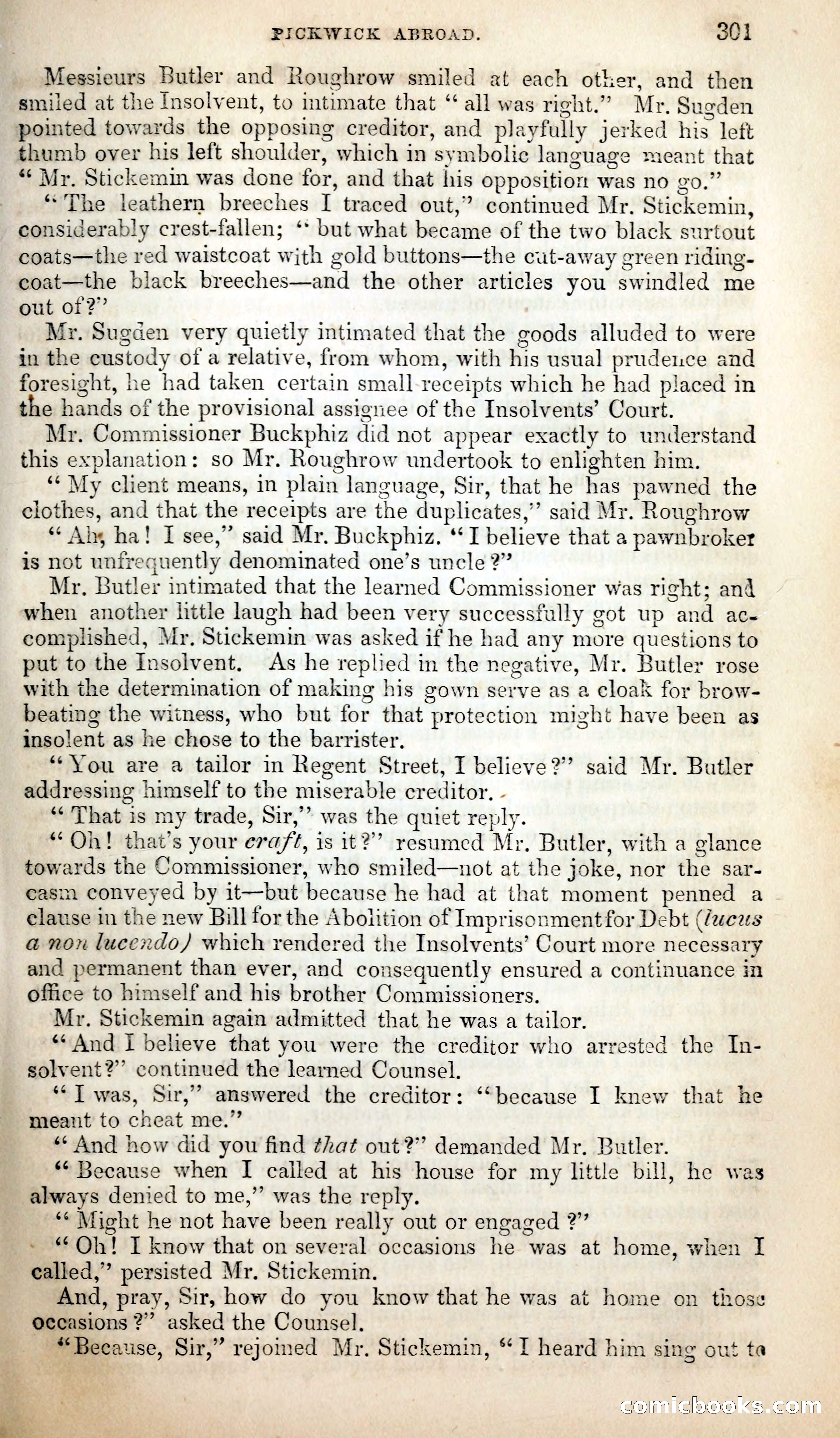
A restored page from Penny Dreadfuls, 1857. Page through the whole issue in the reader above.
📄 Transcribed text from this page (OCR, searchable)
Machine-transcribed from the original scan — historical spelling and the odd misread are preserved.
PICKWICK ABROAD. 301 Messieurs Butler and Roughrow smiled at each other, and then smiled at the Insolvent, to mtimate that “all was right.” Mr. Sugden pointed towards the opposing creditor, and playfully jerked his left thumb over his left shoulder, which in symbolic language meant that “Mr. Stickemm was done for, and that his opposition was no go.” “The leathern breeches I traced out,” continued Mr. Stickemin, considerably crest-fallen; ‘* but what became of the two black surtout coats—the red waistcoat with gold buttons—the cut-away green riding- . 7 oS . coat—the black breeches—and the other articles you swindled me out of?” Mr. Sugden very quietly intimated that the goods alluded to were in the custody of a relative, from whom, with his usual prudence and foresight, he had taken certain small-receipts which he had placed in the hands of the provisional assignee of the Insolvents’ Court. Myr. Commissioner Buckphiz did not appear exactly to understand this explanation: so Mr. Roughrow undertook to enlighten him. ‘“¢ My client means, in plain language, Sir, that he has pawned the clothes, and that the receipts are the duplicates,” said Mr. Roughrow “Abs ha! I see,” said Mr. Buckphiz. ‘‘I believe that a pawnbroker is not unfrequently denominated one’s uncle 2?” Mr, Butler intimated that the learned Commissioner was right; and when another litle laugh had been very successfully got up and ac- complished, Mr. Suckemin was asked if he had any more questions to put to the Insolvent. As he replied in the negative, Mr. Butler rose with the determination of making his gown serve as a cloak for brow- beating the witness, who but for that protection might have been as insolent as he chose to the barrister. ““You are a tailor in Regent Street, I believe?” said Mr. Butler addressing himself to the miserable creditor. - ** That is my trade, Sir,’ was the quiet reply. * Oh! that’s your eraft, is it?” resumed Mr. Butler, with a glance towards the Commissioner, who smiled—not at ihe joke, nor the sar- easm conveyed by it—but because he had at that moment penned a clause in the new Bill for the Abolition of Imprisonment for Debt (/ucus a non lucexdo) which rendered the Insolvents’ Court more necessary and permanent than ever, and consequently ensured a continuance in office to himself and his brother Commissioners. ‘Mr. Stickemin again admitted that he was a tailor. ““And I believe that you were the creditor who arrested the In- solvent?” continued the learned Counsel. **[ was, Sir,” answered the creditor: ‘“because I knew that he meant to cheat me.” “And how did you find that out?” demanded Mr. Butler. ** Because when I called at his house for my little bill, he was always denied to me,” was the reply. ‘* Might he not have been really out or engaged ?” -» “Qh! I know that on several occasions he was at home, when I called,” persisted Mr. Stickemin. And, pray, Sir, how do you know that he was at home on those occasions ?” asked the Counsel. _ *Beeause, Sir,” reyjomed Mr. Stickemin, “TI heard him sing out ta EOMIGcHooks (E(@) =