
Penny Dreadfuls, 1857 · page 177 of 400
Pickwick Abroad; or, The Tour in France — page 177: what you’re looking at
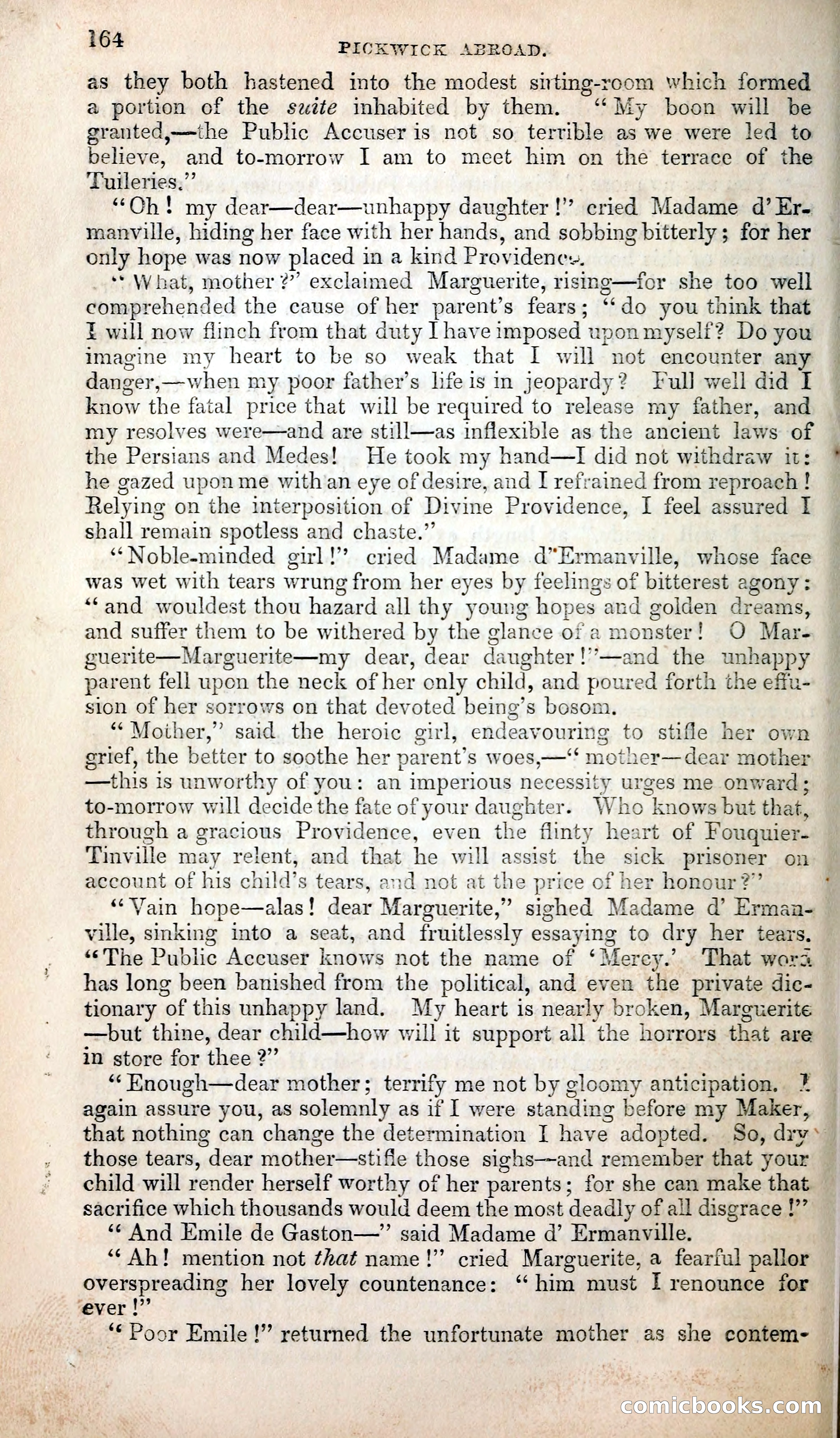
A restored page from Penny Dreadfuls, 1857. Page through the whole issue in the reader above.
📄 Transcribed text from this page (OCR, searchable)
Machine-transcribed from the original scan — historical spelling and the odd misread are preserved.
i164 PICKWICK ABROAD. as they both hastened into the modest sirting-room which formed a portion of the sate mhabited by them. ‘My boon will be granted,—the Public Accuser is not so terrible as we were led to believe, and to-morrow I am to meet him on the terrace of the Tuileries.”’ “Oh! my dear—dear—unhappy daughter!’ eried Madame d’ Er- manville, hiding her face with her hands, and sobbing bitterly; for her only hope was now placed in a kind Providene-. ‘* What, mother ?” exclaimed Marguerite, rismg—for she too well comprehended the cause of her parent’s fears; ‘“‘do you think that } will now flinch from that duty [have imposed upon myself? Do you Imagine my heart to be so weak that I will not encounter any Full well did I know the fatal price that will be required to release my father, and danger,— when my poor father’s life is in jeopardy ? my resolves were—and are still—as inflexible as the ancient laws of the Persians and Medes! He took my hand—I did not withdraw it: he gazed upon me with an eye of desire, and | refrained from reproaeh ! Relying on the interposition of Divine Providence, I feel assured 1 shall remain spotless and chaste.” ‘“‘Noble-minded girl!’ cried Madame d”Ermanville, whose face was wet with tears wrung from her eyes by feelings of bitterest agony: - “‘and wouldest thou hazard all thy young hopes and and suffer them to be withered by the glance of a monster! d golden dreams, O Mar- guerite—Marguerite—my dear, dear daughter!”—and the unhappy parent fell upon the neck of her only child, and poured forth the effu- sion of her sorrows on that devoted being’s bosom. ‘“¢ Mother,” said. the heroic girl, endeavouring to stifle her own erief, the better to soothe her parent’s woes,—‘‘ mother—dear mother — this is unw orthy of you: an imperious necessity urges me onward; to-morrow will decide the fate of your daughter. Who Ena but that, through a gracious Providence, even the flinty heart of F ouquier- Tinville may relent, and that he will assist the sick account of his child’s tears, and not at the price of he prisoner on r honour 2?” ‘ " - ~ _ et ee : ‘ “Vain Meola es dear Marguerite,’ sighed Madame d’ Erman- ville, sinking into a seat, and fruitlessly essaying to dry her tears, ‘“¢The Public Acecuser knows not the name of ‘Merey.’ has long been banished from the political, and even the private dic- tionary af this unhappy land. My heart is nearly broken, Marguerite —but thine, dear child—how will it support all the horrors that are in store for thee 2” “‘ Enough—dear mother; terrify me not by gloomy anticipation. That wara , “- again assure you, as solemnly as if I were standing before my Maker, that nothing can change the determination I have adopted. So, dry» those tears, “dear mother—stifle those sighs—and remember that your child will render herself worthy of her parents; for she can make that | sacrifice which thousands would deem the most deadly of all disprace PAM ‘¢ And Emile de Gaston— ’ said Madame d’ Ermanyville. ‘“‘ Ah! mention not that name!” cried Marguerite, a fearful pallor overspreading her lovely countenance: “ him must I renounce for ever!” ‘© Poor Emile!” returned the unfortunate mother as she contem- (E(0) boo cS co tet -..>- | © ” uh ' 4 » 185 is Py F