
Penny Dreadfuls, 1850 · page 223 of 394
The Mysteries of London; or, Lights and Shadows of London Life — page 223: what you’re looking at
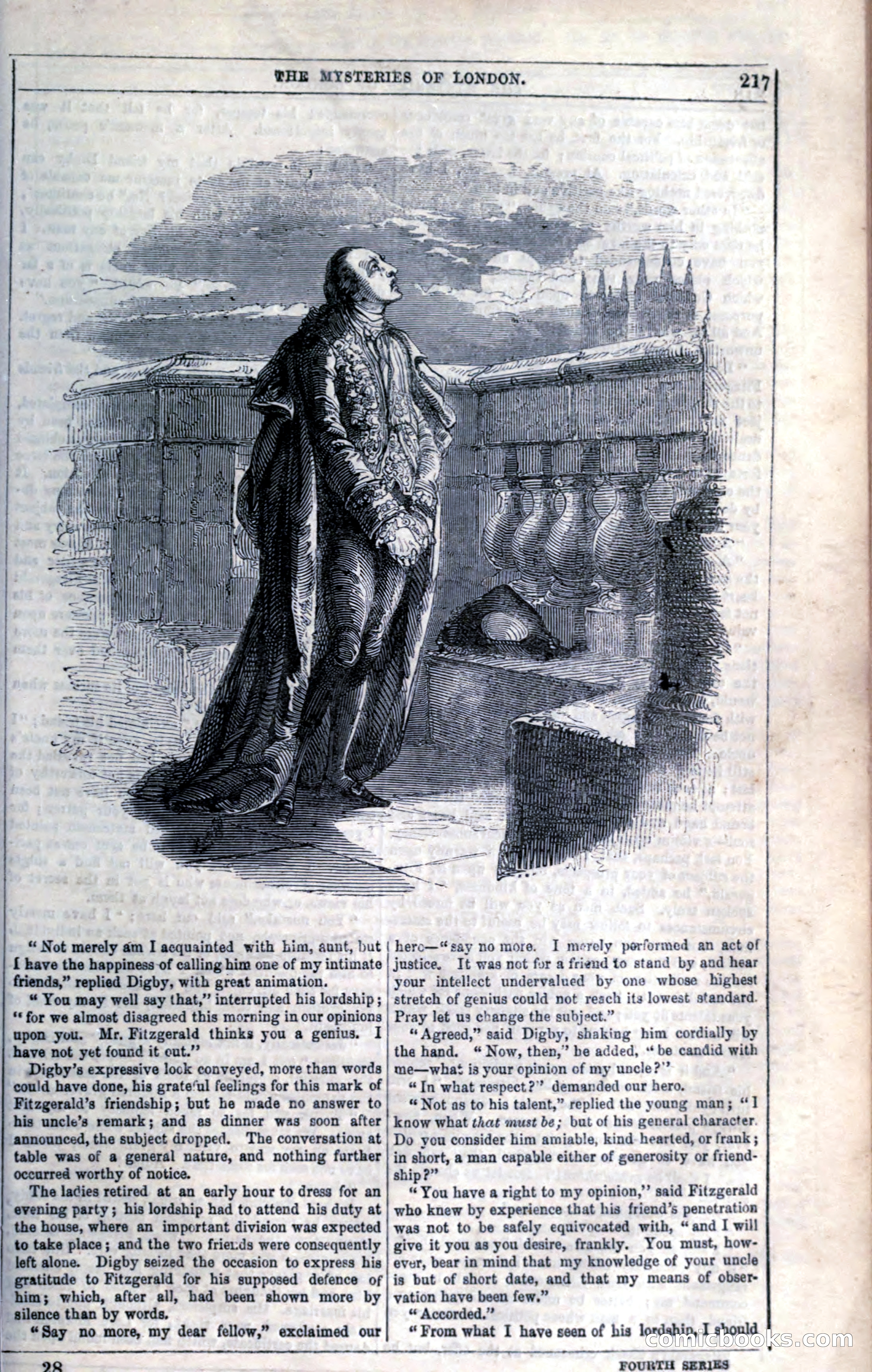
A restored page from Penny Dreadfuls, 1850. Page through the whole issue in the reader above.
📄 Transcribed text from this page (OCR, searchable)
Machine-transcribed from the original scan — historical spelling and the odd misread are preserved.
ee THE MYSTERIES OF LONDON. 217 ed = ——— ——<—— rh 7 = = (41 tt mi lGaaseak ‘ - a? + om tl Hi nity fe ——— - ss NH Wt eth | ; eet “ Not merely dm I acquainted with him, aunt, but | hero—“say no more. - = = = SS ett \ ~~» * -—. — —_— bets +e ee ep hbgett ¥ Py Mi [es a ag titii - MUTA S ites a 5 NATIT f} = 4 . MOU jes ; f i: bay EL Hit Ti <i he= ~ tite int ‘4 =z mit sheds ‘ beads ’ rites. ee3° — I merely performed an act of { have the happiness-of calling him one of my intimate | justice. Tt was not for a friend to stand by and hear friends,” replied Digby, with great animation. “ You may well say that,” interrupted his lordship ; | your intellect undervalued by one whose highest stretch of genius could not resch its lowest standard. ** for we almost disagreed this morning in our opinions | Pray let us change the subject.” upon you. Mr, Fitzgerald thinks you a genius. I have not yet found it cut.” Digby’s expressive lock conveyed, more than words could have done, his grate‘ul feelings for this mark of Fitzgerald’s friendship; but he made no answer to his uncle’s remark; and as dinner was soon after announced, the subject dropped. The conversation at table was of a general nature, and nothing farther occurred worthy of notice. The ladies retired at an early hour to dress for an evening party; his lordship had to attend his duty at the house, where an important division was expected to take place; and the two frieds were consequently left alone. Digby seized the occasion to express his gratitude to Fitzgerald for his supposed defence of him; which, after all, had been shown more by silence than by words, “Say no more, my dear fellow,” exclaimed our “ Agreed,” said Digby, shaking him cordially by the hand. “ Now, then,” be added, “ be candid with me—what is your opinion of my uncle?” “Tn what respect?’ demanded our hero. “ Not as to his talent,” replied the young man; “1 know what that must be; but of his general character Do you consider him amiable, kind-hearted, or frank ; in short, a man capable either of generosity or friend- ship?” “You have a right to my opinion,’’ said Fitzgerald who knew by experience that his friend’s penetration was not to be safely equivocated with, “and I will give it you as you desire, frankly. You must, how- ever, bear in mind that my knowledge of your uncle is but of short date, and that my means of obser- vation have been few.” “ Accorded,” SS... FOURTH SERIES SO | TS TN te aa —— “From what I have seen of his loriahin, T shonld. “S (C()