
Penny Dreadfuls, 1860 · page 127 of 394
The Mysteries of the Court of London — page 127: what you’re looking at
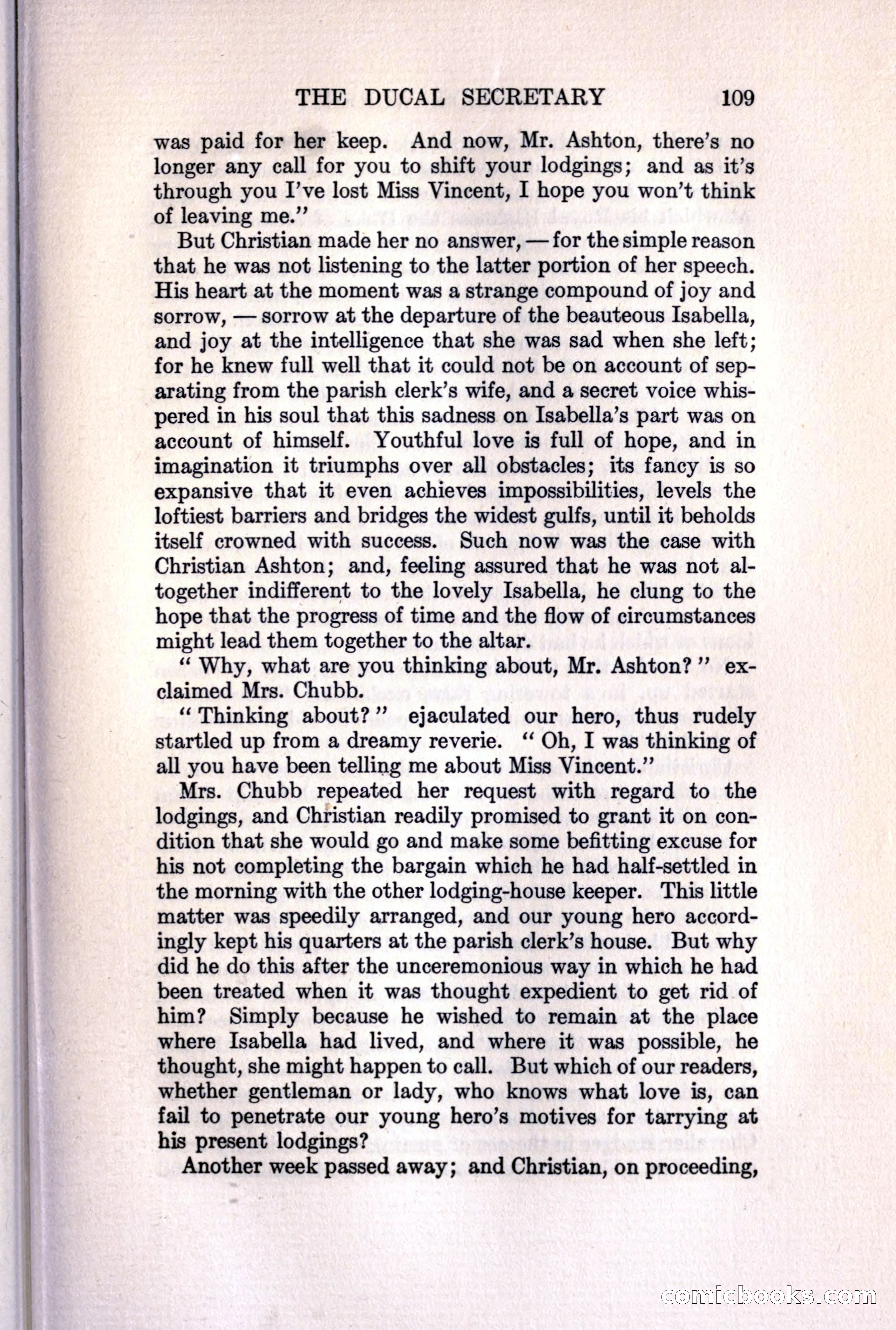
A restored page from Penny Dreadfuls, 1860. Page through the whole issue in the reader above.
📄 Transcribed text from this page (OCR, searchable)
Machine-transcribed from the original scan — historical spelling and the odd misread are preserved.
THE DUCAL SECRETARY 109 was paid for her keep. And now, Mr. Ashton, there’s no longer any call for you to shift your lodgings; and as it’s through you I’ve lost Miss Vincent, I hope you won’t think of leaving me.” But Christian made her no answer, — for the simple reason that he was not listening to the latter portion of her speech. His heart at the moment was a strange compound of joy and sorrow, — sorrow at the departure of the beauteous Isabella, and joy at the intelligence that she was sad when she left; for he knew full well that it could not be on account of sep- arating from the parish clerk’s wife, and a secret voice whis- pered in his soul that this sadness on Isabella’s part was on account of himself. Youthful love is full of hope, and in imagination it triumphs over all obstacles; its fancy is so expansive that it even achieves impossibilities, levels the loftiest barriers and bridges the widest gulfs, until it beholds itself crowned with success. Such now was the case with Christian Ashton; and, feeling assured that he was not al- together indifferent to the lovely Isabella, he clung to the hope that the progress of time and the flow of circumstances might lead them together to the altar. “ Why, what are you thinking about, Mr. Ashton?” ex- claimed Mrs. Chubb. “Thinking about?” ejaculated our hero, thus rudely startled up from a dreamy reverie. ‘“ Oh, I was thinking of all you have been telling me about Miss Vincent.” Mrs. Chubb repeated her request with regard to the lodgings, and Christian readily promised to grant it on con- dition that she would go and make some befitting excuse for his not completing the bargain which he had half-settled in the morning with the other lodging-house keeper. This little matter was speedily arranged, and our young hero accord- ingly kept his quarters at the parish clerk’s house. But why did he do this after the unceremonious way in which he had been treated when it was thought expedient to get rid of him? Simply because he wished to remain at the place where Isabella had lived, and where it was possible, he thought, she might happen to call. But which of our readers, whether gentleman or lady, who knows what love is, can fail to penetrate our young hero’s motives for tarrying at his present lodgings? Another week passed away; and Christian, on proceeding, ECORNICLOO S (CO) im