
Penny Dreadfuls, 1860 · page 329 of 394
The Mysteries of the Court of London — page 329: what you’re looking at
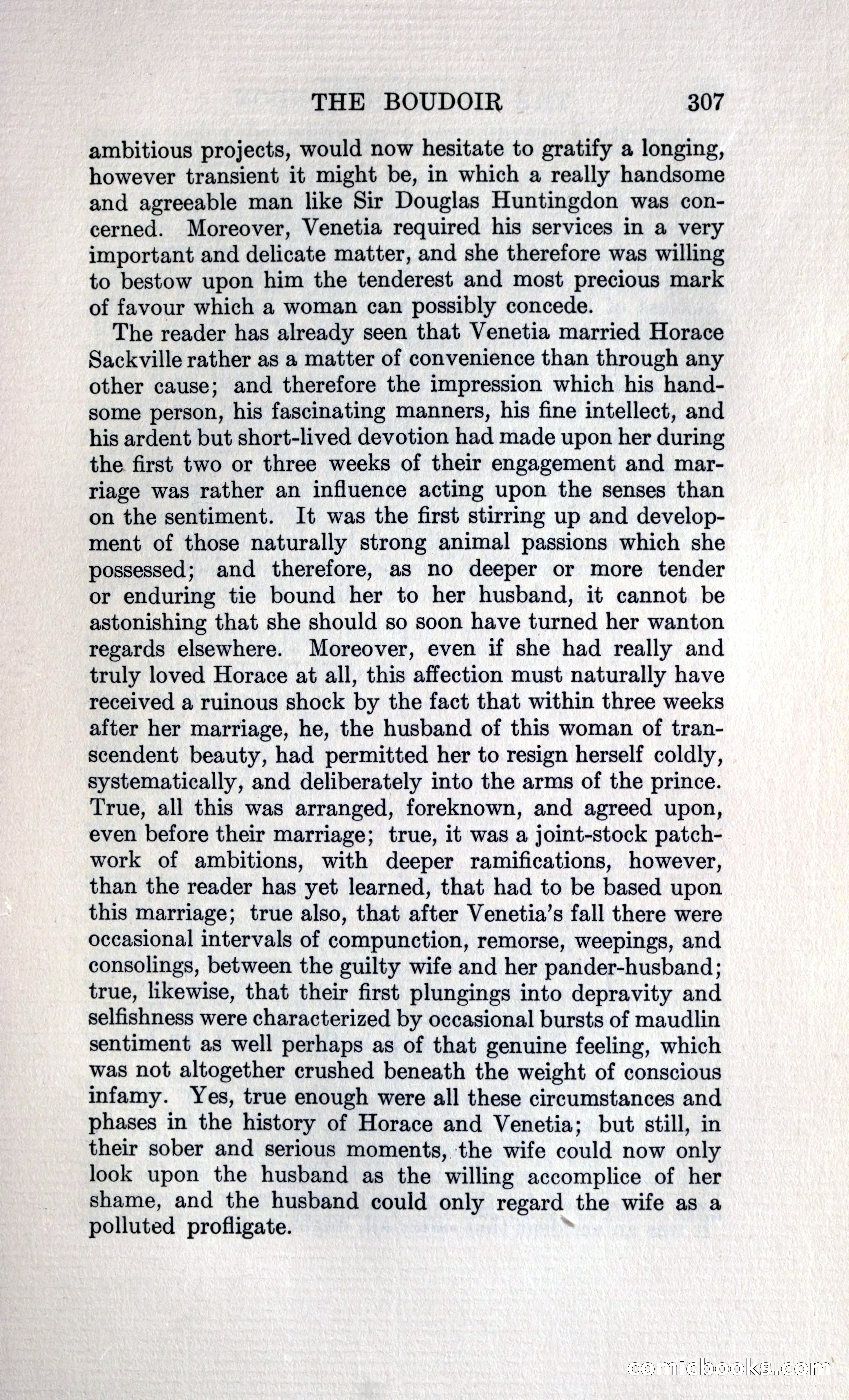
A restored page from Penny Dreadfuls, 1860. Page through the whole issue in the reader above.
📄 Transcribed text from this page (OCR, searchable)
Machine-transcribed from the original scan — historical spelling and the odd misread are preserved.
THE BOUDOIR 307 ambitious projects, would now hesitate to gratify a longing, however transient it might be, in which a really handsome and agreeable man like Sir Douglas Huntingdon was con- cerned. Moreover, Venetia required his services in a very important and delicate matter, and she therefore was willing to bestow upon him the tenderest and most precious mark of favour which a woman can possibly concede. The reader has already seen that Venetia married Horace Sackville rather as a matter of convenience than through any other cause; and therefore the impression which his hand- some person, his fascinating manners, his fine intellect, and his ardent but short-lived devotion had made upon her during the first two or three weeks of their engagement and mar- riage was rather an influence acting upon the senses than on the sentiment. It was the first stirring up and develop- ment of those naturally strong animal passions which she possessed; and therefore, as no deeper or more tender or enduring tie bound her to her husband, it cannot be astonishing that she should so soon have turned her wanton regards elsewhere. Moreover, even if she had really and truly loved Horace at all, this affection must naturally have received a ruinous shock by the fact that within three weeks after her marriage, he, the husband of this woman of tran- scendent beauty, had permitted her to resign herself coldly, systematically, and deliberately into the arms of the prince. True, all this was arranged, foreknown, and agreed upon, even before their marriage; true, it was a joint-stock patch- work of ambitions, with deeper ramifications, however, than the reader has yet learned, that had to be based upon this marriage; true also, that after Venetia’s fall there were occasional intervals of compunction, remorse, weepings, and consolings, between the guilty wife and her pander-husband; true, likewise, that their first plungings into depravity and selfishness were characterized by occasional bursts of maudlin sentiment as well perhaps as of that genuine feeling, which was not altogether crushed beneath the weight of conscious infamy. Yes, true enough were all these circumstances and phases in the history of Horace and Venetia; but still, in their sober and serious moments, the wife could now only look upon the husband as the willing accomplice of her shame, and the husband could only regard the wife as a polluted profligate. GOMIGD OO