
Penny Dreadfuls, 1900 · page 55 of 398
Moths by Ouida — page 55: what you’re looking at
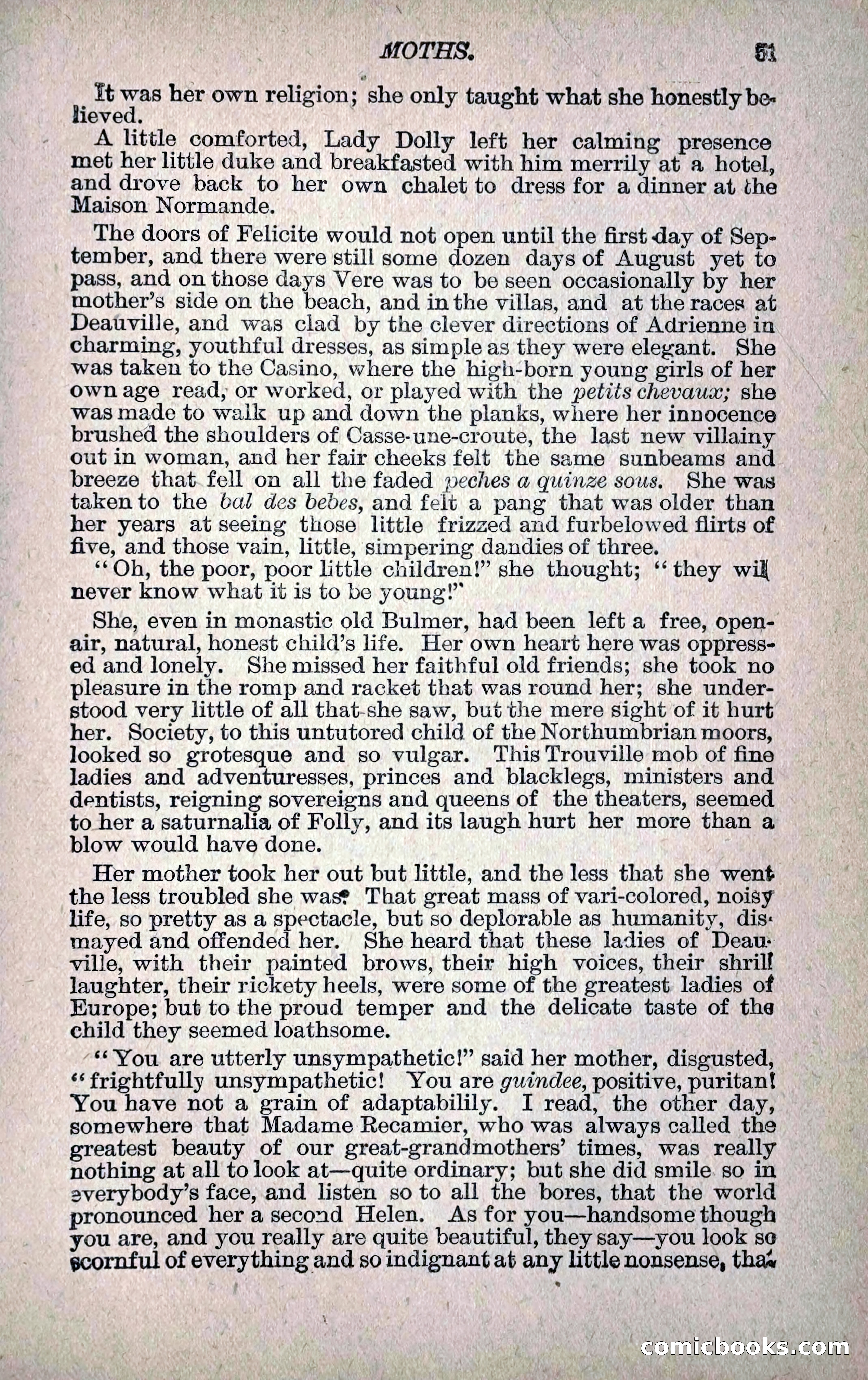
A restored page from Penny Dreadfuls, 1900. Page through the whole issue in the reader above.
📄 Transcribed text from this page (OCR, searchable)
Machine-transcribed from the original scan — historical spelling and the odd misread are preserved.
\ MOTHS. , Sint i Tt wae her own religion; ‘she only taught what she honestly be- leved. A little comforted, Lady Dolly left her calming presence met her little duke and breakfasted with him merrily at a hotel, and drove back to her own chalet to dress for a dinner at the Maison Normande. The doors of Felicite would not open until the first day of Sep- tember, and there were still some dozen days of August yet to pass, and on those days Vere was to be seen occasionally by her mother’s side on the beach, and inthe villas, and at the races at Deativille, and was clad by the clever directions of Adrienne in charming, youthful dresses, as simple as they were elegant. She was taken to the Casino, where the high-born young girls of her Ownage read, or worked, or played with the petits chevaux; she was made to walk up and down the planks, where her innocence brushed the shoulders of Casse-une-croute, the last new villainy out in woman, and her fair cheeks felt the same sunbeams and breeze that.fell on all the faded peches a quinze sous. She was taken to the bal des bebes, and feit a pang that was older than her years at seeing those little frizzed and furbelowed flirts of five, and those vain, little, simpering dandies of three. ‘*Oh, the poor, poor little children!” she thought; ‘*‘ they will never know what it is to be young!” She, even in monastic old Bulmer, had been left a free, open- air, natural, honest child’s life. Her own heart here was oppress- ed and lonely. She missed her faithful old friends; she took no pleasure in the romp and racket that was round her; she under- stood very little of all that-she saw, but the mere sight of it hurt her. Society, to this untutored child of the Northumbrian moors, looked so grotesque and so vulgar. This Trouville mob of fine ladies and adventuresses, princes and blacklegs, ministers and dentists, reigning sovereigns and queens of the theaters, seemed to her a saturnalia of Folly, and its laugh hurt her more than a blow would have done. Her mother took her out but little, and the less that she went the less troubled she was? That great mass of vari-colored, noisy life, so pretty as a spectacle, but so deplorable as humanity, dis: mayed and offended her. She heard that these ladies of Deau: ville, with their painted brows, their high voices, their shrilf laughter, their rickety heels, were some of the greatest ladies of Europe; but to the proud temper and the delicate taste of the child they seemed loathsome. -** You are utterly unsympathetic!” said her mother, disgusted, ‘‘frightfully unsympathetic! You are guindee, positive, puritan! You have not a grain of adaptabilily. I read, the other day, somewhere that Madame Recamier, who was always called the greatest beauty of our great-grandmothers’ times, was really nothing at all to look at—quite ordinary; but she did smile. so in averybody’s face, and listen so to all the bores, that the world pronounced her a second Helen. As for you—handsome though you are, and you really are quite beautiful, they say—you look se scornful of everything and so indignant at any little nonsense, thas Ecomichoo < (E(@)