
Penny Dreadfuls, 1900 · page 365 of 398
Moths by Ouida — page 365: what you’re looking at
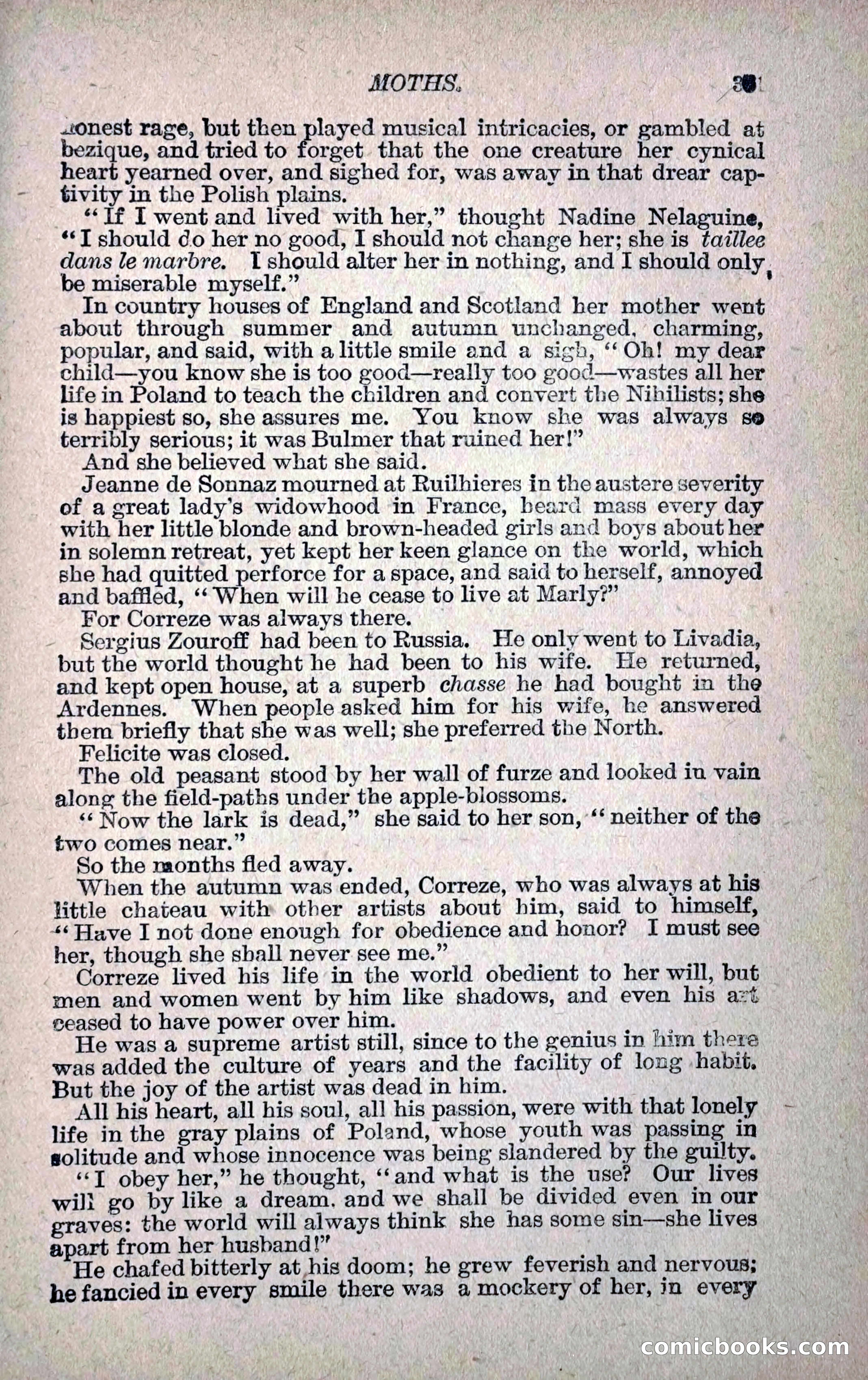
A restored page from Penny Dreadfuls, 1900. Page through the whole issue in the reader above.
📄 Transcribed text from this page (OCR, searchable)
Machine-transcribed from the original scan — historical spelling and the odd misread are preserved.
tonest rage, but then ? ay musical intricacies, or gambled at bezique, and tried to forget. that the one creature her cynical heart yearned over, and sighed for, was away in that drear cap- tivity in the Polish plains. “if I went and lived with her,” thought Nadine Nelaguine, ‘*T should do her no good, I should not change her; she is tazllee dans le marbre, should alter her in nothing, and I should only, be miserable myself.” In country houses of England and Scotland her mother went about through summer and autumn unchanged, charming, popular, and said, with alittle smile and a sigh, ‘‘Oh! my dear child—you know she is too good—really too good—wastes all her life in Poland to teach the children and convert the Nihilists; she is happiest so, she assures me. You know she was always se terribly serious; it was Bulmer that ruined her!” And she believed what she said. Jeanne de Sonnaz mourned at Ruilhieres in the austere severity of a great lady’s widowhood in France, beard mass every day with her little blonde and brown-headed girls and boys about her in solemn retreat, yet kept her keen glance on the world, which she had quitted perforce for a space, and said to herself, annoyed and baffled, ‘‘ When will he cease to live at Marly?”’ For Correze was always there. Sergius Zouroff had been to Russia. He only went to Livadia, but the world thought he had been to his wife. He returned, and kept open house, at a superb chasse he had bought in the Ardennes. When people asked him for his wife, he answered them briefly that she was well; she preferred the North. Felicite was closed. The old peasant stood by her wall of furze and looked iu vain along the field-paths under the apple-blossoms. ‘¢ Now the lark is dead,” she said to her son, ‘‘ neither of the two comes near.” | So the months fled away. When the autumn was ended, Correze, who was always at his. little chateau with other artists about him, said to himself, +‘ Have I not done enough for obedience and honor? J must see her, though she shall never see me.” Correze lived his life in the world obedient to her will, but men and women went by him like shadows, and even his azt geased to have power over him. va He was a supreme artist still, since to the genius in him there was added the culture of years and the facility of long habit, But the joy of the artist was dead in him. All his heart, all his soul, all his passion, were with that lonely life in the gray plains of Poland, whose youth was passing In aolitude and whose innocence was being slandered by the guilty. “T obey her,” he thought, ‘“‘and what is the use? Our lives wili go by like a dream. and we shall be divided even in our aves: the world will always think she has some sin—she lives apart from her husband!” | He chafed bitterly at his doom; he grew feverish and nervous; he fancied in every smile there was a mockery of her, in every GComicboo <S (E(0)