
Penny Dreadfuls, 1900 · page 342 of 398
Moths by Ouida — page 342: what you’re looking at
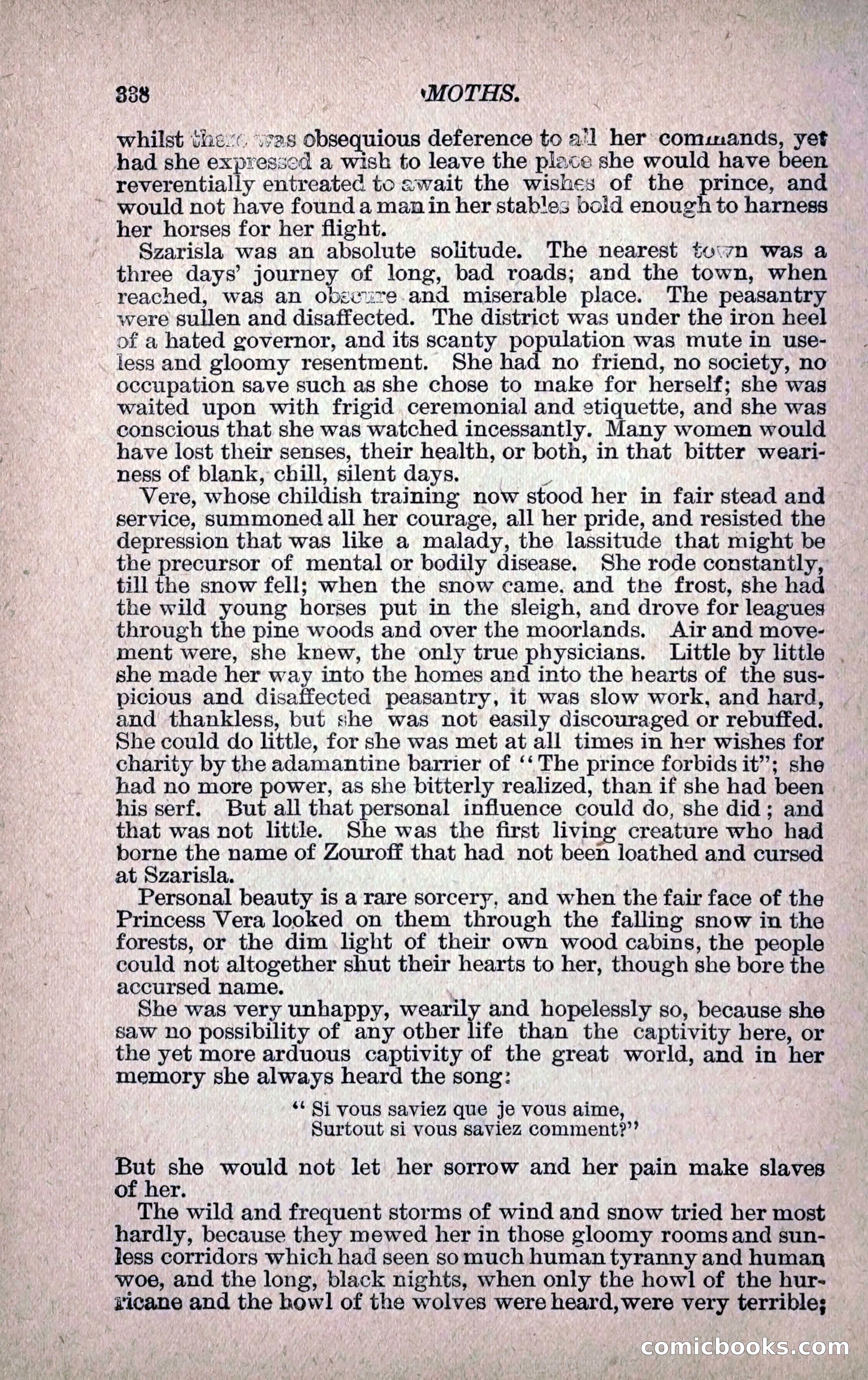
A restored page from Penny Dreadfuls, 1900. Page through the whole issue in the reader above.
📄 Transcribed text from this page (OCR, searchable)
Machine-transcribed from the original scan — historical spelling and the odd misread are preserved.
338 WOTHS. whilst the. ‘vas obsequious deference to 2'l her commands, yet had she expressed a wish to leave the place she would have been reverentially entreated to await the wishes of the prince, and * would not have founda manin her stab!es bold enough to harness her horses for her flight. Szarisla was an absolute solitude. The nearest tu\vn was a three days’ journey of long, bad roads; and the town, when reached, was an obsecure.and miserable place. The peasantry were sullen and disaffected. The district was under the iron heel of a hated governor, and its scanty population was mute in use- less and gloomy resentment. She had no friend, no society, no occupation save such as she chose to make for herself; she was waited upon with frigid ceremonial and etiquette, and she was conscious that she was watched incessantly. Many women would have lost their senses, their health, or both, in that bitter weari- ness of blank, chill, silent days. — Vere, whose childish training now stood her in fair stead and — service, summoned all her courage, all her pride, and resisted the depression that was like a malady, the lassitude that might be the precursor of mental or bodily disease. She rode constantly, till the snow fell; when the snow came. and the frost, she had the wild young horses put in the sleigh, and drove for leagues through the pine woods and over the moorlands. Air and move- ment were, she knew, the only true physicians. Little by little | she made her way into the homes and into the hearts of the sus- picious and disaffected peasantry, it was slow work, and hard, and thankless, but she was not easily discouraged or rebuffed. She could do little, for she was met at all times in her wishes for charity by the adamantine barrier of ‘‘ The prince forbids it”’; she iad no more power, as she bitterly realized, than if she had been his serf. But all that personal influence could do, she did; and that was not little. She was the first living creature who had borne the name of Zourofi that had not been loathed and cursed at Szarisla. Personal beauty is a rare sorcery, and when the fair face of the Princess Vera looked on them through the falling snow in the forests, or the dim light of their own wood cabins, the people could not altogether shut their hearts to her, though she bore the accursed name. : She was very unhappy, iene and hopelessly so, because she saw no possibility of any other life than the captivity here, or the yet more arduous captivity of the great world, and in her memory she always heard the song: ‘* Si vous saviez que je vous aime, Surtout si vous saviez comment?”’ foe she would not let her sorrow and her pain make slaves of her. The wild and frequent storms of wind and snow tried her most hardly, because they mewed her in those gloomy rooms and sun- less corridors which had seen so much human tyranny and human woe, and the long, black nights, when only the howl of the hur- vicane and the howl of the wolves were heard, were very terrible; cComicbooks:co