
Penny Dreadfuls, 1900 · page 270 of 398
Moths by Ouida — page 270: what you’re looking at
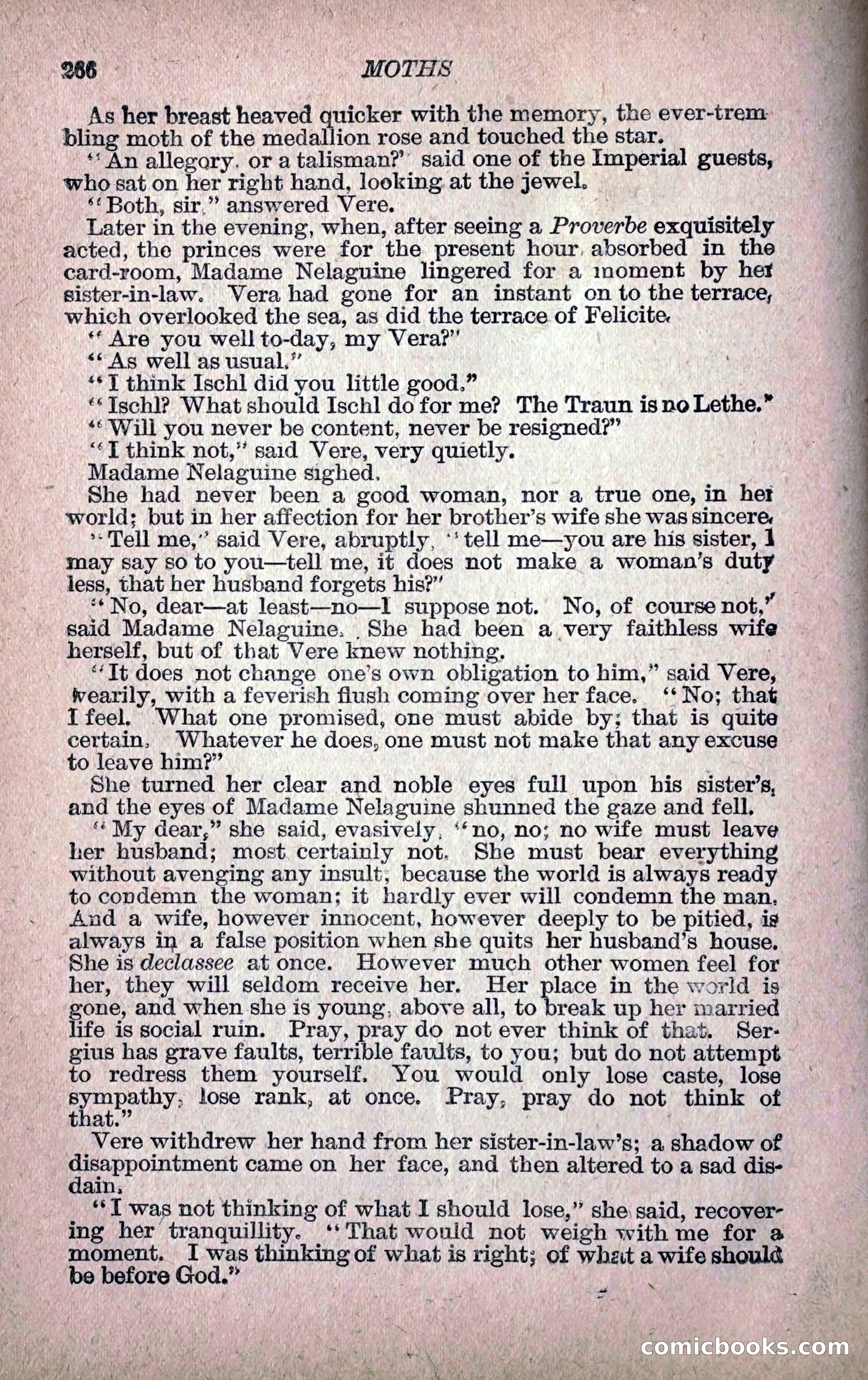
A restored page from Penny Dreadfuls, 1900. Page through the whole issue in the reader above.
📄 Transcribed text from this page (OCR, searchable)
Machine-transcribed from the original scan — historical spelling and the odd misread are preserved.
ABE Tee MOTHS As her breast heaved quicker with the memory, the ever-trem: bling moth of the medallion rose and touched the star. ‘* An allegory. or a talisman?’ said one of the Imperial guests, who sat on her right hand, looking at the jewel. ‘¢ Both, sir.” answered Vere. fs Later in the evening, when, after seeing a Proverbe exquisitely acted, the princes were for the present hour, absorbed in the card-room, Madame Nelaguine lingered for a moment by her sister-in-law. Vera had gone for an instant on to the terrace, which overlooked the sea, as did the terrace of Felicite. *f Are you well to-day, my Vera?”’ *“As well as usual,” ** J think Ischl did you little good.” : *¢«Ischl? What should Ischl do for me? The Traun is no Lethe.” ‘© Will you never be content, never be resigned?” “‘T think not,” said Vere, very quietly. Madame Nelaguine sighed. She had never been a good woman, nor a true one, in het world; but in her affection for her brother’s wife she was sincere. Tell me,’’ said Vere, abruptly, ‘‘ tell me—you are his sister, 1 may say so to you—tell me, it does not make a woman’s duty less, that her husband forgets his?’’ ‘¢No, dear—at least—no—I suppose not. No, of course not,” — said Madame Nelaguine. She had been avery faithless wife herself, but of that Vere knew nothing. : “It does not change one’s own obligation to him,” said Vere, wearily, with a feverish flush coming over her face. ‘‘ No; that 1 feel. What one promised, one must abide by; that is quite certain. Whatever he does, one must not make that any excuse to leave him?” | She turned her clear and noble eyes full upon his sister’s, and the eyes of Madame Nelaguine shunned the gaze and fell, “ My dear,” she said, evasively, ‘‘no, no; no wife must leave her husband; most certainly not. She must bear everything without avenging any insult; because the world is always ready to condemn the woman; it hardly ever will condemn the man. And a wife, however innocent, however deeply to be pitied, is always in a false position when she quits her husband’s house. She is declassee at once. However much other women feel for her, they will seldom receive her. Her place in the world is gone, and when she is young, above all, to break up her married — life is social ruin. Pray, pray do not ever think of that. Ser- — gius has grave faults, terrible faults, to you; but do not attempt to redress them yourself. You would only lose caste, lose hee lose rank, at once. Pray, pray do not think of that.’ : __ Vere withdrew her hand from her sister-in-law’s; a shadow of Ona anette came on her face, and then altered to a sad dis- ain, ‘**1 was not thinking of what I should lose,” she said, recover- ing her tranquillity. ‘*That would not weigh with me for a moment. I was thinking of what is right; of what a wife shoulé be before God.” weit Sail ‘ : 4 : . - - : : \ : ow : : - - : pp ‘ f , \ “s a 7 | ie ~ hy . v A ‘4 $y 4) ‘ "+ , wes t . , é 7 ‘ ¥ : - é { ’ : ‘ 4 My? ck A, y\ Fev Ae * ‘ > A aa ye Le mf : ~? a4 col