
Penny Dreadfuls, 1900 · page 127 of 398
Moths by Ouida — page 127: what you’re looking at
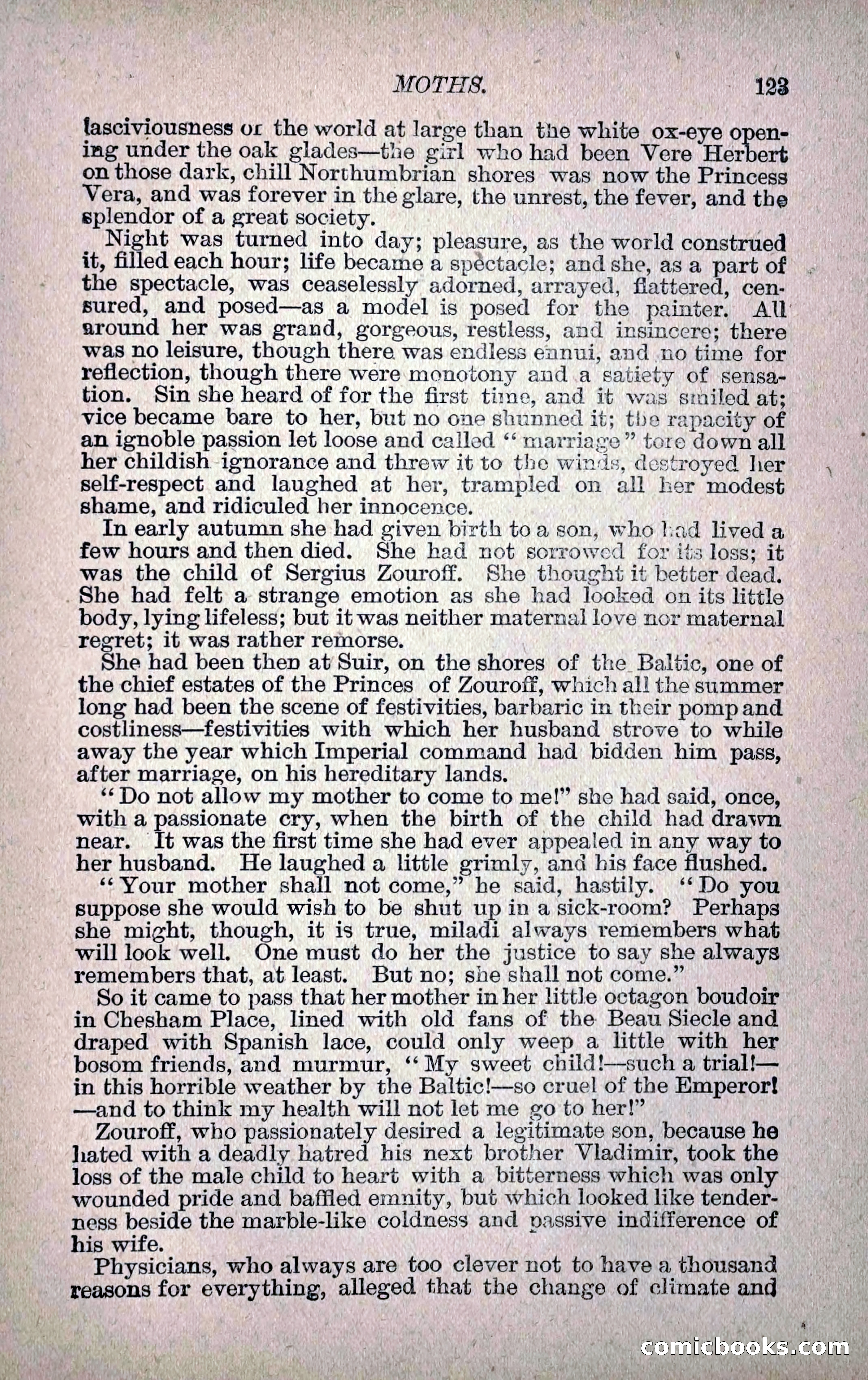
A restored page from Penny Dreadfuls, 1900. Page through the whole issue in the reader above.
📄 Transcribed text from this page (OCR, searchable)
Machine-transcribed from the original scan — historical spelling and the odd misread are preserved.
MOTHS, "128 lasciviousness or the world at large than the white ox-eye open- ing under the oak glades—the girl who had been Vere Herbert on those dark, chill Northumbrian shores was now the Princess Vera, and was forever in the glare, the unrest, the fever, and the splendor of a great society. _ Night was turned into day; pleasure, as the world construed it, filled each hour; life became a spéctacle; and she, as a part of the spectacle, was ceaselessly adorned, arrayed, flattered, cen- sured, and posed—as a model is posed for the painter. Al around her was grand, gorgeous, restless, and insincere; there was no leisure, though there was endless ennui, and .no time for reflection, though there were monotony and. a satiety of sensa- tion. Sin she heard of for the first time, and it was smiled at; vice became bare to her, but no one shunned it; the rapacity of an ignoble passion let loose and called ‘‘ marriage” tore down all her childish ignorance and threw it to the winds, destroyed her self-respect and laughed at her, trampled on all her modest shame, and ridiculed her innocence. In early autumn she had given birth toa son, who had liveda few hours and then died. She had not sorrowed for its loss: it was the child of Sergius Zouroff. She thought it better dead. She had felt a strange emotion as she had looked on its little body, lying lifeless; but it was neither maternal love nor maternal regret; it was rather remorse. She had been then at Suir, on the shores of the Baltic, one of the chief estates of the Princes of Zouroff, which all the summer long had been the scene of festivities, barbaric in their pomp and costliness—festivities with which her husband strove to while away the year which Imperial command had bidden him pass, after marriage, on his hereditary lands. **Do not allow my mother to come to me!” she had said, once, with a passionate cry, when the birth of the child had drawn near. It was the first time she had ever appealed in any way to her husband. He laughed a little grimly, and his face flushed. ‘¢Your mother shall not come,” he said, hastily. ‘*‘ Do you suppose she would wish to be shut up in asick-room? Perhaps she might, though, it is true, miladi always remembers what will look well. One must do her the justice to say she always remembers that, at least. But no; she shall not come.” So it came to pass that her mother in her little octagon boudoir in Chesham Place, lined with old fans of the Beau Siecle and draped with Spanish lace, could only weep a little with her bosom friends, and murmur, ‘‘ My sweet child!—such a trial!— in this horrible weather by the Baltic!—so cruel of the Emperor! —and to think my health will not let me go to her!” Zouroff, who passionately desired a legitimate son, because he hated with a deadly hatred his next brother Vladimir, took the loss of the male child to heart with a bitterness which was only wounded pride and baffled emnity, but which looked like tender- ness beside the marble-like coldness and passive indifference of his wife. Physicians, who always are too clever not to have a thousand reasons for everything, alleged that the change of climate and co “ comicbooks.