
Penny Dreadfuls, 1901 · page 167 of 400
I Forbid the Banns! — page 167: what you’re looking at
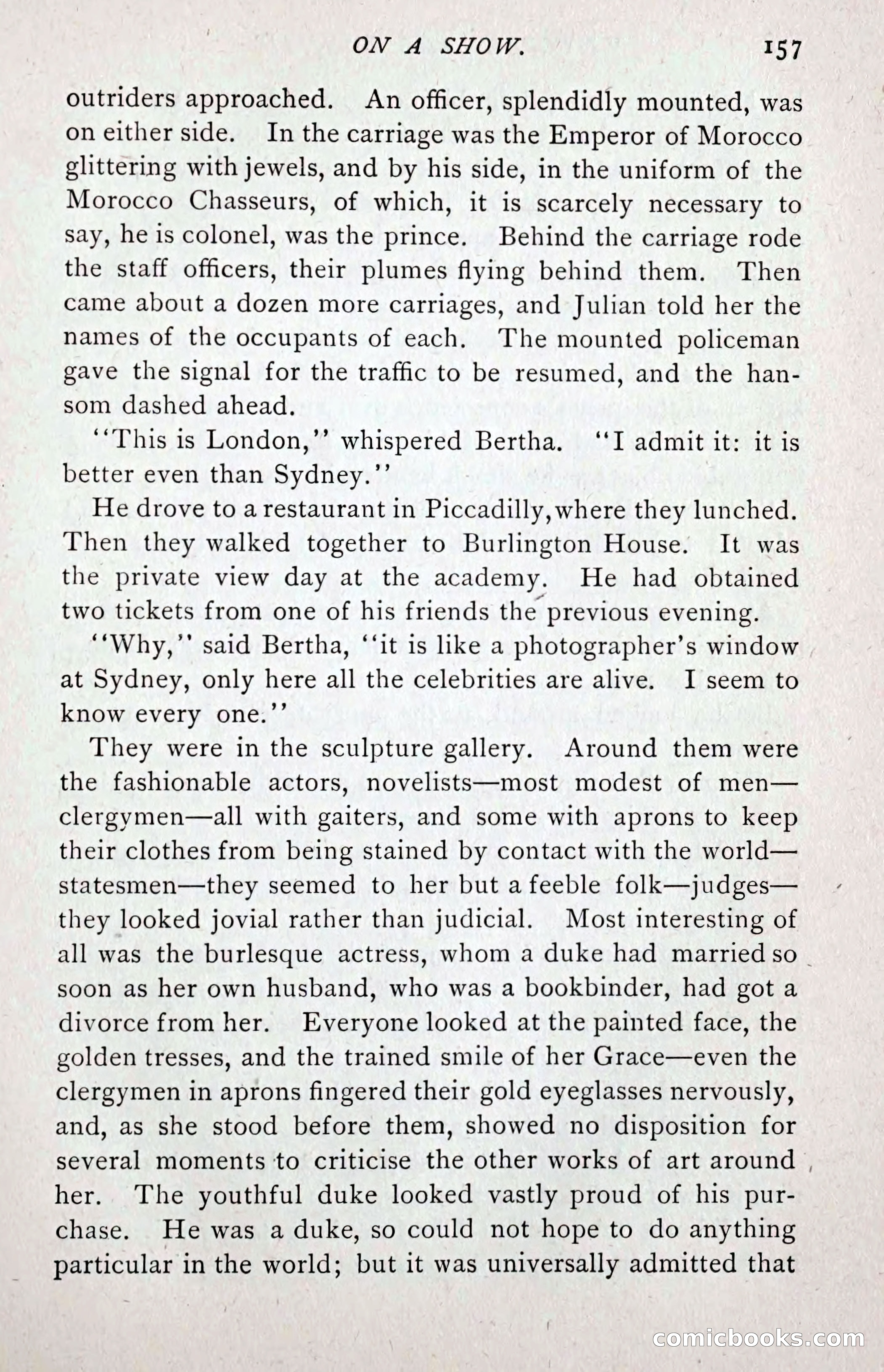
A restored page from Penny Dreadfuls, 1901. Page through the whole issue in the reader above.
📄 Transcribed text from this page (OCR, searchable)
Machine-transcribed from the original scan — historical spelling and the odd misread are preserved.
ON A SHOW. 157 outriders approached. An officer, splendidly mounted, was oneither side. In the carriage was the Emperor of Morocco glittering with jewels, and by his side, in the uniform of the Morocco Chasseurs, of which, it is scarcely necessary to say, he is colonel, was the prince. Behind the carriage rode the staff officers, their plumes flying behind them. Then came about a dozen more carriages, and Julian told her the names of the occupants of each. The mounted policeman gave the signal for the traffic to be resumed, and the han- som dashed ahead. ‘“This 1s London,’’ whispered Bertha. ‘‘I admit it: it is better even than Sydney.’’ He drove to arestaurant in Piccadilly, where they lunched. Then they walked together to Burlington House. It was the private view day at the academy. He had obtained two tickets from one of his friends the previous evening. ‘‘Why,’’ said Bertha, ‘‘it is ike a photographer’s window at Sydney, only here all the celebrities are alive. I seem to know every one.’’ They were in the sculpture gallery. Around them were the fashionable actors, novelists—most modest of men— clergymen—all with gaiters, and some with aprons to keep their clothes from being stained by contact with the world— statesmen—they seemed to her but a feeble folk—judges— they looked jovial rather than judicial. Most interesting of all was the burlesque actress, whom a duke had married so - soon as her own husband, who was a bookbinder, had got a divorce from her. Everyone looked at the painted face, the golden tresses, and the trained smile of her Grace—even the clergymen in aprons fingered their gold eyeglasses nervously, and, as she stood before them, showed no disposition for several moments to criticise the other works of art around her. The youthful duke looked vastly proud of his pur- chase. He was a duke, so could not hope to do anything particular in the world; but it was universally admitted that — (CORMNIELIOOKS (E(0)