
Penny Dreadfuls, 1899 · page 64 of 359
Her Faithful Knight — page 64: what you’re looking at
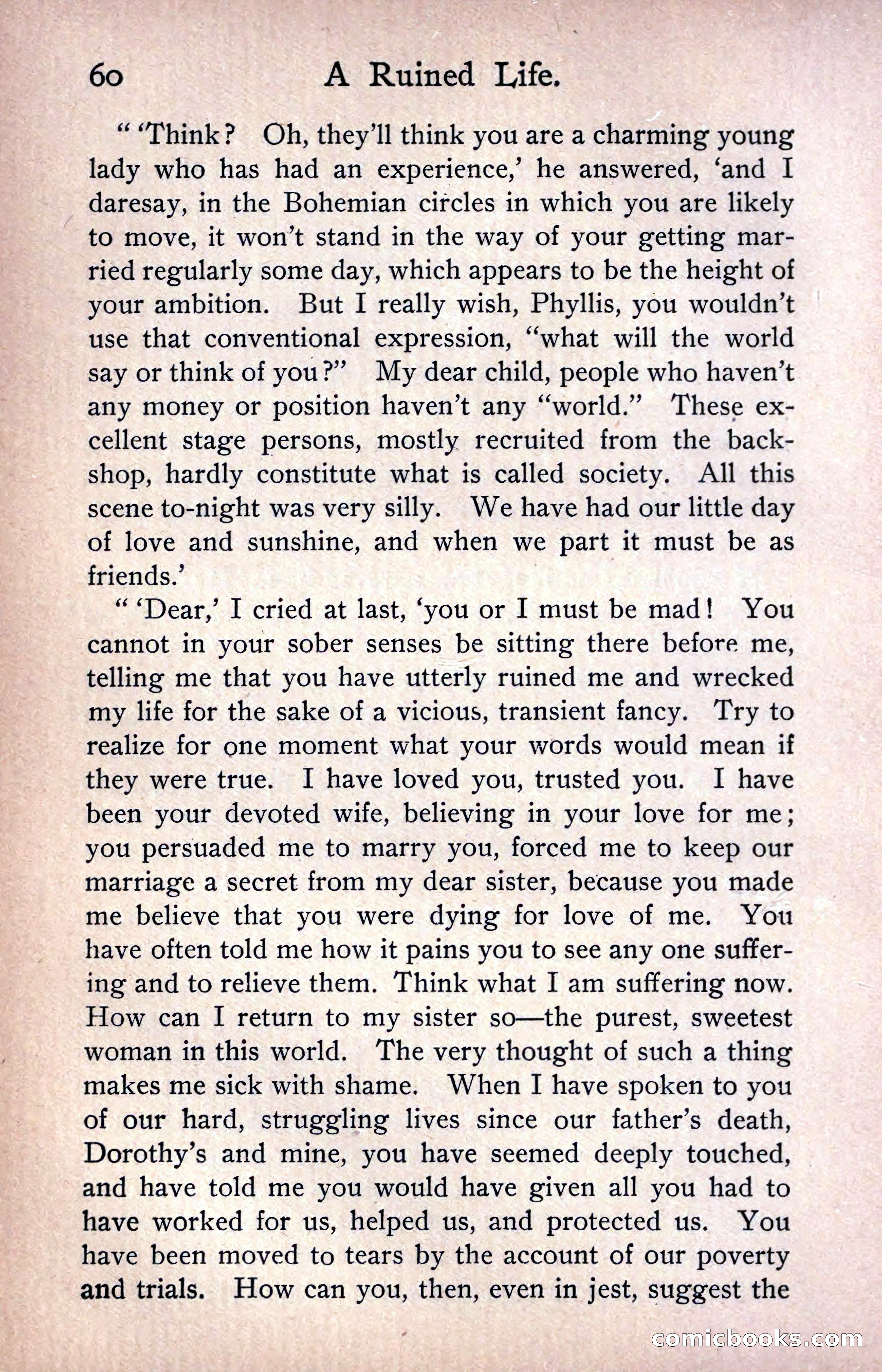
A restored page from Penny Dreadfuls, 1899. Page through the whole issue in the reader above.
📄 Transcribed text from this page (OCR, searchable)
Machine-transcribed from the original scan — historical spelling and the odd misread are preserved.
60 A Ruined Life. “*Think? Oh, they’ll think you are a charming young lady who has had an experience,’ he answered, ‘and I daresay, in the Bohemian circles in which you are likely to move, it won’t stand in the way of your getting mar- ried regularly some day, which appears to be the height of your ambition. But I really wish, Phyllis, you wouldn’t use that conventional expression, “what will the world say or think of you?” My dear child, people who haven’t any money or position haven’t any “world.” These ex- cellent stage persons, mostly recruited from the back- shop, hardly constitute what is called society. All this scene to-night was very silly. We have had our little day of love and sunshine, and when we part it must be as friends.’ | ““Dear,’ I cried at last, ‘you or I must be mad! You cannot in your sober senses be sitting there before me, telling me that you have utterly ruined me and wrecked my life for the sake of a vicious, transient fancy. Try to realize for one moment what your words would mean if they were true. I have loved you, trusted you. I have been your devoted wife, believing in your love for me; you persuaded me to marry you, forced me to keep our marriage a secret from my dear sister, because you made me believe that you were dying for love of me. You have often told me how it pains you to see any one suffer- ing and to relieve them. Think what I am suffering now. How can I return to my sister so—the purest, sweetest woman in this world. The very thought of such a thing makes me sick with shame. When I have spoken to you of our hard, struggling lives since our father’s death, Dorothy’s and mine, you have seemed deeply touched, and have told me you would have given all you had to have worked for us, helped us, and protected us. You have been moved to tears by the account of our poverty and trials. How can you, then, even in jest, suggest the CORnieoooks (E@)