
Penny Dreadfuls, 1898 · page 60 of 214
Hawaii — page 60: what you’re looking at
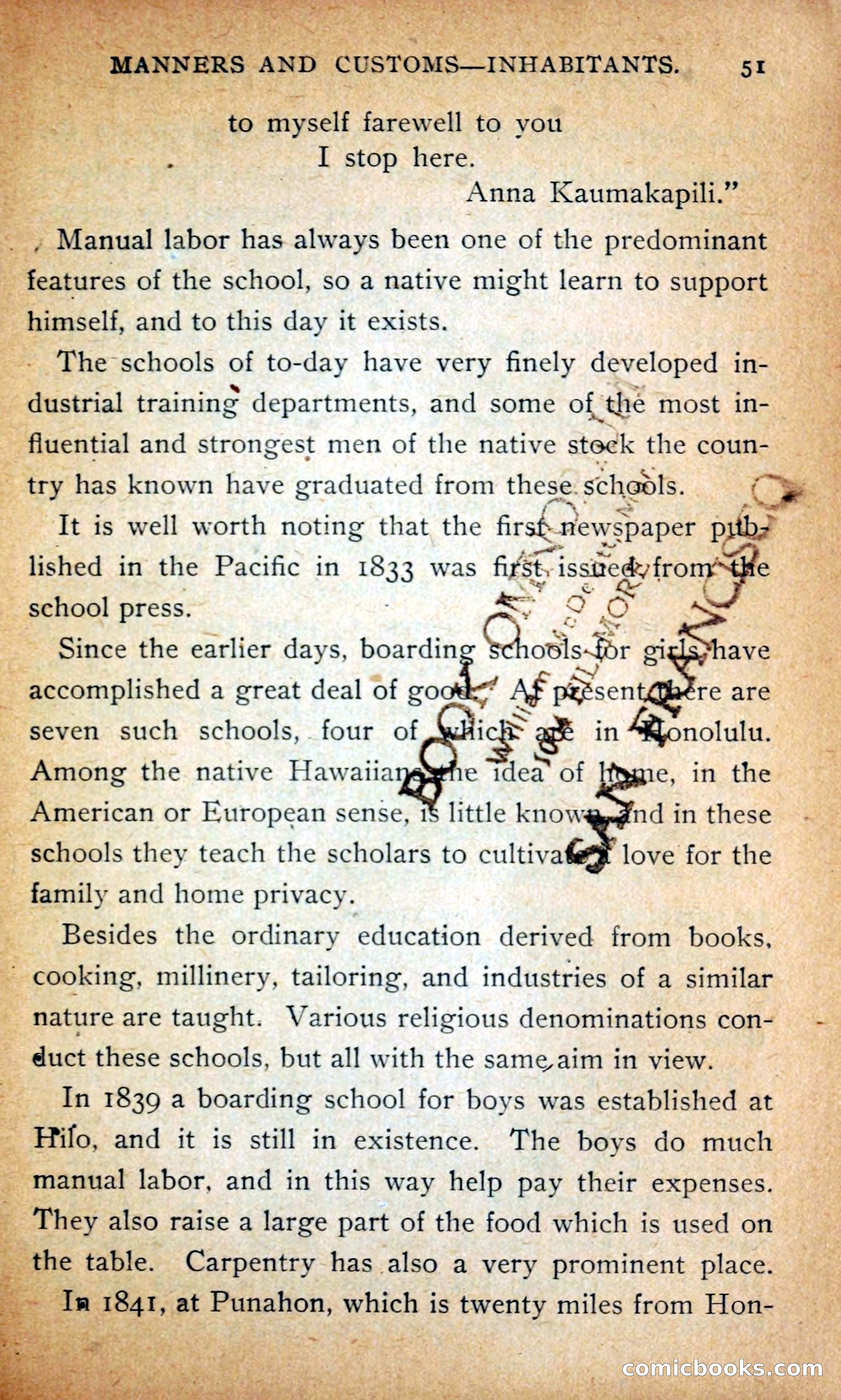
A restored page from Penny Dreadfuls, 1898. Page through the whole issue in the reader above.
📄 Transcribed text from this page (OCR, searchable)
Machine-transcribed from the original scan — historical spelling and the odd misread are preserved.
(2 ie Rae EY uy ‘MANNERS AND CUSTOMS—INHABITANTS. 51 to myself farewell to you ; I stop here. Anna Kaumakapili.” , Manual labor has always been one of the predominant features of the school, so a native might learn to support — himself, and to this day it exists. The schools of to-day have very finely developed in- dustrial training departments, and some of the most in- filuential and strongest men of the native stock the coun- try has known have graduated from these. schools. ie It is well worth noting that the firshuse newspaper pith? lished in the Pacific in 1833 was first, fists frome school press. 3 a 2 O a Since the earlier days, boardin Gchoriscfar g s*have accomplished a great deal of cook Af péesen re are seven such schools, four of ice gE in nolulu. Among the native Hawaiia e idea’ of 1e, in the American or European sense, 18 little knowégeafnd in these schools they teach the scholars to cultiva love for the family and home privacy. Besides the ordinary education derived from books, _ cooking, millinery, tailoring, and industries of a similar nature are taught. Various religious denominations con- duct these schools, but all with the same aim in view. In 1839 a boarding school for boys was established at Hilo, and it is still in existence. The boys do much manual labor, and in this way help pay their expenses. They also raise a large part of the food which is used on _ the table. Carpentry has also a very prominent place. a Im 1841, at Punahon, which is twenty miles from Hon- ~ Eomicbooks.com