
Penny Dreadfuls, 1900 · page 64 of 254
The Evil Genius: A Domestic Story — page 64: what you’re looking at
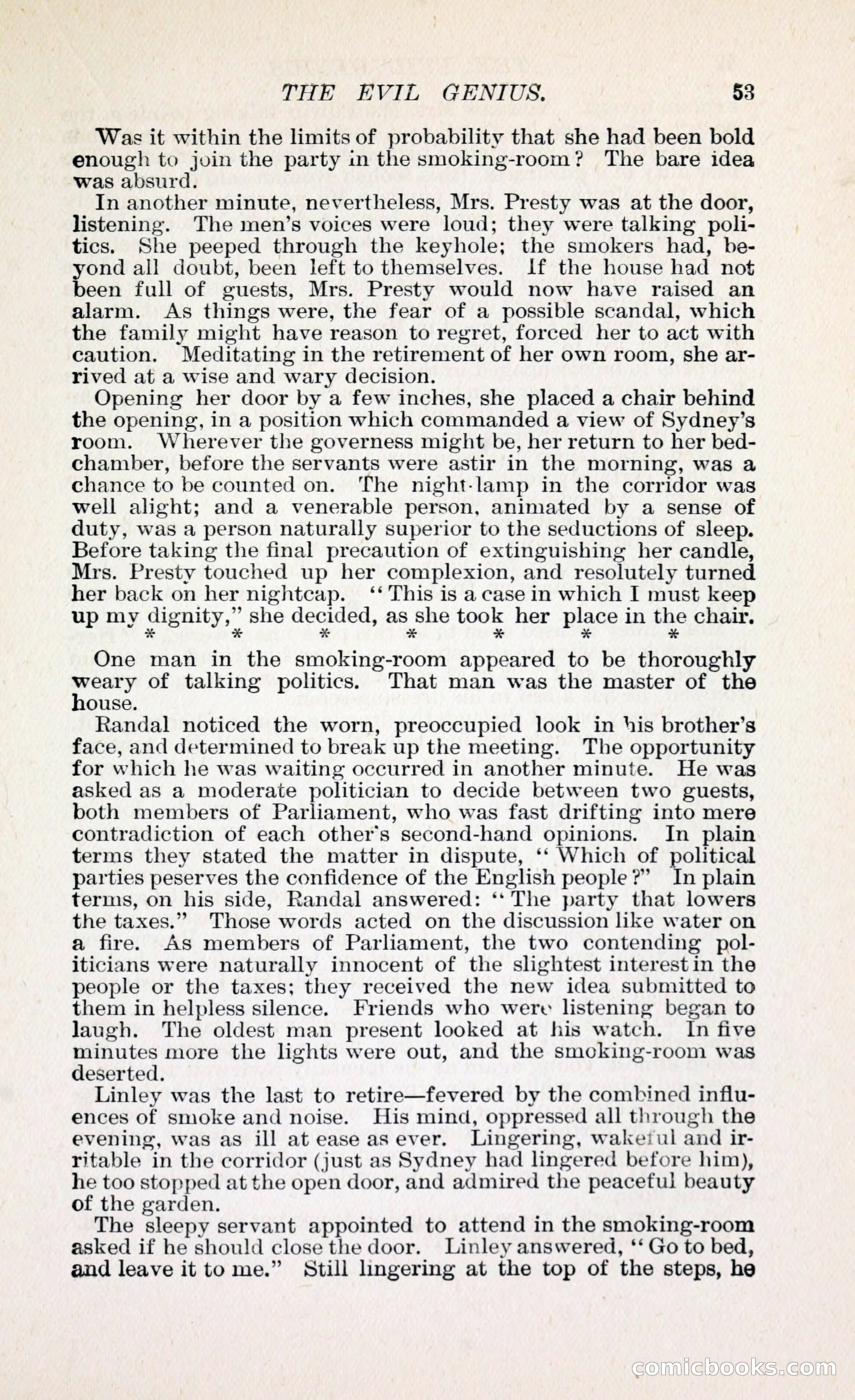
A restored page from Penny Dreadfuls, 1900. Page through the whole issue in the reader above.
📄 Transcribed text from this page (OCR, searchable)
Machine-transcribed from the original scan — historical spelling and the odd misread are preserved.
THE EVIL GENIUS. 33 Was it within the limits of probability that she had been bold enough to join the party in the smoking-room? The bare idea was absurd. In another minute, nevertheless, Mrs. Presty was at the door, listening. The men’s voices were loud; they were talking poli- tics. She peeped through the keyhole; the smokers had, be- yond all doubt, been left to themselves. If the house had not been full of guests, Mrs. Presty would now have raised an alarm. As things were, the fear of a possible scandal, which the family might have reason to regret, forced her to act with caution. Meditating in the retirement of her own room, she ar- rived at a wise and wary decision. Opening her door by a few inches, she placed a chair behind the opening, in a position which commanded a view of Sydney’s room. Wherever the governess might be, her return to her bed- chamber, before the servants were astir in the morning, was a chance to be counted on. The night-lamp in the corridor was well alight; and a venerable person, animated by a sense of duty, was a person naturally superior to the seductions of sleep. Before taking the final precaution of extinguishing her candle, Mrs. Presty touched up her complexion, and resolutely turned her back on her nightcap. ‘‘ This is a casein which I must keep up my dignity,” she decided, as she took her place in the chair, % % * * % One man in the smoking-room appeared to be thoroughly ata of talking politics. That man was the master of the ouse. Randal noticed the worn, preoccupied look in his brother’s face, and determined to break up the meeting. The opportunity for which he was waiting occurred in another minute. He was asked as a moderate politician to decide between two guests, both members of Parliament, who was fast drifting into mere contradiction of each other's second-hand opinions. In plain terms they stated the matter in dispute, ‘‘ Which of political parties peserves the confidence of the English people?” In plain terms, on his side, Randal answered: ‘‘ The party that lowers the taxes.” Those words acted on the discussion like water on a fire. As members of Parliament, the two contending pol- iticians were naturally innocent of the slightest interest in the people or the taxes; they received the new idea submitted to them in helpless silence. Friends who were listening began to laugh. The oldest man present looked at his watch. In five minutes more the lights were out, and the smoking-room was deserted. Linley was the last to retire—fevered by the combined influ- ences of smoke and noise. His mind, oppressed all through the evening, was as ill at ease as ever. Lingering, waketul and ir- ritable in the corridor (just as Sydney had lingered before him), he too stopped at the open door, and admired the peaceful beauty of the garden. The sleepy servant appointed to attend in the smoking-room asked if he should close the door. Linley answered, ‘‘ Go to bed, and leave it to me.” Still lingering at the top of the steps, he CORMICLO@ S (CO) im