
Penny Dreadfuls, 1900 · page 167 of 254
The Evil Genius: A Domestic Story — page 167: what you’re looking at
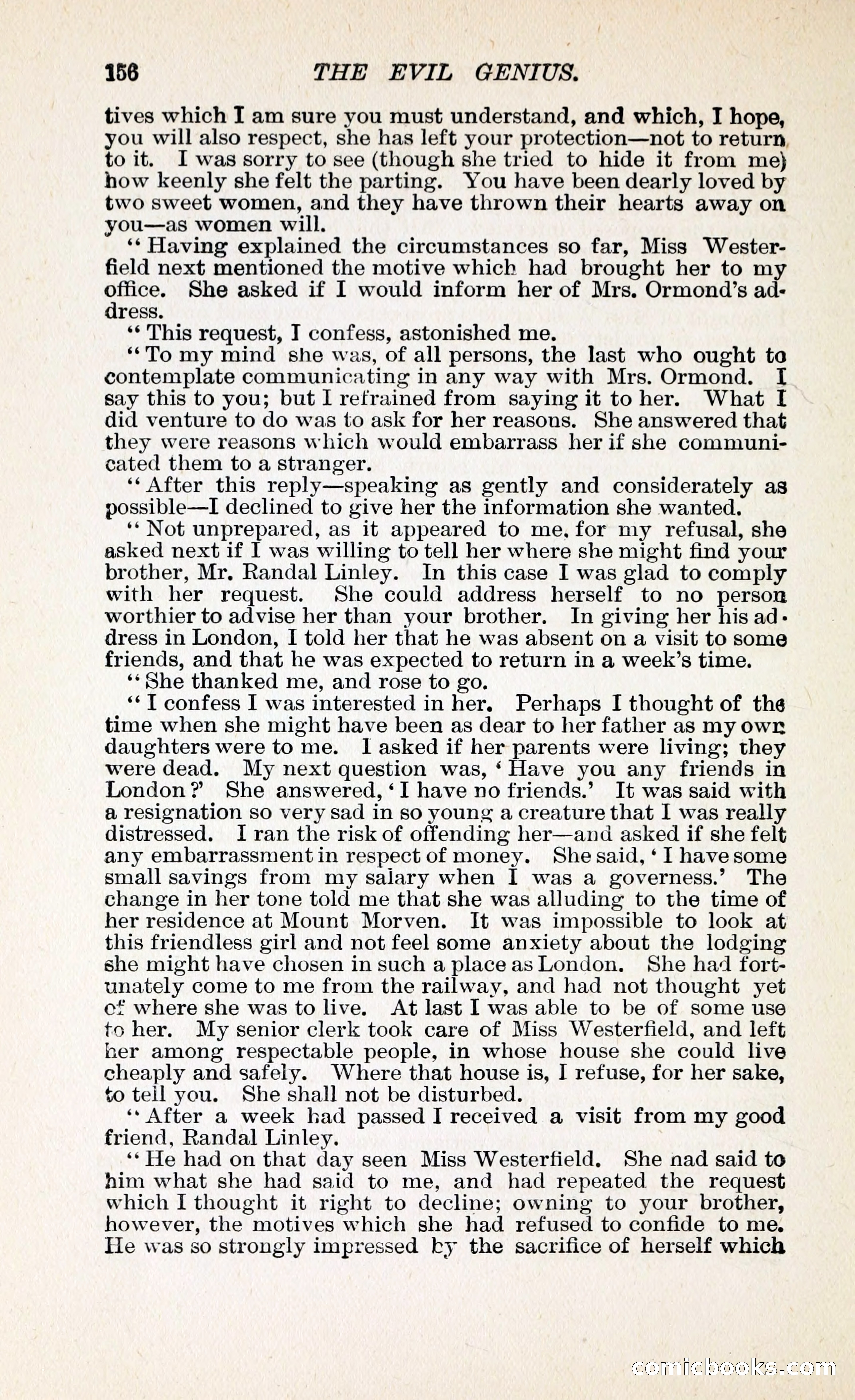
A restored page from Penny Dreadfuls, 1900. Page through the whole issue in the reader above.
📄 Transcribed text from this page (OCR, searchable)
Machine-transcribed from the original scan — historical spelling and the odd misread are preserved.
156 THE EVIL GENIUS. tives which I am sure you must understand, and which, I hope, you will also respect, she has left your protection—not to return, to it. I was sorry to see (though she tried to hide it from me) how keenly she felt the parting. You have been dearly loved by two sweet women, and they have thrown their hearts away on you—as women will. ‘*‘ Having explained the circumstances so far, Miss Wester- field next mentioned the motive which had brought her to my oe She asked if I would inform her of Mrs. Ormond’s ad- ress. ‘* This request, I confess, astonished me. ‘*To my mind she was, of all persons, the last who ought to contemplate communicating in any way with Mrs. Ormond. I say this to you; but I refrained from saying it to her. What I did venture to do was to ask for her reasons. She answered that they were reasons which would embarrass her if she communi- cated them to a stranger. ‘‘ After this reply—speaking as gently and considerately as possible—I declined to give her the information she wanted. ‘* Not unprepared, as it appeared to me, for my refusal, she asked next if I was willing to tell her where she might find your brother, Mr. Randal Linley. In this case I was glad to comply with her request. She could address herself to no person worthier to advise her than your brother. In giving her his ad- dress in London, I told her that he was absent on a visit to some friends, and that he was expected to return in a week’s time. ‘*She thanked me, and rose to go. ‘‘T confess I was interested in her, Perhaps I thought of the time when she might have been as dear to her father as my owr daughters were to me. 1 asked if her parents were living; they were dead. My next question was, ‘ Have you any friends in London? She answered, ‘I have no friends.’ It was said with a resignation so very sad in so young a creature that I was really distressed. Iran the risk of offending her—and asked if she felt any embarrassment in respect of money. Shesaid, ‘I havesome small savings from my salary when I was a governess.’ The change in her tone told me that she was alluding to the time of her residence at Mount Morven. It was impossible to look at this friendless girl and not feel some anxiety about the lodging she might have chosen in such a place as London. She had fort- unately come to me from the railway, and had not thought yet of where she was to live. At last I was able to be of some use to her. My senior clerk took care of Miss Westerfield, and left her among respectable people, in whose house she could live cheaply and safely. Where that house is, I refuse, for her sake, ¢o teil you. She shall not be disturbed. ‘‘ After a week had passed I received a visit from my good friend, Randal Linley. ‘*‘He had on that day seen Miss Westerfield. She nad said to him what she had said to me, and had repeated the request which I thought it right to decline; owning to your brother, however, the motives which she had refused to confide to me. Iie was so strongly impressed ky the sacrifice of herself which ECONNICLOOKS ,eO© m