
Penny Dreadfuls, 1900 · page 138 of 254
The Evil Genius: A Domestic Story — page 138: what you’re looking at
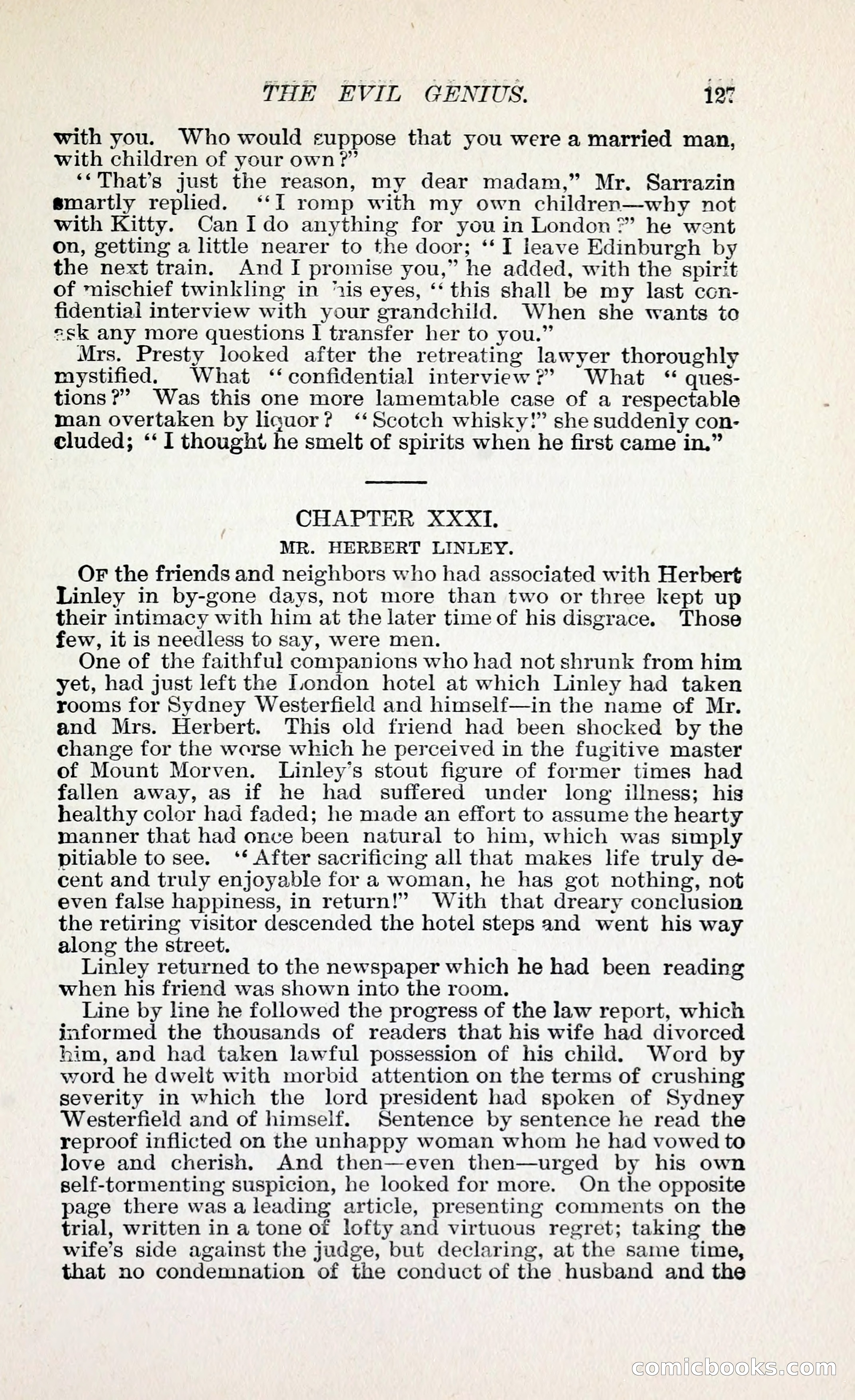
A restored page from Penny Dreadfuls, 1900. Page through the whole issue in the reader above.
📄 Transcribed text from this page (OCR, searchable)
Machine-transcribed from the original scan — historical spelling and the odd misread are preserved.
THE EVIL GENIUS. 127 with you. Who would cuppose that you were a married man, with children of your own ?” ‘<That’s just the reason, my dear madam,” Mr. Sarrazin smartly replied. ‘‘I romp with my own children—why not with Kitty. CanIdo anything for you in London’ he went on, getting a little nearer to the door; ‘‘I leave Edinburgh by the next train. And JI promise you,” he added, with the spirit of mischief twinkling in “tis eyes, ‘‘ this shall be my last con- fidential interview with your grandchild. When she wants to «sk any more questions I transfer her to you.” Mrs. Presty looked after the retreating lawyer thoroughly mystified. What ‘‘confidential interview?’ What “ ques- tions?” Was this one more lamemtable case of a respectable man overtaken by liguor? ‘‘ Scotch whisky!” she suddenly con- cluded; ‘‘ I thought he smelt of spirits when he first came in.” CHAPTER XXXI. MR. HERBERT LINLEY. OF the friends and neighbors who had associated with Herbert Linley in by-gone days, not more than two or three kept up their intimacy with him at the later timeof his disgrace. Those few, it is needless to say, were men. One of the faithful companions who had not shrunk from him yet, had just left the London hotel at which Linley had taken rooms for Sydney Westerfield and himself—in the name of Mr. and Mrs. Herbert. This old friend had been shocked by the change for the worse which he perceived in the fugitive master of Mount Morven. Linley’s stout figure of former times had fallen away, as if he had suffered under long illness; hig healthy color had faded; he made an effort to assume the hearty manner that had once been natural to him, which was simply pitiable to see. ‘* After sacrificing all that makes life truly de- cent and truly enjoyable for a woman, he has got nothing, not even false happiness, in return!” With that dreary conclusion the retiring visitor descended the hotel steps and went his way along the street. Linley returned to the newspaper which he had been reading when his friend was shown into the room. Line by line he followed the progress of the law report, which informed the thousands of readers that his wife had divorced him, and had taken lawful possession of his child. Word by word he dwelt with morbid attention on the terms of crushing severity in which the lord president had spoken of Sydney Westerfield and of himself. Sentence by sentence he read the reproof inflicted on the unhappy woman whom he had vowed to Jove and cherish. And then—even then—urged by his own self-tormenting suspicion, he looked for more. On the opposite page there was a leading article, presenting comments on the trial, written in a tone of lofty and virtuous regret; taking the wife’s side against the judge, but declaring, at the same time, that no condemnation of the conduct of the husband and the COMMICOO© CS (E() im