
Penny Dreadfuls, 1900 · page 296 of 336
The Dugdale Millions — page 296: what you’re looking at
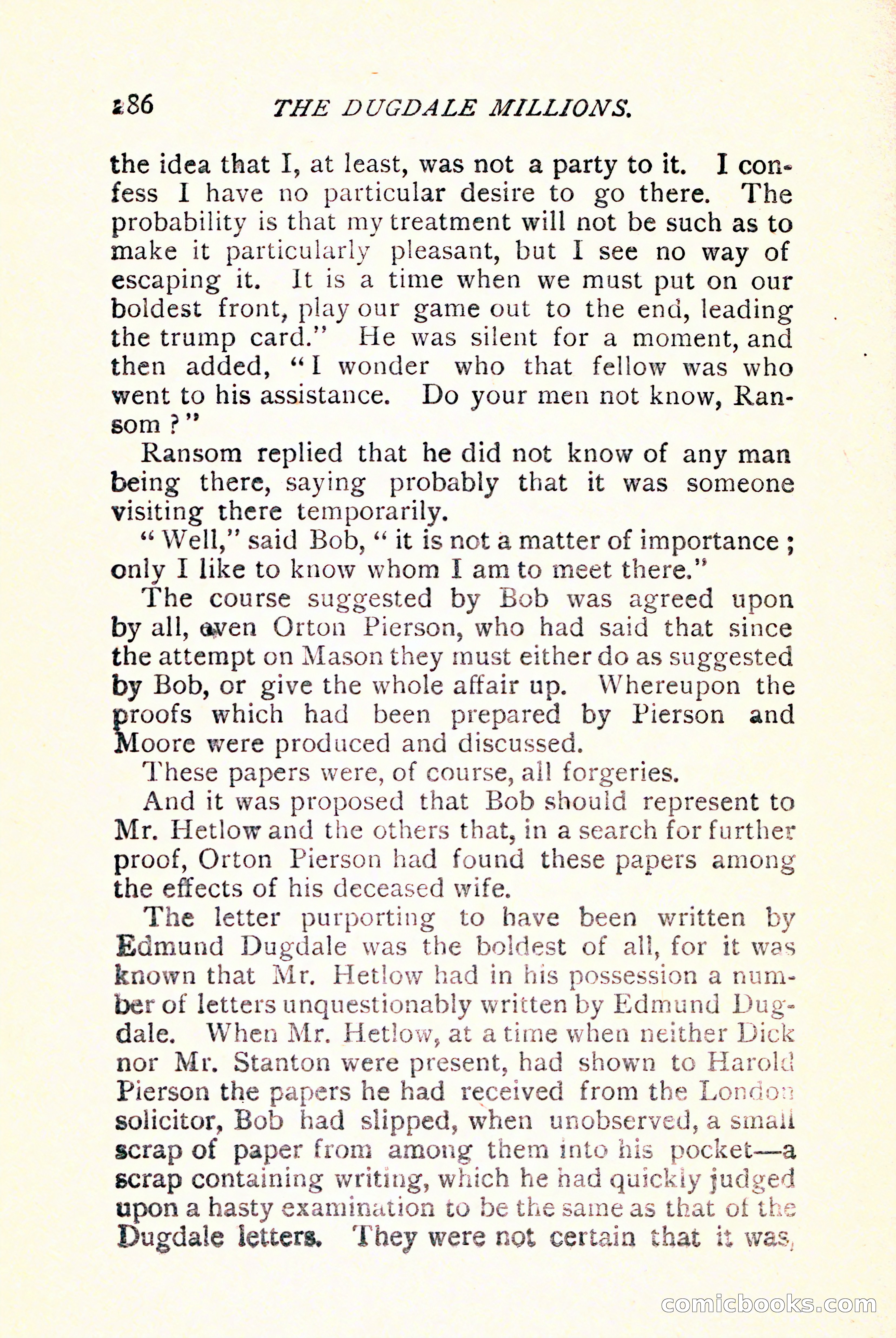
A restored page from Penny Dreadfuls, 1900. Page through the whole issue in the reader above.
📄 Transcribed text from this page (OCR, searchable)
Machine-transcribed from the original scan — historical spelling and the odd misread are preserved.
286 THE DUGDALE MILLIONS. the idea that I, at least, was not a party to it. I con- fess I have no particular desire to go there. The probability is that my treatment will not be such as to make it particularly pleasant, but I see no way of escaping it. It is a time when we must put on our boldest front, play our game out to the end, leading the trump card.”” He was silent for a moment, and then added, “Il wonder who that fellow was who went to his assistance. Do your men not know, Ran- som ?” Ransom replied that he did not know of any man being there, saying probably that it was someone visiting there temporarily. ‘“‘ Well,” said Bob, “ it is not a matter of importance ; only I like to know whom I am to meet there.” The course suggested by Bob was agreed upon by all, aven Orton Pierson, who had said that since the attempt on Mason they must either do as suggested by Bob, or give the whole affair up. Whereupon the roofs which had been prepared by Pierson and om were produced and discussed. ‘These papers were, of course, all forgeries, And it was proposed that Bob should represent to Mr. Hetlow and the others that, in a search for further proof, Orton Pierson had found these papers among the effects of his deceased wife. The letter purporting to have been written by Edmund Dugdale was the boldest of all, for it was known that Mr. Hetlow had in his possession a num- ber of letters unquestionably written by Edmund Dug- dale. When Mr. Hetlow, at atime when neither Dick nor Mr. Stanton were present, had shown to Harold Pierson the papers he had received from the Londo: solicitor, Bob had slipped, when unobserved, a smali scrap of paper from among them into his pocket—a scrap containing writing, which he had quickiy judged upon a hasty examination to be the same as that of the Dugdale letters, ‘They were not certain that it was, CoOmicloo