
Penny Dreadfuls, 1900 · page 14 of 336
The Dugdale Millions — page 14: what you’re looking at
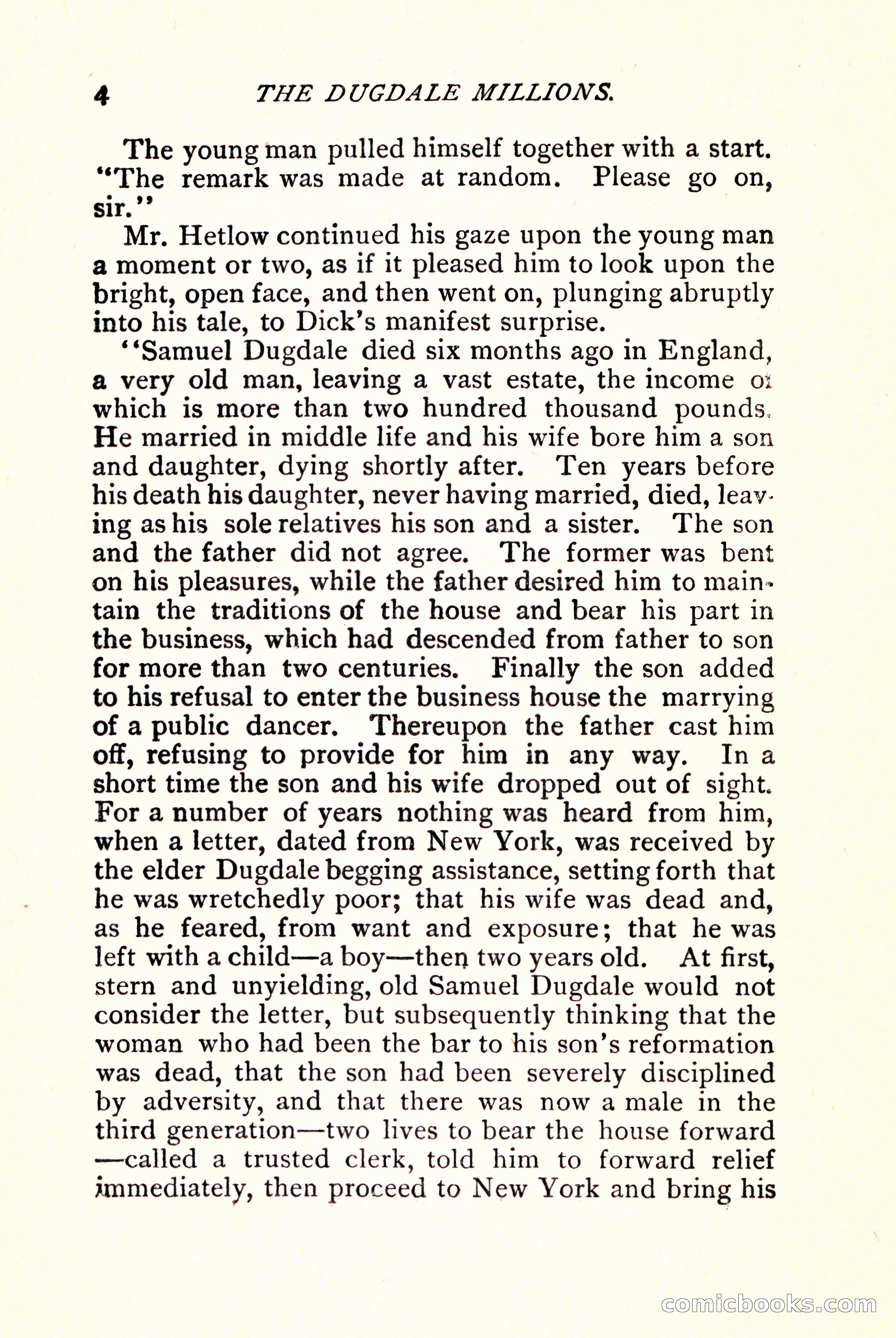
A restored page from Penny Dreadfuls, 1900. Page through the whole issue in the reader above.
📄 Transcribed text from this page (OCR, searchable)
Machine-transcribed from the original scan — historical spelling and the odd misread are preserved.
4 THE DUGDALE MILLIONS. The young man pulled himself together with a start. “The remark was made at random. Please go on, sir.’”” Mr. Hetlow continued his gaze upon the young man a moment or two, as if it pleased him to look upon the bright, open face, and then went on, plunging abruptly into his tale, to Dick’s manifest surprise. ‘*Samuel Dugdale died six months ago in England, a very old man, leaving a vast estate, the income o: which is more than two hundred thousand pounds. He married in middle life and his wife bore him a son and daughter, dying shortly after. ‘Ten years before his death his daughter, never having married, died, leav- ing ashis sole relatives his son and a sister. The son and the father did not agree. The former was bent on his pleasures, while the father desired him to main- tain the traditions of the house and bear his part in the business, which had descended from father to son for more than two centuries. Finally the son added to his refusal to enter the business house the marrying of a public dancer. Thereupon the father cast him off, refusing to provide for him in any way. Ina short time the son and his wife dropped out of sight. For a number of years nothing was heard from him, when a letter, dated from New York, was received by the elder Dugdale begging assistance, setting forth that he was wretchedly poor; that his wife was dead and, as he feared, from want and exposure; that he was left with a child—a boy—then two years old. At first, stern and unyielding, old Samuel Dugdale would not consider the letter, but subsequently thinking that the woman who had been the bar to his son’s reformation was dead, that the son had been severely disciplined by adversity, and that there was now a male in the third generation—two lives to bear the house forward —called a trusted clerk, told him to forward relief mmmediately, then proceed to New York and bring his CoMmicloee <S C@ 3}