
Penny Dreadfuls, 1895 · page 325 of 394
Belle Rose: A Romance of the Cloak and Sword — page 325: what you’re looking at
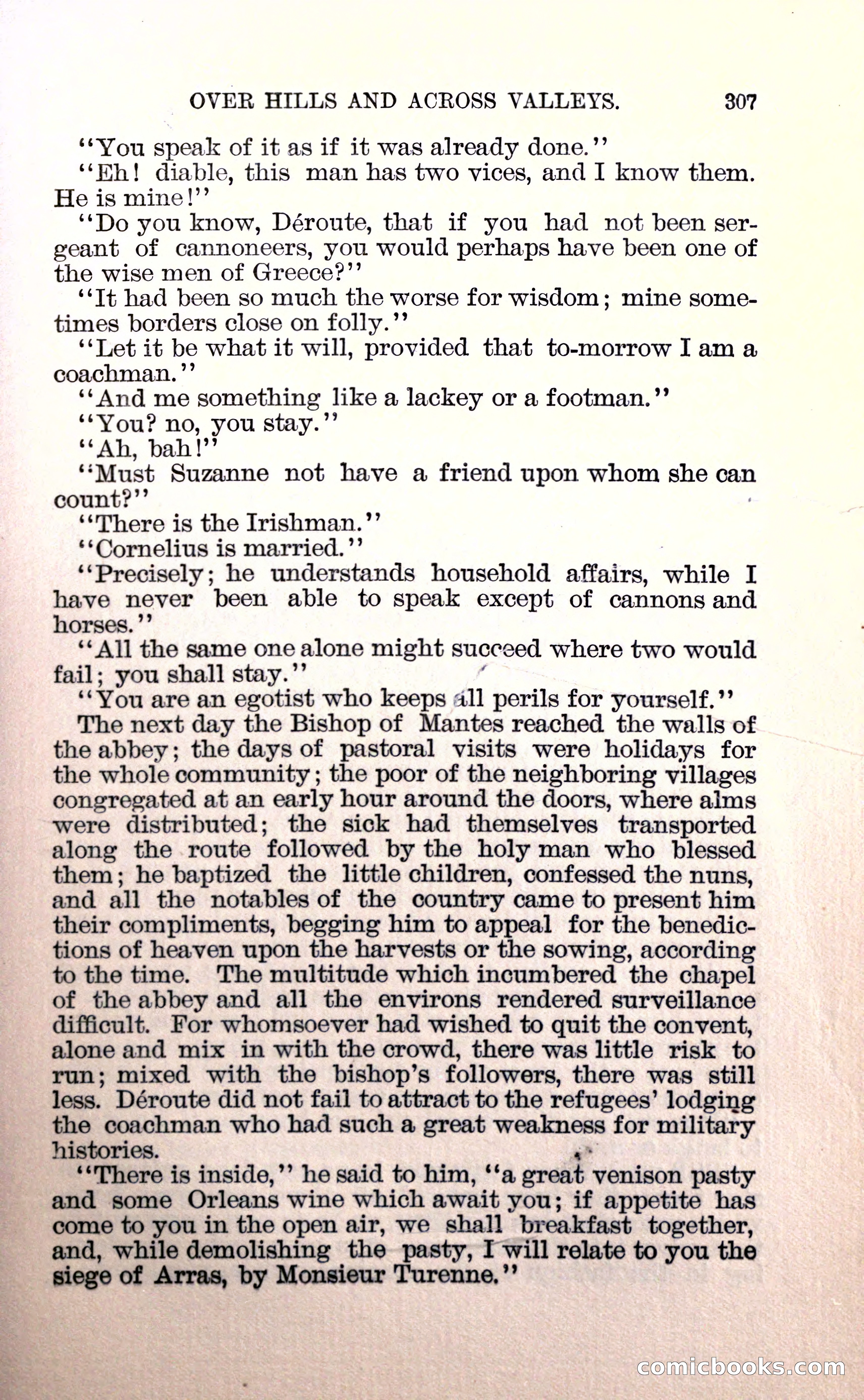
A restored page from Penny Dreadfuls, 1895. Page through the whole issue in the reader above.
📄 Transcribed text from this page (OCR, searchable)
Machine-transcribed from the original scan — historical spelling and the odd misread are preserved.
OVER HILLS AND ACROSS VALLEYS. 307 “You speak of it as if it was already done.’’ “Wh! diable, this man has two vices, and I know them. He is mine!”’ ‘*Do you know, Déroute, that if you had not been ser- geant of cannoneers, you would perhaps have been one of the wise men of Greece?’’ ‘‘Tt had been so much the worse for wisdom; mine some- times borders close on folly.’’ ‘‘Let it be what it will, provided that to-morrow I am a coachman.”’ ‘¢And me something like a lackey or a footman.”’ ‘*You? no, you stay.’’ "Ah. bah?!”’ “Must Suzanne not have a friend upon whom she can count?”’ ‘There is the Irishman.’ ‘*Cornelius is married.”’ ‘‘Precisely; he understands household affairs, while I have never been able to speak except of cannons and horses.’ ‘* All the same one alone might succeed where two would fail; you shall stay.”’ “You are an egotist who keeps all perils for yourself.’ The next day the Bishop of Mantes reached the walls of the abbey; the days of pastoral visits were holidays for the whole community ; the poor of the neighboring villages congregated at an early hour around the doors, where alms were distributed; the sick had themselves transported along the route ‘followed by the holy man who blessed them; he baptized the little children, confessed the nuns, and all the notables of the country came to present him their compliments, begging him to appeal for the benedic- tions of heaven upon the harvests or the sowing, according to the time. The multitude which incumbered the chapel of the abbey and all the environs rendered surveillance difficult. For whomsoever had wished to quit the convent, alone and mix in with the crowd, there was little risk to run; mixed with the bishop’s followers, there was still less. Déroute did not fail to attract to the refugees’ lodging the coachman who had such a great babeoraiac for military histories. ‘There is inside,’’ he said to him, ‘‘a grit venison pasty and some Orleans wine which await you; if appetite has come to you in the open air, we shall breakfast together, and, while demolishing the pasty, I will relate to you the siege of Arras, by Monsieur Turenne,”’ (el @) miGcooo 3