
Penny Dreadfuls, 1841 · page 36 of 248
Angelina: Or, The Mystery of St. Mark's Abbey — page 36: what you’re looking at
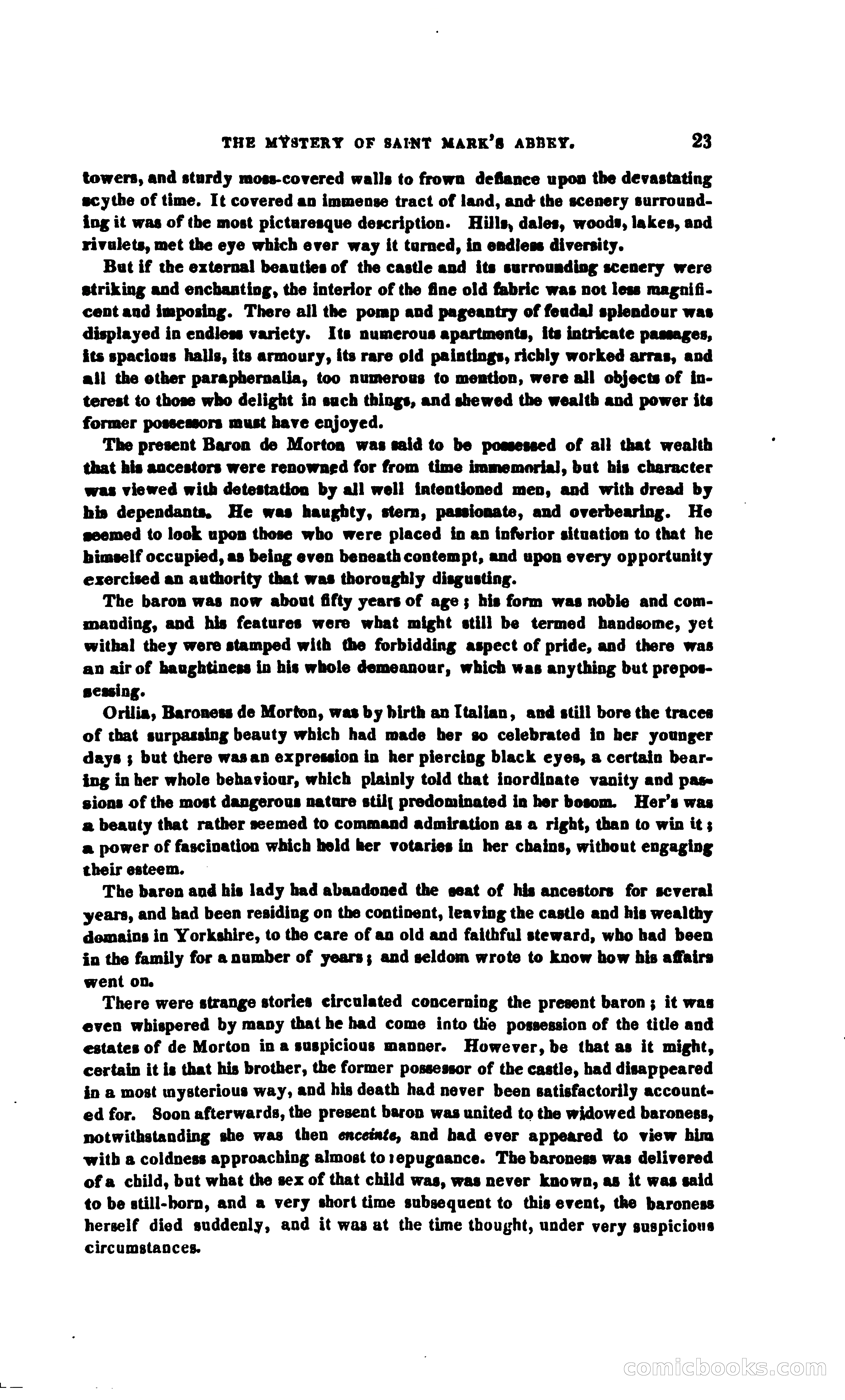
A restored page from Penny Dreadfuls, 1841. Page through the whole issue in the reader above.
📄 Transcribed text from this page (OCR, searchable)
Machine-transcribed from the original scan — historical spelling and the odd misread are preserved.
THE MYSTERY OF SAINT MARK’S ABBEY. 23 towers, and sturdy moes-covered walls to frown defiance upon the devastating acythe of time. It covered an immense tract of land, and the scenery surround- ing it was of the most picturesque description. Hills, dales, woods, lakes, and rivulets, met the eye which ever way it tarned, in endless diversity. But if the external beauties of the castle and its surrounding scenery were striking and enchanting, the interior of the fine old fabric was not less magnifi- cent and imposing. There all the pomp and pageantry of feudal splendour was displayed in endless variety. Its numerous apartments, its intricate passages, fits spacious halls, its armoury, its rare old paintings, richly worked arras, and ail the other paraphernalia, too numerous to mention, were all objects of in- terest to those who delight in such things, and shewed the wealth and power its former possessors must have enjoyed. The present Baron de Morton was said to be possessed of all that wealth that his ancestors were renowned for from time iramemorial, but his character was viewed with detestation by all well intentioned men, and with dread by his dependants, He was haughty, stern, passionate, and overbearing. He seemed to look upon those who were placed in an infvrior situation to that he himself occupied, as being even beneath contempt, and upon every opportunity exercised an authority that was thoroughly disgusting. The baron was now about fifty years of age; his form was noble and com- manding, and his features were what might still be termed handsome, yet withal they were stamped with the forbidding aspect of pride, and there was an air of haughtiness in his whole demeanour, which was anything but prepos- scasing. Orilia, Baroness de Morton, was by birth an Italian, and still bore the traces of that surpassing beauty which had made her so celebrated in her younger days ; but there wasan expression in her piercing black eyes, a certain bear- ing in her whole behaviour, which plainly told that inordinate vanity and pas sions of the most dangerous nature stilt predominated in her bosom. Her’s was a beauty that rather seemed to command admiration as a right, than to win it ; a power of fascination which held her votaries in her chains, without engaging their esteem. The baren and his lady had abandoned the seat of his ancestors for scveral years, and bad been residing on the continent, leaving the castle and his wealthy domains in Yorkshire, to the care of an old and faithful steward, who had been in the family for a number of years; and seldom wrote to know how his affairs went on. There were strange stories circulated concerning the present baron; it was even whispered by many that he had come into the possession of the title and estates of de Morton in a suspicious manner. However, be that as it might, certain it is that his brother, the former possessor of the castle, had disappeared in a most mysterious way, and his death had never been satisfactorily account- ed for. Soon afterwards, the present baron was united to the widowed baroness, notwithstanding she was then enceinte, and had ever appeared to view him with a coldness approaching almost to:epugaance. The baroness was delivered ofa child, but what the sex of that child was, was never known, as it was said to be still-born, and a very short time subsequent to this event, the baroness herself died suddenly, and it was at the time thought, under very suspicious circumstances. CORNICE DO© Go