
Penny Dreadfuls, 1844 · page 257 of 278
Alfred; or, The Adventures of a French Gentleman — page 257: what you’re looking at
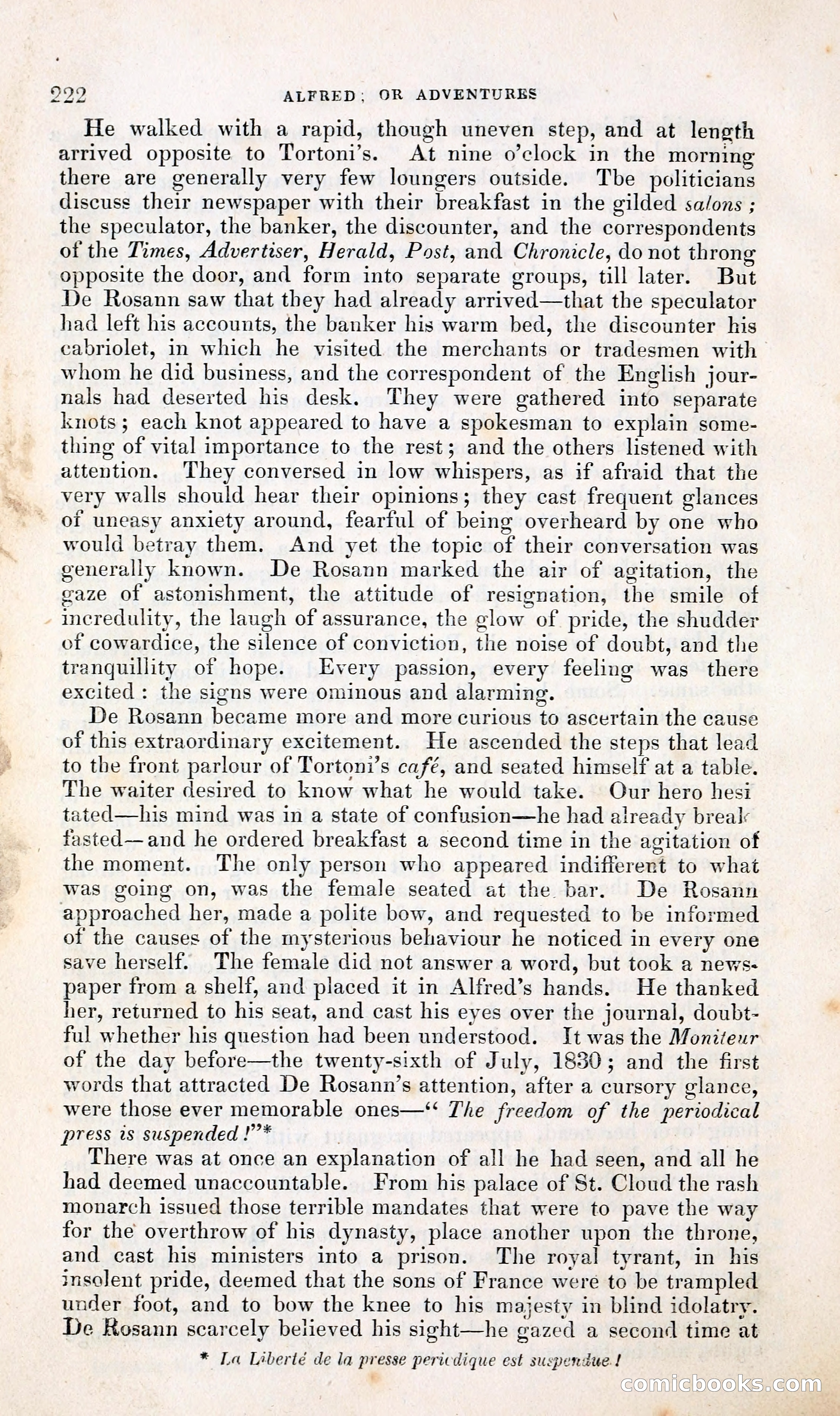
A restored page from Penny Dreadfuls, 1844. Page through the whole issue in the reader above.
📄 Transcribed text from this page (OCR, searchable)
Machine-transcribed from the original scan — historical spelling and the odd misread are preserved.
999 ALFRED: OR ADVENTURES He walked with a rapid, though uneven step, and at length arrived opposite to Tortoni’s. At nine o’clock in the morning there are generally very few loungers outside. Tbe politicians discuss their newspaper with their breakfast in the gilded salons ; the speculator, the banker, the discounter, and the correspondents of the Times, Advertiser, Herald, Post, and Chronicle, do not throng opposite the door, and form into separate groups, till later. But De Rosann saw that they had already arrived—that the speculator had left his accounts, the banker his warm bed, the discounter his cabriolet, in which he visited the merchants or tradesmen with whom he did business, and the correspondent of the English jour- nals had deserted his desk. They were gathered into separate knots; each knot appeared to have a spokesman to explain some- thing of vital importance to the rest; and the others listened with attention. They conversed in low whispers, as if afraid that the very walls should hear their opinions; they cast frequent glances of uneasy anxiety around, fearful of being overheard by one who would betray them. And yet the topic of their conversation was generally known. De Rosann marked the air of agitation, the gaze of astonishment, the attitude of resignation, the smile of incredulity, the laugh of assurance, the glow of pride, the shudder of cowardice, the silence of conviction, the noise of doubt, and the tranquillity of hope. Every passion, every feeling was there excited: the signs were ominous and alarming. De Rosann became more and more curious to ascertain the cause of this extraordinary excitement. He ascended the steps that lead to the front parlour of Tortoni’s café, and seated himself at a table. The waiter desired to know what he would take. Our hero hesi tated—his mind was in a state of confusion—he had already break fasted—and he ordered breakfast a second time in the agitation of the moment. The only person who appeared indifferent to what was going on, was the female seated at the bar. De Rosann approached her, made a polite bow, and requested to be informed of the causes of the mysterious behaviour he noticed in every one save herself. The female did not answer a word, but took a news. paper from a shelf, and placed it in Alfred’s hands. He thanked her, returned to his seat, and cast his eyes over the journal, doubt- ful whether his question had been understood. Jt was the Moniteur of the day before—the twenty-sixth of July, 1830; and the first words that attracted De Rosann’s attention, after a cursory glance, were those ever memorable ones—‘‘ The freedom of the periodical press is suspended !’’* | There was at once an explanation of all he had seen, and all he had deemed unaccountable. From his palace of St. Cloud the rash monarch issued those terrible mandates that were to pave the way for the overthrow of his dynasty, place another upon the throne, and cast his ministers into a prison. The royal tyrant, in his insolent pride, deemed that the sons of France were to be trampled under foot, and to bow the knee to his majesty in blind idolatry. De Rosann scarcely betieved his sight—he gazed a second time at * La Liberte de la presse pericdique est suspenzue.! | COMNCIOOKS(E) .