
Penny Dreadfuls, 1839 · page 94 of 273
Alfred de Rosann by G.W.M. Reynolds — page 94: what you’re looking at
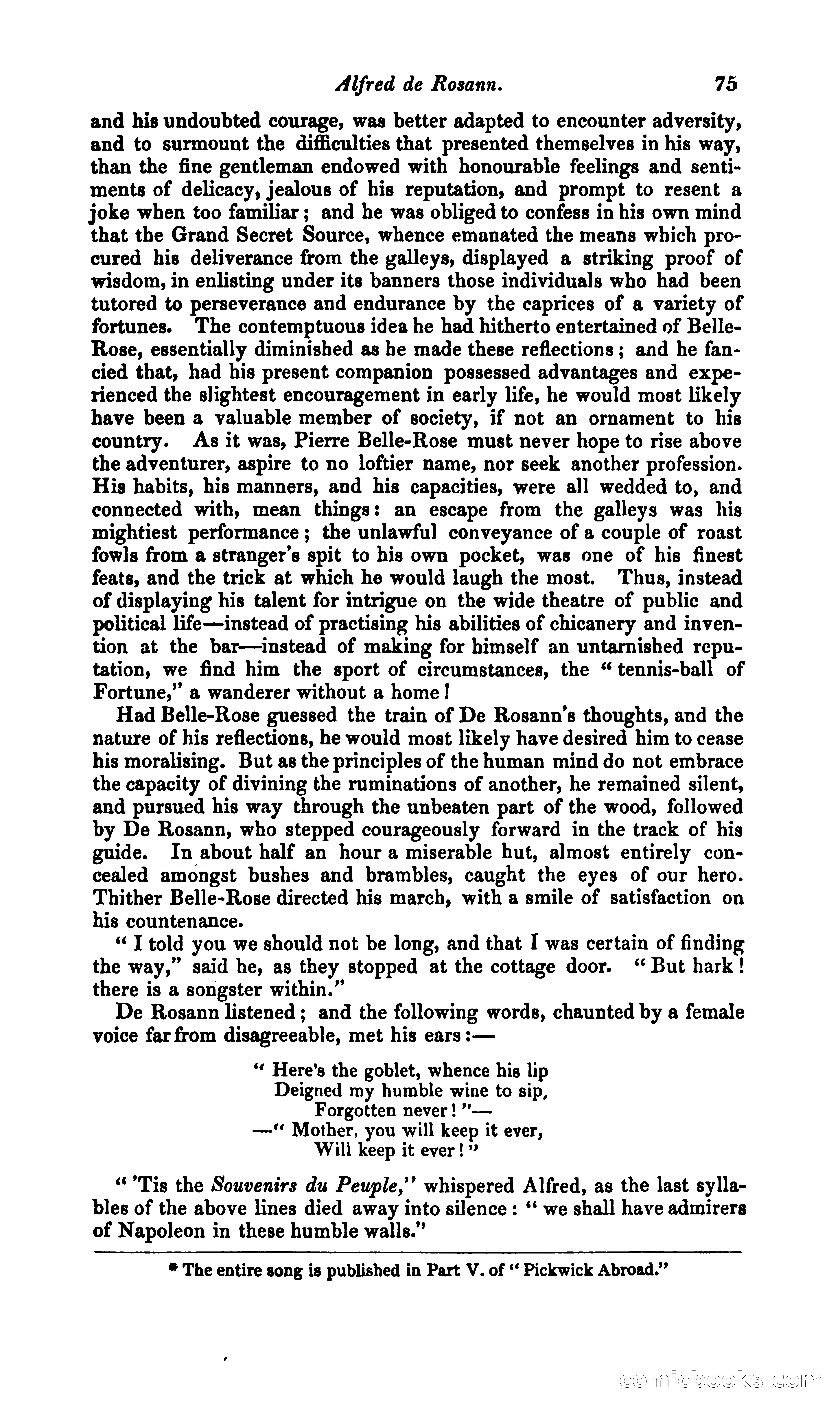
A restored page from Penny Dreadfuls, 1839. Page through the whole issue in the reader above.
📄 Transcribed text from this page (OCR, searchable)
Machine-transcribed from the original scan — historical spelling and the odd misread are preserved.
Alfred de Rosann. 75 and his undoubted courage, was better adapted to encounter adversity, and to surmount the difficulties that presented themselves in his way, than the fine gentleman endowed with honourable feelings and senti- ments of delicacy, jealous of his reputation, and prompt to resent a joke when too familiar; and he was obliged to confess in his own mind that the Grand Secret Source, whence emanated the means which pro- cured his deliverance from the yalleys, displayed a striking proof of wisdom, in enlisting under its banners those individuals who had been tutored to perseverance and endurance by the caprices of a variety of fortunes. The contemptuous idea he had hitherto entertained of Belle- Rose, essentially diminished as he made these reflections; and he fan- cied that, had his present companion possessed advantages and expe- rienced the slightest encouragement in early life, he would most likely have been a valuable member of society, if not an ornament to his country. As it was, Pierre Belle-Rose must never hope to rise above the adventurer, aspire to no loftier name, nor seek another profession. His habits, his manners, and his capacities, were all wedded to, and connected with, mean things: an escape from the galleys was his mightiest performance; the unlawfu) conveyance of a couple of roast fowls from a stranger's spit to his own pocket, was one of his finest feats, and the trick at which he would laugh the most. Thus, instead of displaying his talent for intrigue on the wide theatre of public and political life—instead of practising his abilities of chicanery and inven- tion at the bar—instead of making for himself an untarnished repu- tation, we find him the sport of circumstances, the “ tennis-ball of Fortune,” a wanderer without a home! Had Belle-Rose guessed the train of De Rosann’s thoughts, and the nature of his reflections, he would most likely have desired him to cease his moralising. But as the principles of the human mind do not embrace the capacity of divining the ruminations of another, he remained silent, and pursued his way through the unbeaten part of the wood, followed by De Rosann, who stepped courageously forward in the track of his guide. In about half an hour a miserable hut, almost entirely con- cealed amongst bushes and brambles, caught the eyes of our hero. Thither Belle-Rose directed his march, with a smile of satisfaction on his countenance. ‘I told you we should not be long, and that I was certain of finding the way, said he, as they stopped at the cottage door. ‘“ But hark! there is a songster within.” De Rosann listened; and the following words, chaunted by a female voice far from disagreeable, met his ears :— “* Here's the goblet, whence his lip Deigned my humble wine to sip, Forgotten never ! ”’— —‘* Mother, you will keep it ever, Will keep it ever!” "Tis the Souvenirs du Peuple,’’ whispered Alfred, as the last sylla- bles of the above lines died away into silence: ‘‘ we shall have admirers of Napoleon in these humble walls.” * The entire song is published in Part V. of ‘‘ Pickwick Abroad.” COnicbooolks (GO)