
Penny Dreadfuls, 1839 · page 180 of 201
Alfred de Rosann — page 180: what you’re looking at
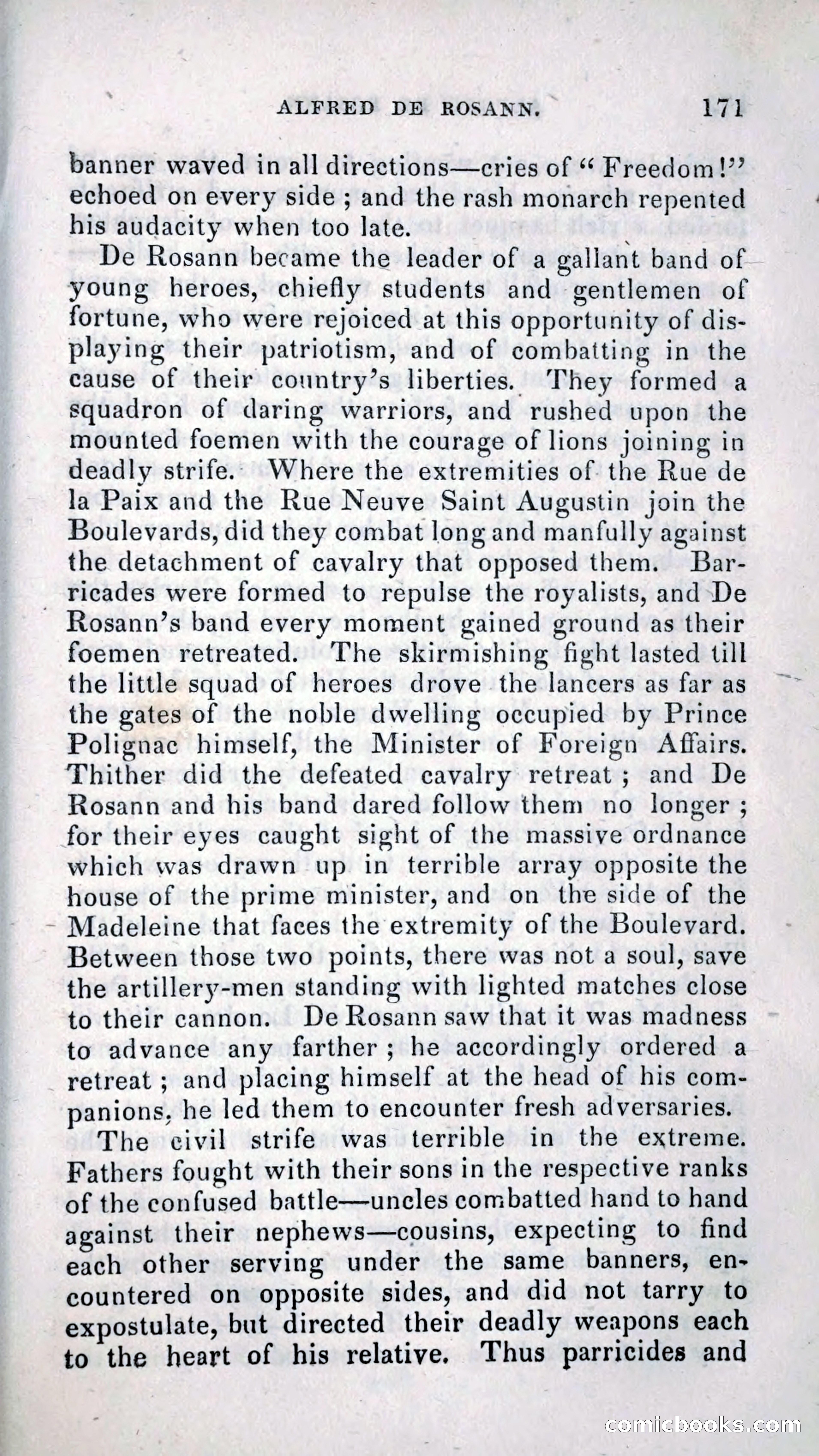
A restored page from Penny Dreadfuls, 1839. Page through the whole issue in the reader above.
📄 Transcribed text from this page (OCR, searchable)
Machine-transcribed from the original scan — historical spelling and the odd misread are preserved.
ALFRED DE ROSANN. 171 banner waved in all directions—cries of “ Freedom!”’ echoed on every side ; and the rash monarch repented his audacity when too late. De Rosann became the leader of a gallant band of young heroes, chiefly students and gentlemen of fortune, who were rejoiced at this opportunity of dis- playing their patriotism, and of combatting in the cause of their country’s liberties. They formed a squadron of daring warriors, and rushed upon the mounted foemen with the courage of lions joining in deadly strife. Where the extremities of the Rue de la Paix and the Rue Neuve Saint Augustin join the Boulevards, did they combat long and manfully against the detachment of cavalry that opposed them. Bar- _ ricades were formed to repulse the royalists, and De Rosann’s band every moment gained ground as their foemen retreated. The skirmishing fight lasted till the little squad of heroes drove the lancers as far as the gates of the noble dwelling occupied by Prince Polignac himself, the Minister of Foreign Affairs. Thither did the defeated cavalry retreat; and De Rosann and his band dared follow them no longer ; for their eyes caught sight of the massive ordnance which was drawn up in terrible array opposite the house of the prime minister, and on the side of the - Madeleine that faces the extremity of the Boulevard. Between those two points, there was not a soul, save the artillery-men standing with lighted matches close to their cannon. De Rosann saw that it was madness to advance any farther; he accordingly ordered a retreat ; and placing himself at the head of his com- panions, he led them to encounter fresh adversaries. The civil strife was terrible in the extreme. Fathers fought with their sons in the respective ranks of the confused battle—uncles combatted hand to hand against their nephews—cousins, expecting to find each other serving under the same banners, en- countered on opposite sides, and did not tarry to expostulate, but directed their deadly weapons each to the heart of his relative. Thus parricides and COPMICLOOOKS (E@)