
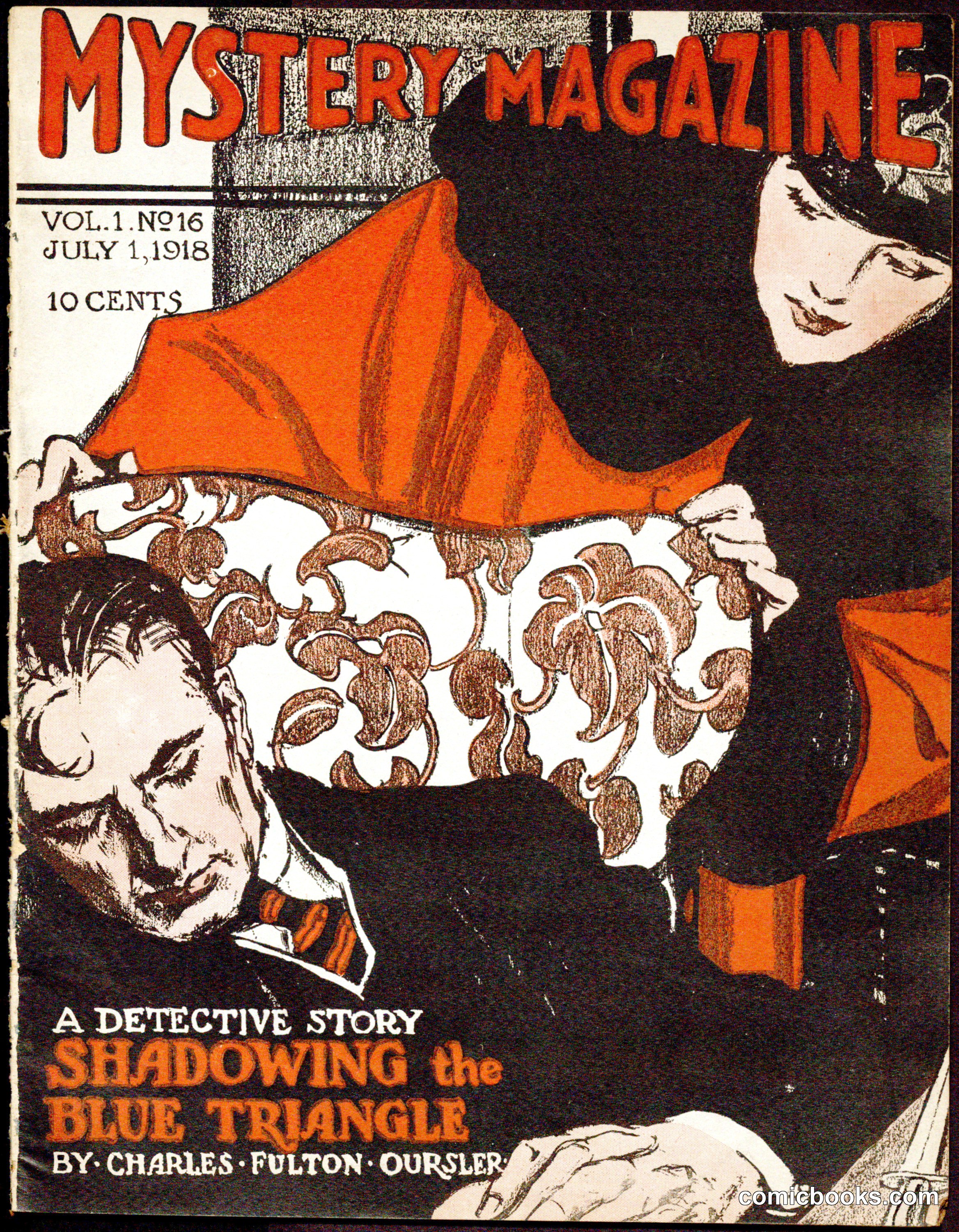
A woman in black peers over an unconscious man's shoulder, revealing a detailed architectural blueprint she conceals beneath her orange wrap. This cover advertises "Shadowing the Blue Triangle," a detective story by Charles Fulton Oursler, priced at ten cents.
Mystery Magazine exemplified the serialized pulp fiction that dominated working-class American reading in the early twentieth century. These weekly publications offered melodramatic tales of crime, espionage, and detection at affordable prices, continuing the tradition of Victorian penny dreadfuls. The genre's visual language—dramatic shadows, criminal conspiracies, veiled threats—reflected urban anxieties and the era's fascination with professional crime and detective work. Comic books would inherit this pulp tradition's narrative structures, sequential imagery, and appeal to popular audiences seeking thrilling escape.
📖 This public-domain issue is being restored page-by-page for our free reader — check back soon.
About this artifact
- Date
- July 1, 1918
- Rights
- Public domain — free to view, share, and reuse.
- Restoration
- Digitally restored and hosted by ComicBooks.com · high-resolution version available.
Part of our mission to preserve and restore the public-domain heritage of the medium.