
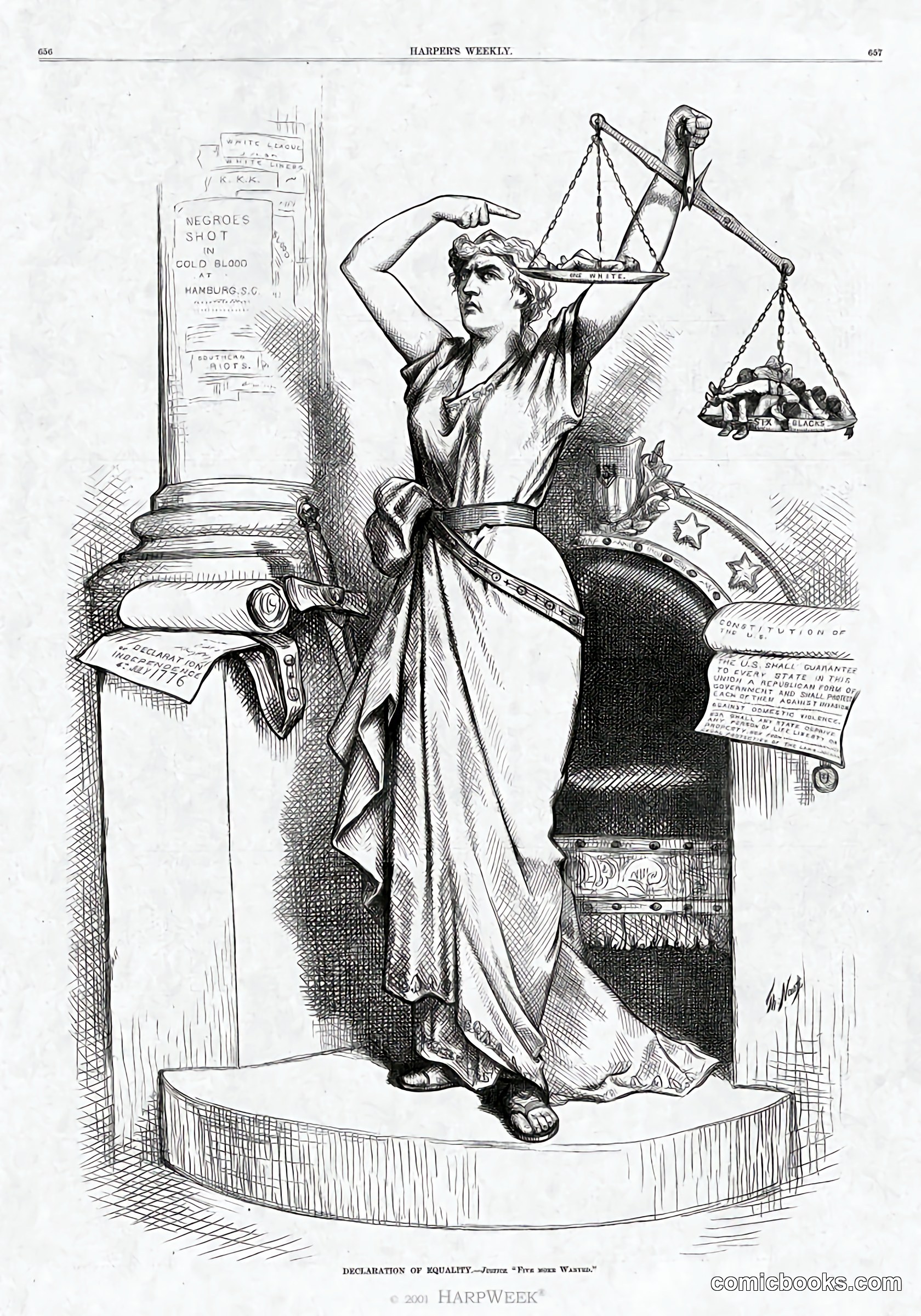
Thomas Nast was the towering figure of American editorial cartooning, and his work for Harper's Weekly in the 1870s shows the art form at the height of its power to shape public life. Nast wielded his pen as a weapon of conscience, using richly drawn, symbol-laden cartoons to campaign on the great issues of his day and to hold the corrupt and the powerful to account. His images did more than illustrate opinion; they crystallized it, giving readers unforgettable visual shorthand for complex political arguments. Nast's genius lay in making ideas visible. He understood that a recurring symbol, a well-aimed caricature, or a single striking scene could lodge in the public mind more durably than any editorial. So influential was his output that he is credited with popularizing enduring American icons and with helping topple entrenched political machines through sheer force of imagery. For the history of comics, Nast is a patriarch: he proved that the cartoon could be serious art and serious journalism at once, a vehicle for persuasion, satire, and moral urgency. The editorial cartoon as Americans know it, and the socially engaged spirit comics can carry, begins in large part with him.
About this artifact
- Creator
- Thomas Nast
- Date
- 1876
- Rights
- Public domain — free to view, share, and reuse.
- Restoration
- Digitally restored and hosted by ComicBooks.com · high-resolution version available.
Part of our mission to preserve and restore the public-domain heritage of the medium.