
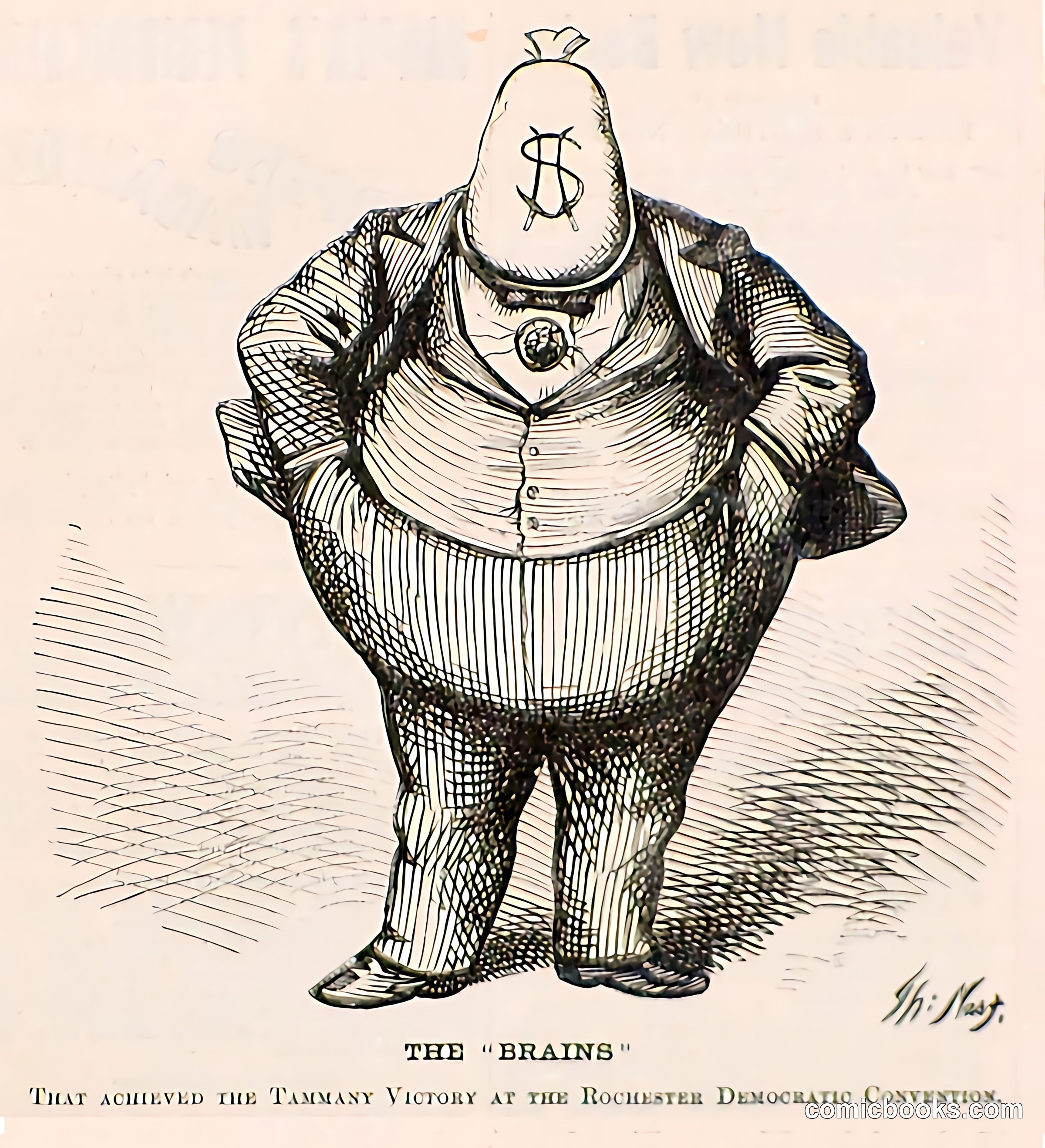
Thomas Nast's assault on William M. "Boss" Tweed and New York's Tammany Hall political machine stands as the most consequential campaign in the history of American cartooning. Published in Harper's Weekly, Nast's images hammered the Tweed Ring for months, casting its bosses as thieves feasting on the public purse. In this famous 1871 cartoon, The Tammany Tiger Loose, Nast depicted the machine as a ferocious tiger mauling a fallen figure of the Republic in a Roman arena, with Tweed enthroned as emperor watching the slaughter. The Tiger became Nast's enduring emblem for Tammany's rapacity. The power of the imagery was not lost on Tweed, who is widely reported to have raged that his constituents could not read the newspapers' words but could not help understanding "them damn pictures." Efforts were made to bribe and silence the artist. The campaign contributed to the Ring's collapse; Tweed was eventually prosecuted, and after fleeing abroad he was reportedly identified in part from a Nast caricature. The episode became the founding legend of the editorial cartoon as a genuine political force—proof that a drawing could help topple a regime.
About this artifact
- Creator
- Thomas Nast
- Date
- 1871
- Rights
- Public domain — free to view, share, and reuse.
- Restoration
- Digitally restored and hosted by ComicBooks.com · high-resolution version available.
Part of our mission to preserve and restore the public-domain heritage of the medium.