
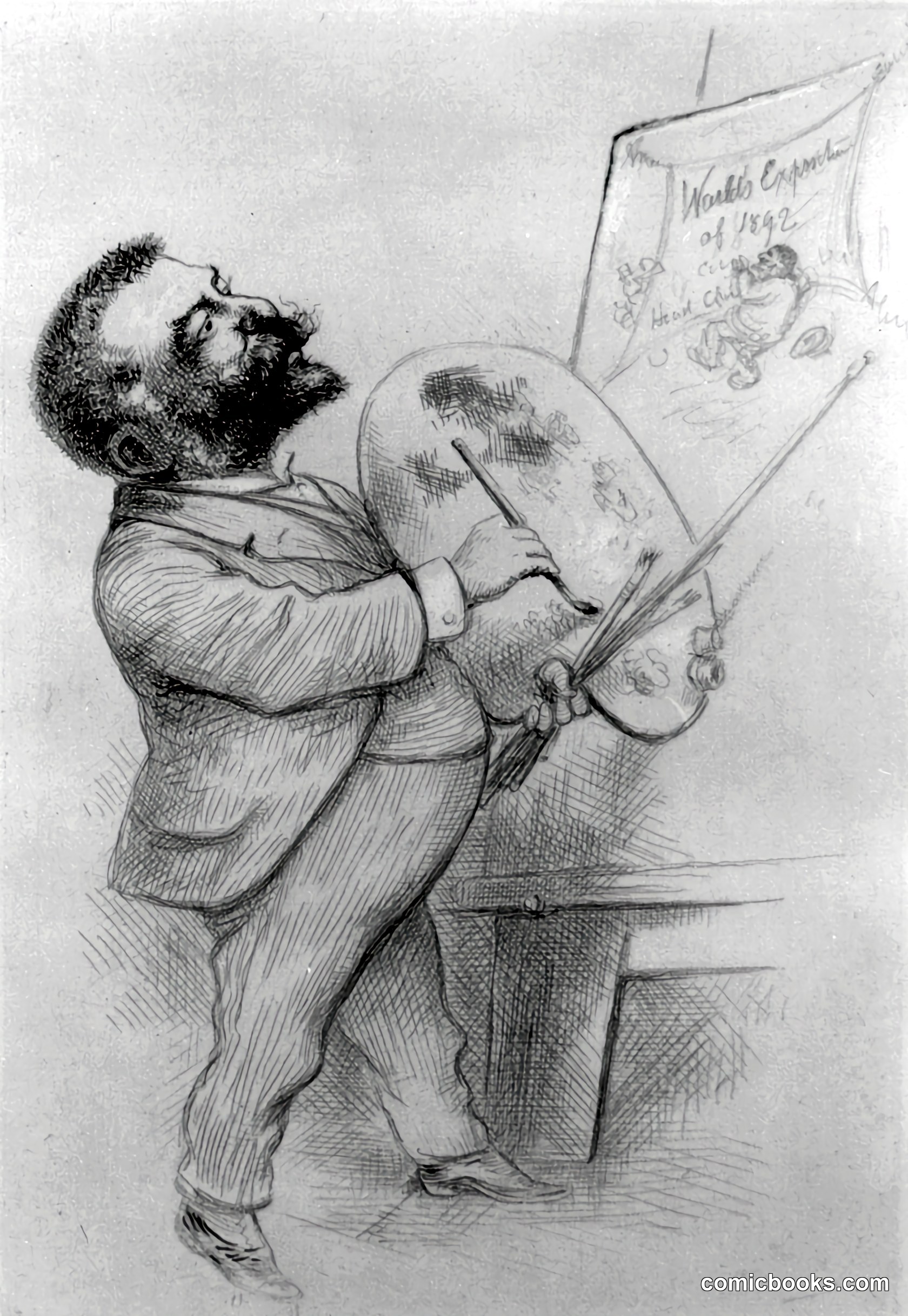
This 1870 portrait presents the man behind the most powerful pen in nineteenth-century America. Thomas Nast (1840–1902), German-born and raised in New York, became the defining editorial cartoonist of his era through his long association with Harper's Weekly. From the Civil War—during which his patriotic and emancipationist images earned him wide fame and, reportedly, admiration from Abraham Lincoln—through the Reconstruction years and the great anti-Tammany campaign, Nast helped invent the modern American political cartoon. He gave the country enduring symbols, including the Republican elephant, the popularized Democratic donkey, and the modern image of Santa Claus, while his relentless caricatures of the Tweed Ring demonstrated that a cartoonist could shape real political outcomes. His style combined sharp allegory, dense detail, and unmistakable characterization, setting a standard for generations of illustrators who followed. Nast's later career brought financial difficulties, and he died while serving as a United States consul abroad. This portrait invites us to consider the figure whose work bridged fine illustration and mass persuasion—an artist whose drawings functioned as arguments, and whose influence on America's visual and political imagination remains difficult to overstate.
About this artifact
- Creator
- self-portrait
- Date
- 1870
- Rights
- Public domain — free to view, share, and reuse.
- Restoration
- Digitally restored and hosted by ComicBooks.com · high-resolution version available.
Part of our mission to preserve and restore the public-domain heritage of the medium.