
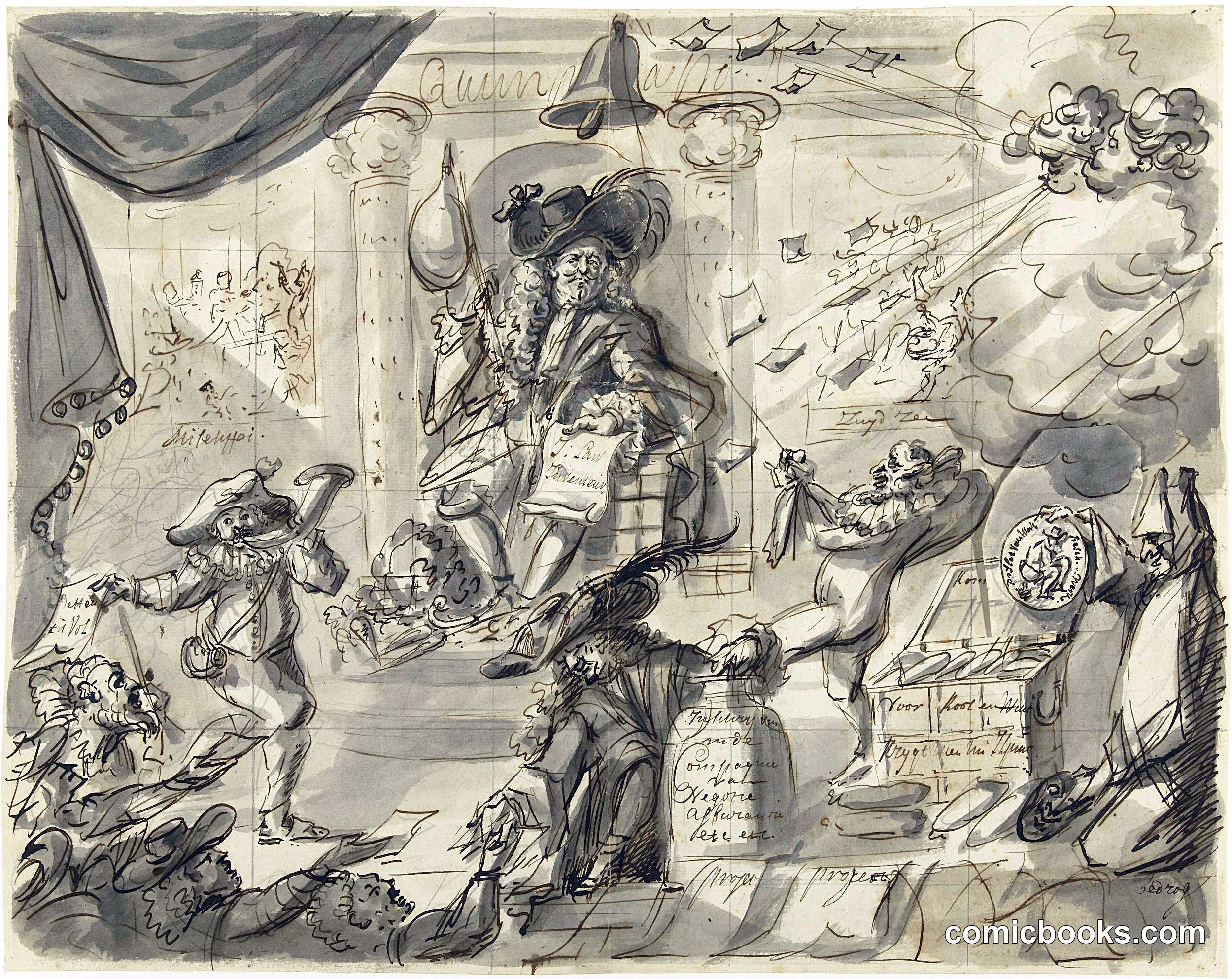
This etched satire depicts the collapse of the Mississippi Company scheme, a financial bubble that ruined thousands of European investors. The central charlatan-merchant presides over chaos: documents scatter, nobles and commoners jostle for advantage, ships sink in stormy waters, and the devil lurks below. The print exemplifies early 18th-century print satire's moral condemnation of greed and financial fraud, employing grotesque caricature, crowded composition, and allegorical symbols. Such broadsheet satires—descended from Bruegel and Northern Renaissance traditions—established conventions that would flow into Hogarth's narrative sequences and eventually into modern comics: sequential storytelling, visual hierarchy, exaggerated physiognomy, and the marriage of image and text to expose folly. The work reflects period anxieties about money, credit, and class mobility.
About this artifact
- Date
- 1720
- Rights
- Public domain — free to view, share, and reuse.
- Restoration
- Digitally restored and hosted by ComicBooks.com · high-resolution version available.
Part of our mission to preserve and restore the public-domain heritage of the medium.