
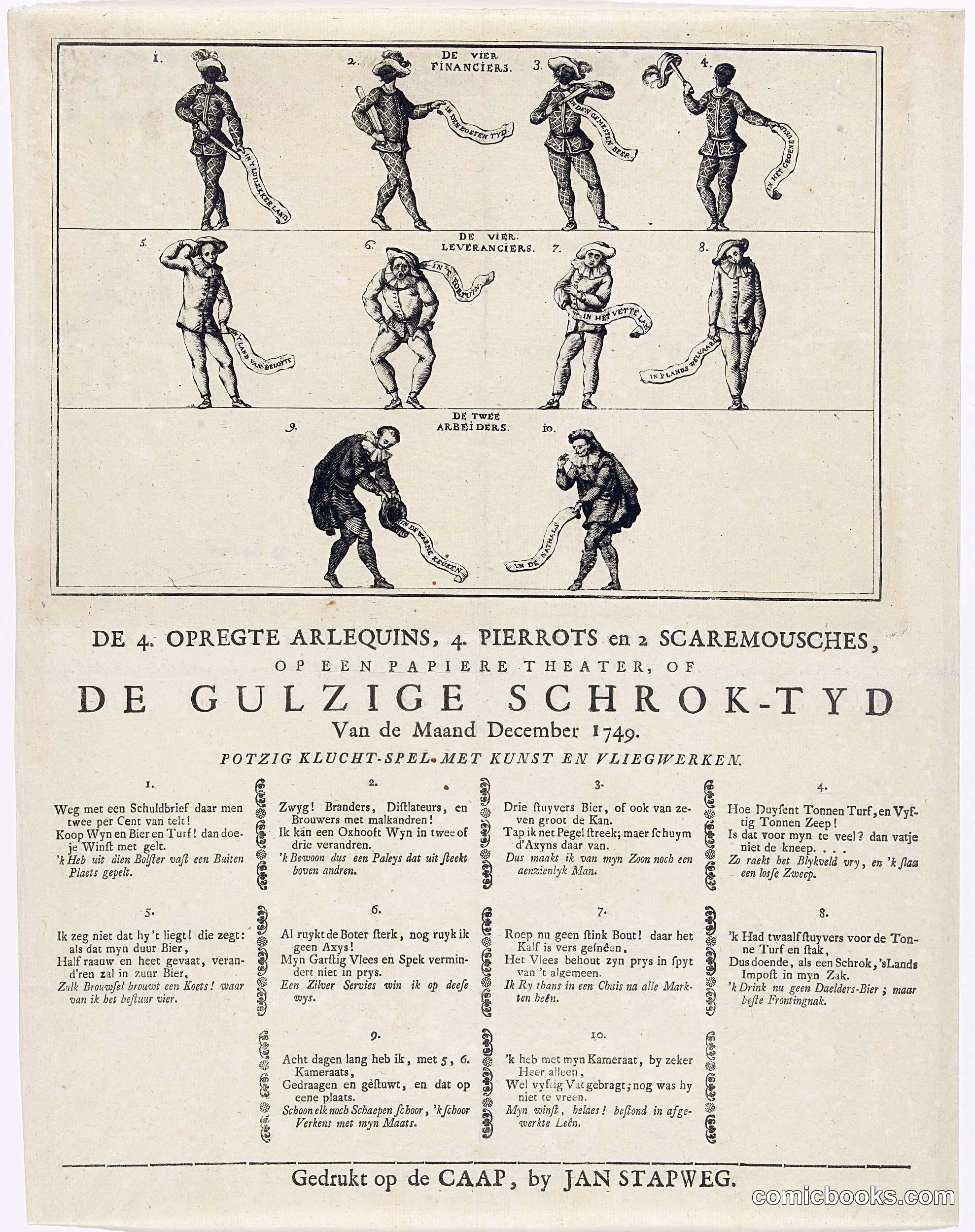
This Dutch etching satirizes financial officials collecting new taxes through grotesque bodily humor. Ten numbered figures—nude or partly clothed—contort themselves while handling serpentine ribbons inscribed with financial terms, their exaggerated postures and genitalia rendered explicit and absurd. The print descends from Northern European picture-sheet traditions and anticipates 18th-century caricature's assault on authority through bodily distortion. Tax collectors, financiers, and corrupt administrators were standard targets of popular satire; this print weaponizes deformity and exposure to mock their greed and moral degradation. The etched line work—fine and controlled—allowed sharp detail in both human anatomy and decorative text. Such prints circulated widely among literate urban audiences, establishing visual codes of ridicule that would later animate Gillray, Rowlandson, and the comic tradition itself.
About this artifact
- Date
- 1749
- Rights
- Public domain — free to view, share, and reuse.
- Restoration
- Digitally restored and hosted by ComicBooks.com.
Part of our mission to preserve and restore the public-domain heritage of the medium.