
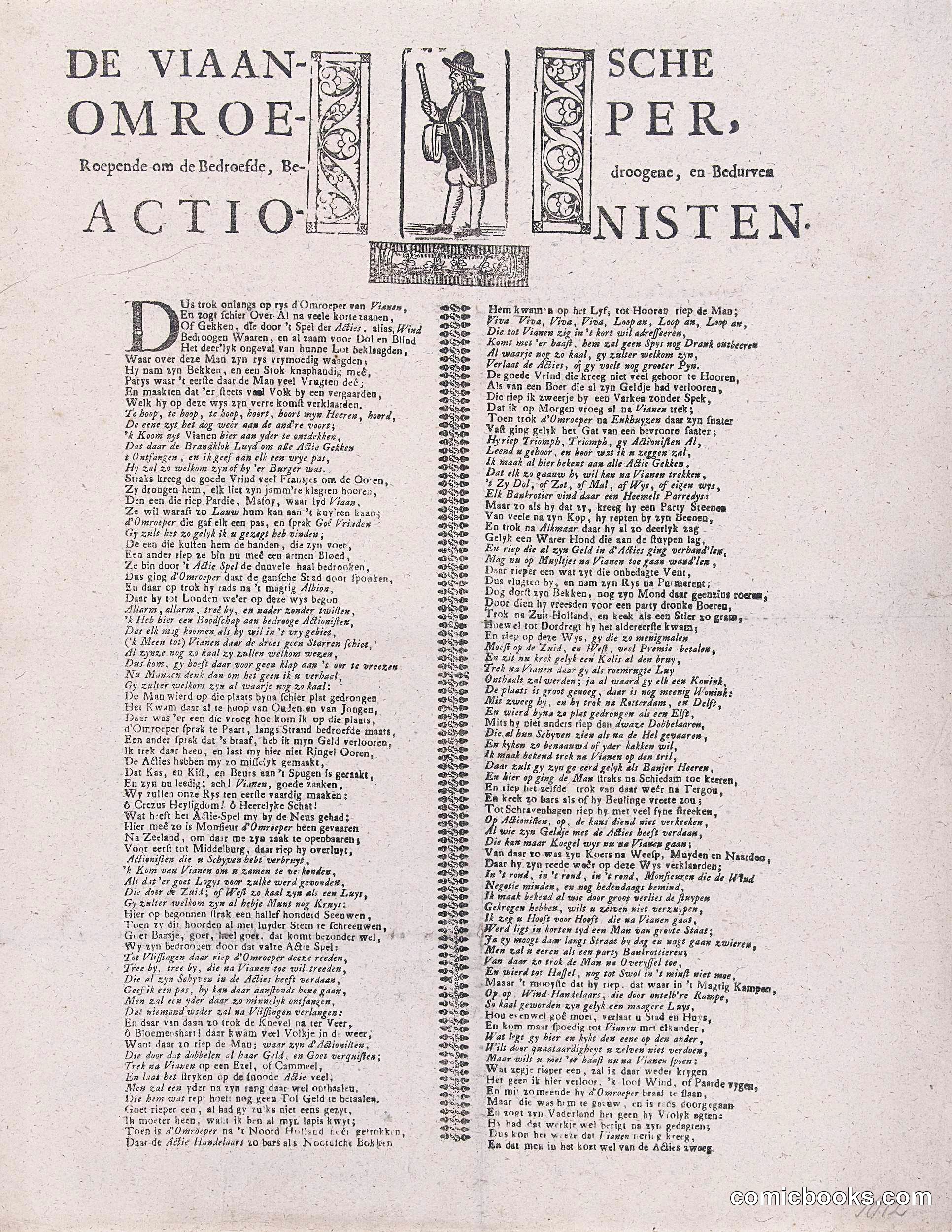
This Dutch broadside combines woodcut illustration with dense letterpress text—a cheap, popular format for political satire across the Low Countries and German lands. A single figure, the town crier, stands centered, his body language and dress satirized through exaggeration. The surrounding verse attacks him directly, a common method of combining visual and textual ridicule. Such picture-sheets, produced in runs of hundreds, anticipated the newspaper cartoon and caricature prints of Hogarth, Gillray, and later printmakers. This tradition—mixing crude portraiture, bodily caricature, and scatological or scabrous verse—fed directly into the visual satire of the 18th and 19th centuries, eventually informing modern comic art's fusion of image and narrative text.
About this artifact
- Date
- 1720
- Rights
- Public domain — free to view, share, and reuse.
- Restoration
- Digitally restored and hosted by ComicBooks.com.
Part of our mission to preserve and restore the public-domain heritage of the medium.