
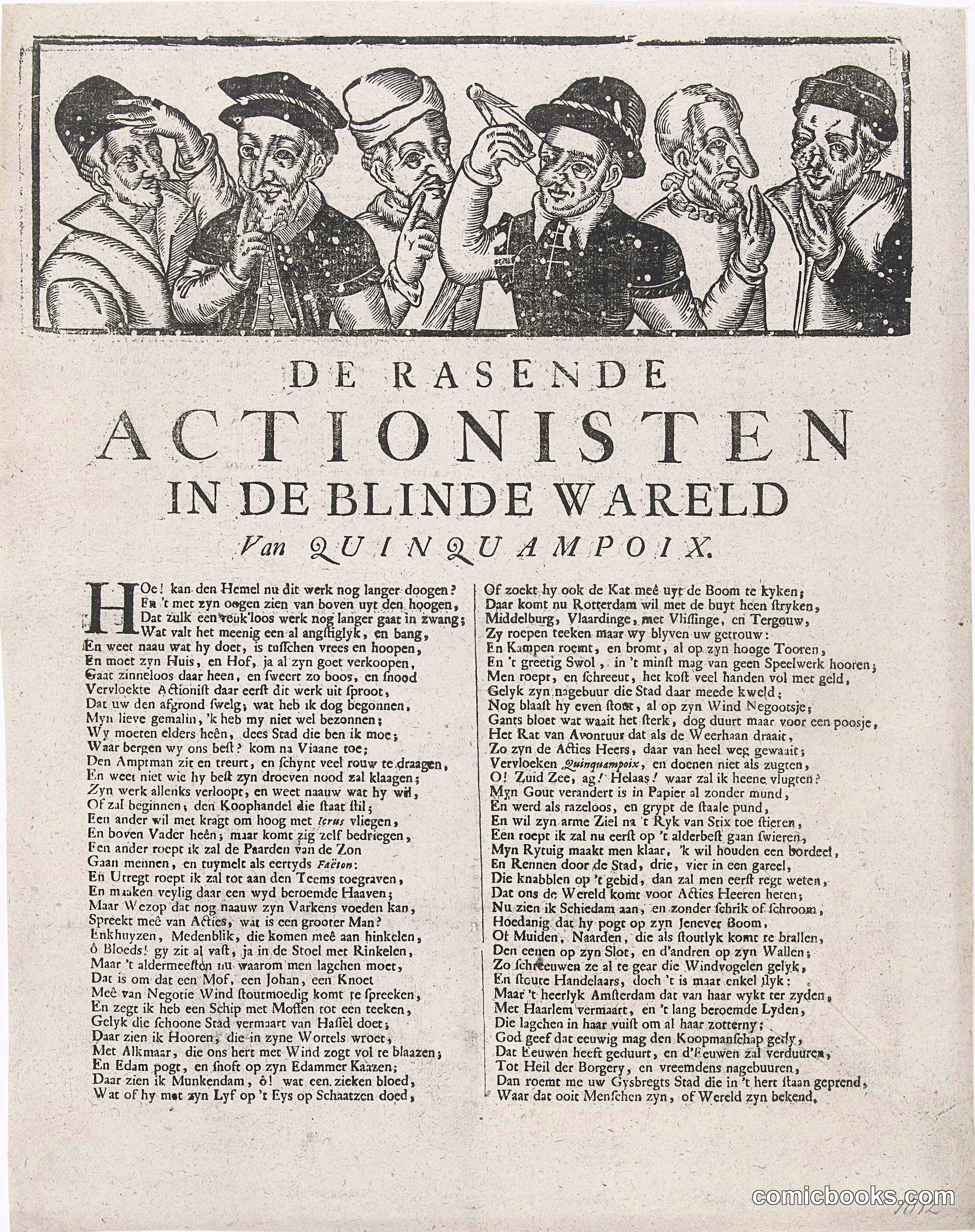
This Dutch woodcut satirizes the South Sea Bubble and Mississippi Company financial collapse through six caricatured figures—merchants, speculators, and swindlers caught in frenzied trading. The title translates "The Raging Speculators in the Blind World of Quinquampoix," referencing the Paris street where bubble schemes flourished. Grotesque facial features and exaggerated expressions mark each trader as fool or knave. The print exemplifies early 18th-century print satire's direct attack on greed and public delusion, using physiognomy and visual distortion—techniques that would define Hogarth, Gillray, and later satirists. As one of countless broadsheets flooding Europe after 1720, it demonstrates how woodcut and etching made political commentary cheap, fast, and accessible to ordinary readers—a direct ancestor of the comic strip's democratic reach.
About this artifact
- Date
- 1720
- Rights
- Public domain — free to view, share, and reuse.
- Restoration
- Digitally restored and hosted by ComicBooks.com.
Part of our mission to preserve and restore the public-domain heritage of the medium.