
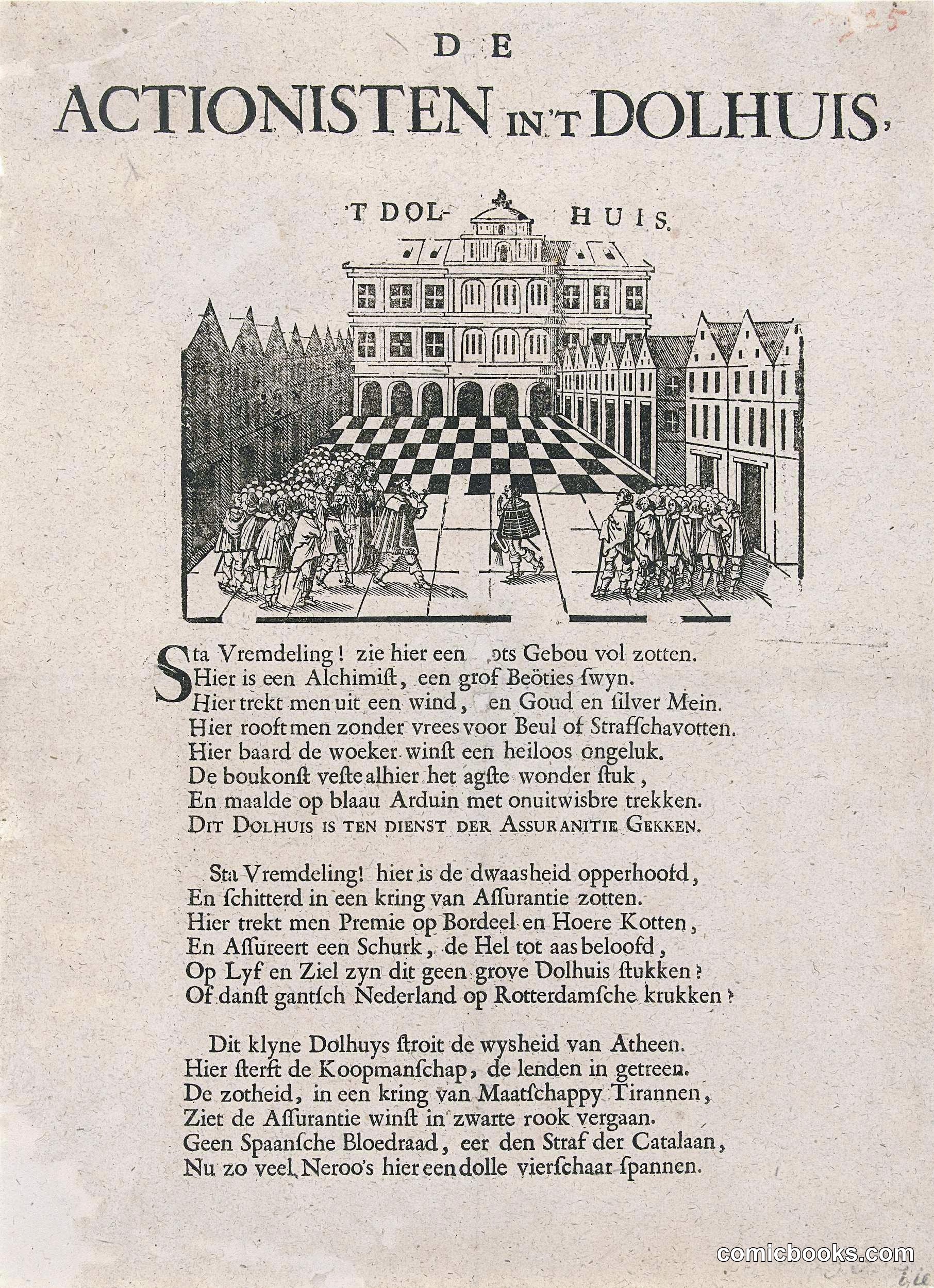
This Dutch wood engraving depicts the South Sea Bubble financial collapse through the metaphor of a madhouse. Frenzied figures in a checkered courtyard represent speculators and brokers whose irrational trading behavior is equated with lunacy. The architectural setting—grand house surrounded by walls—frames financial excess as mental disorder. The accompanying verse mocks both the greed of investors and the absurdity of get-rich schemes.
This print exemplifies early 18th-century political satire's visual language: caricature through situation rather than physiognomy, moralizing verse paired with engraved scene, and the reduction of complex economics to readable spectacle. Such popular prints established conventions that would flow through Hogarth's narrative sequences and eventually into comic narrative forms—using sequential imagery and exaggeration to critique social follies and public delusions.
About this artifact
- Date
- 1720
- Rights
- Public domain — free to view, share, and reuse.
- Restoration
- Digitally restored and hosted by ComicBooks.com.
Part of our mission to preserve and restore the public-domain heritage of the medium.