
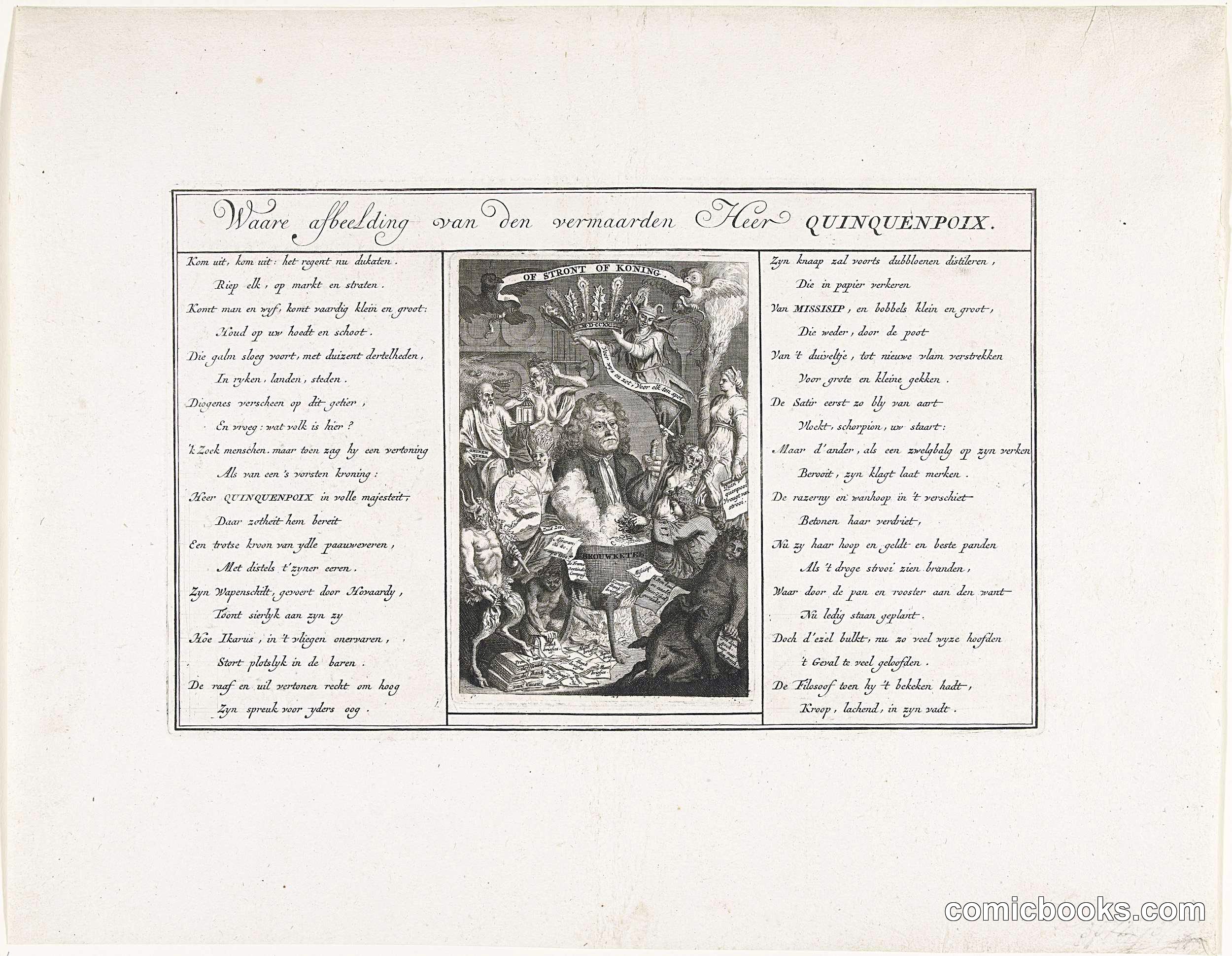
This Dutch engraving mocks the South Sea Bubble financial collapse through a crowded scene of frenzied speculators, fortune-seekers, and dupes. The central figure presides over chaos—merchants, widows, and common folk jostle for shares in worthless schemes. Dutch text in three columns frames the image with satirical verse condemning greed and folly.
Part of a European tradition stretching from Hogarth through Gillray, such prints used engraving to expose financial fraud and human weakness. The Quinquempoix (John Law's Mississippi scheme) became a symbol of speculative mania across the continent. Here, social hierarchy collapses as clergy, nobility, and laborers scramble equally—a sharp comment on how financial delusion erases class distinction. This form of illustrated political satire established conventions the modern comic strip would inherit: sequential narrative, caricatured types, crowded composition, and text paired with image to amplify the joke.
About this artifact
- Date
- 1712
- Rights
- Public domain — free to view, share, and reuse.
- Restoration
- Digitally restored and hosted by ComicBooks.com · high-resolution version available.
Part of our mission to preserve and restore the public-domain heritage of the medium.