
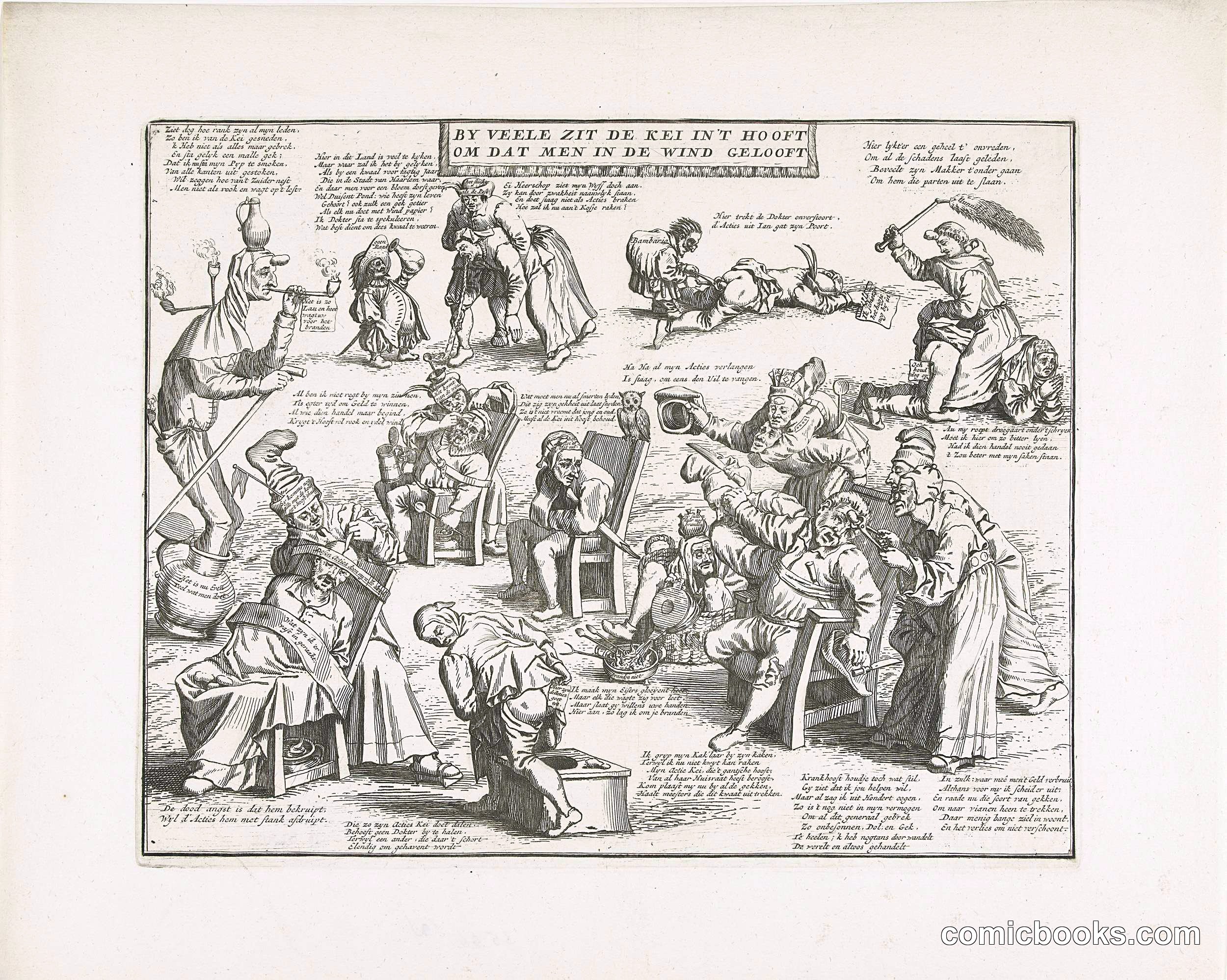
This Dutch etching depicts a crowded scene of figures engaged in various activities of deception and folly, with Latin inscriptions identifying each character's vice or trade. The composition exemplifies the Northern European satirical print tradition—the ancestor of modern sequential comics—where narrative unfolds through multiple vignettes populated by stock types: the charlatan, the fool, the victim. The artist uses dense composition and detailed etching to create a moral panorama of human weakness. Such prints circulated widely as portable moral lessons, establishing visual conventions—exaggerated features, labeled types, episodic arrangement—that would eventually inform the comic strip form. The work reflects both Reformation anxiety about deception and the print culture's emergence as a vehicle for social commentary accessible beyond the literate elite.
About this artifact
- Date
- 1720
- Rights
- Public domain — free to view, share, and reuse.
- Restoration
- Digitally restored and hosted by ComicBooks.com · high-resolution version available.
Part of our mission to preserve and restore the public-domain heritage of the medium.