
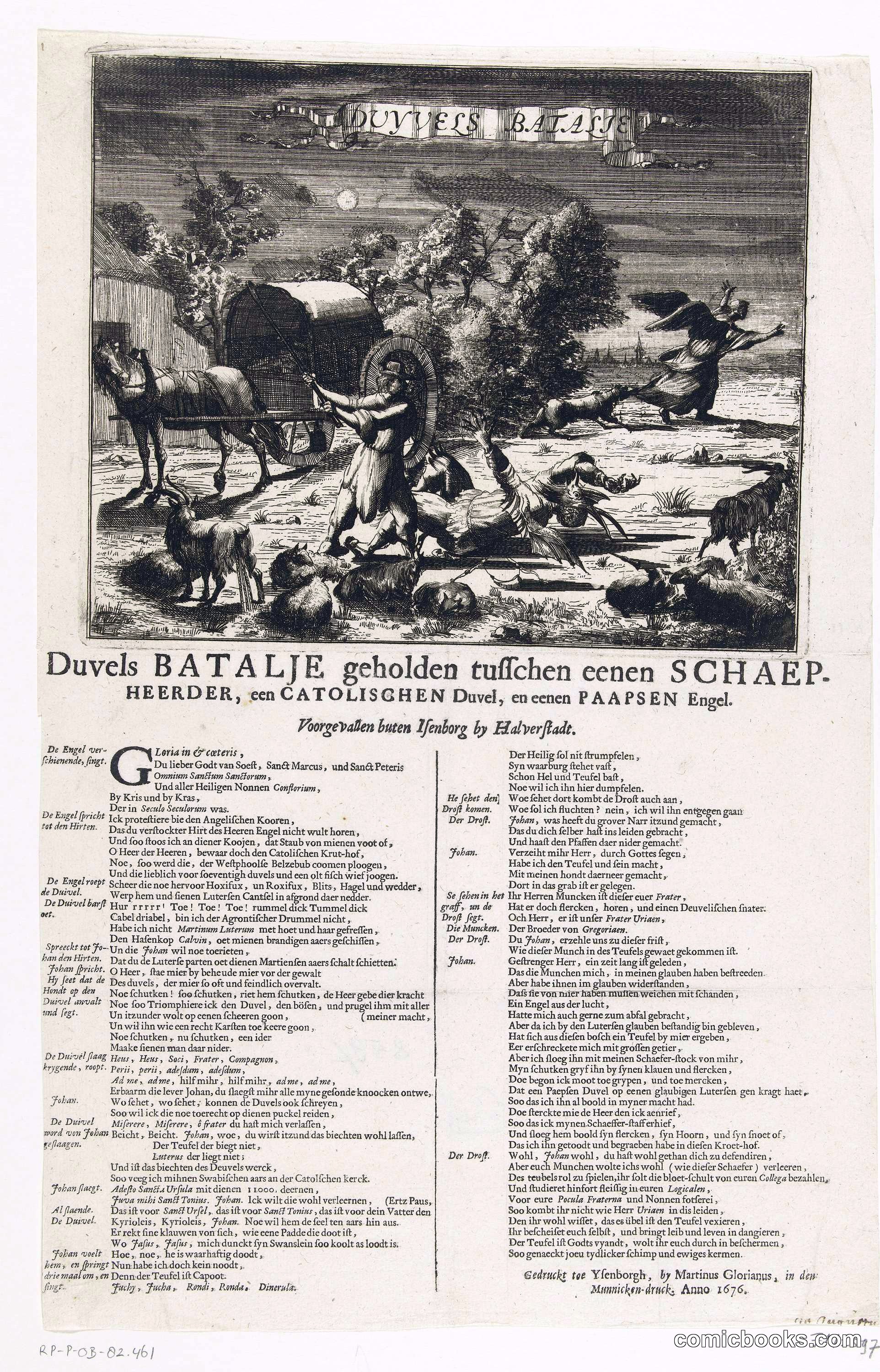
This Dutch etching depicts a chaotic farmyard scene where a shepherd and his animals engage in absurd struggle. A cart overturns, dogs attack sheep, and figures tumble across the composition in violent disorder. The print belongs to the Northern European tradition of moral satire through visual comedy—predecessors to the modern comic strip. The narrative unfolds through sequential action and exaggerated gesture, with Dutch verses explaining the moral instruction: foolishness leads to chaos. Such popular prints, distributed as affordable broadsheets, used grotesque figure distortion and slapstick incident to ridicule human folly and social disorder. This tradition, evolving through Hogarth and Gillray, established visual storytelling through caricature as a vehicle for social and political commentary.
About this artifact
- Date
- 1676
- Rights
- Public domain — free to view, share, and reuse.
- Restoration
- Digitally restored and hosted by ComicBooks.com.
Part of our mission to preserve and restore the public-domain heritage of the medium.