
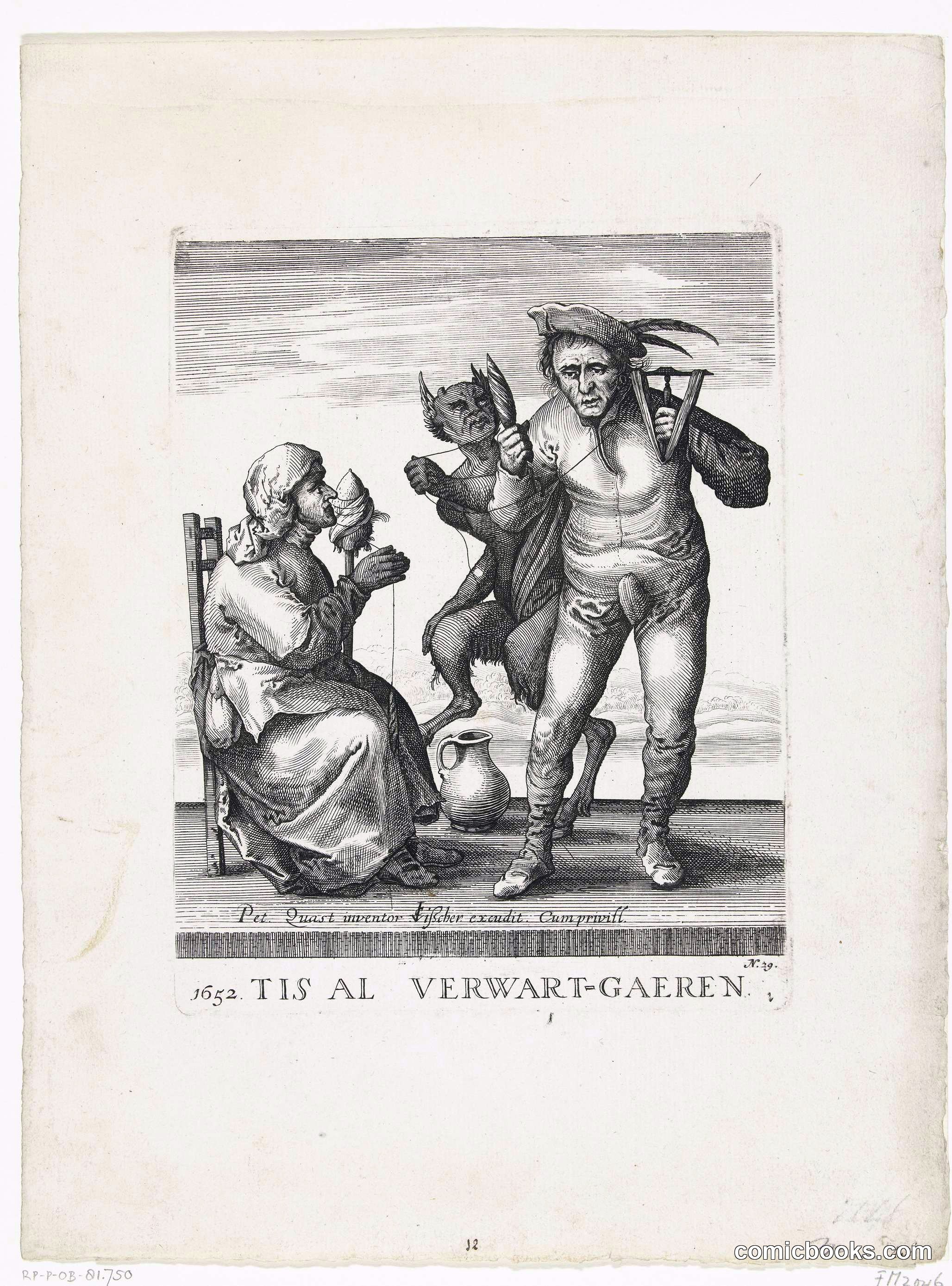
This etching depicts a domestic scene of moral chaos: a seated woman spins thread while demons—a horned devil and a mischievous imp—tangle her work. The Latin inscription reads "Pax Quaeri Inventor Ficher exaudit. Cum praesit" (Peace sought, the inventor heard; the warden commands it). The print belongs to the Dutch Golden Age tradition of allegorical satire, where domestic disorder symbolized spiritual or social corruption. As an engraving, it combines fine detail with bold figuration characteristic of Northern European printmaking. This moralizing mode—using supernatural or grotesque figures to critique human behavior—directly preceded the political and social caricatures of Hogarth and later cartoonists. The domestic setting and didactic tone reflect Reformation anxieties about idleness and women's virtue, themes that would persist in printed satire for centuries.
About this artifact
- Date
- 1652
- Rights
- Public domain — free to view, share, and reuse.
- Restoration
- Digitally restored and hosted by ComicBooks.com · high-resolution version available.
Part of our mission to preserve and restore the public-domain heritage of the medium.