
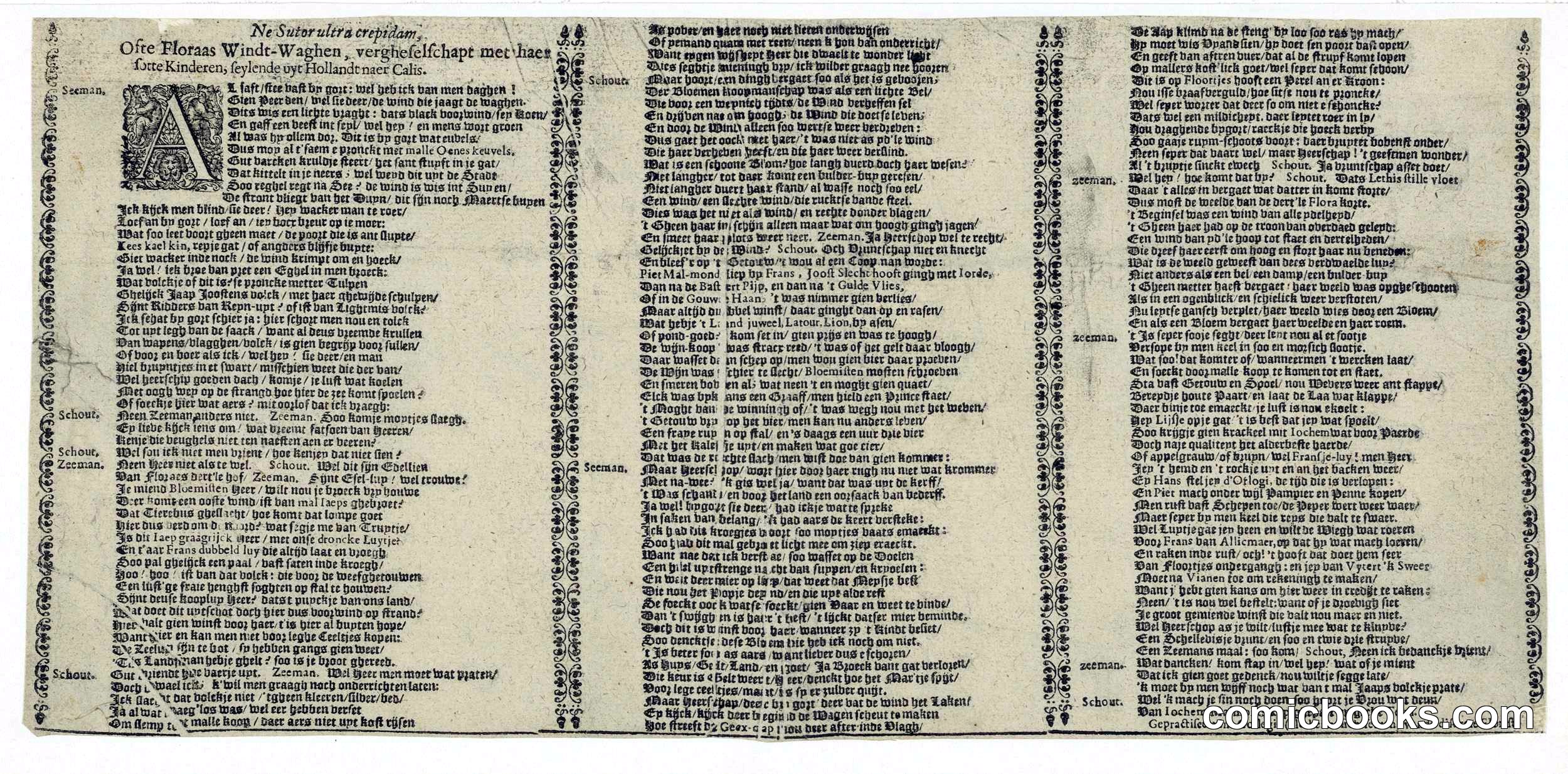
This Dutch woodcut satirizes the tulip-trading mania that gripped the Netherlands in the 1630s. Multiple columns of densely printed verse mock speculators, merchants, and ordinary citizens consumed by fever-dream profits from rare bulbs. The composition descends from Northern Renaissance broadsheet traditions—combining image and text to reach a mass audience with sharp social commentary. Such prints, distributed cheaply as single sheets, pioneered the marriage of visual caricature and written satire that would define European print culture through the 18th and 19th centuries and eventually influence comic strip narrative. Here, economic folly becomes the target—a theme recurring across centuries of popular print satire.
About this artifact
- Date
- 1637
- Rights
- Public domain — free to view, share, and reuse.
- Restoration
- Digitally restored and hosted by ComicBooks.com · high-resolution version available.
Part of our mission to preserve and restore the public-domain heritage of the medium.