
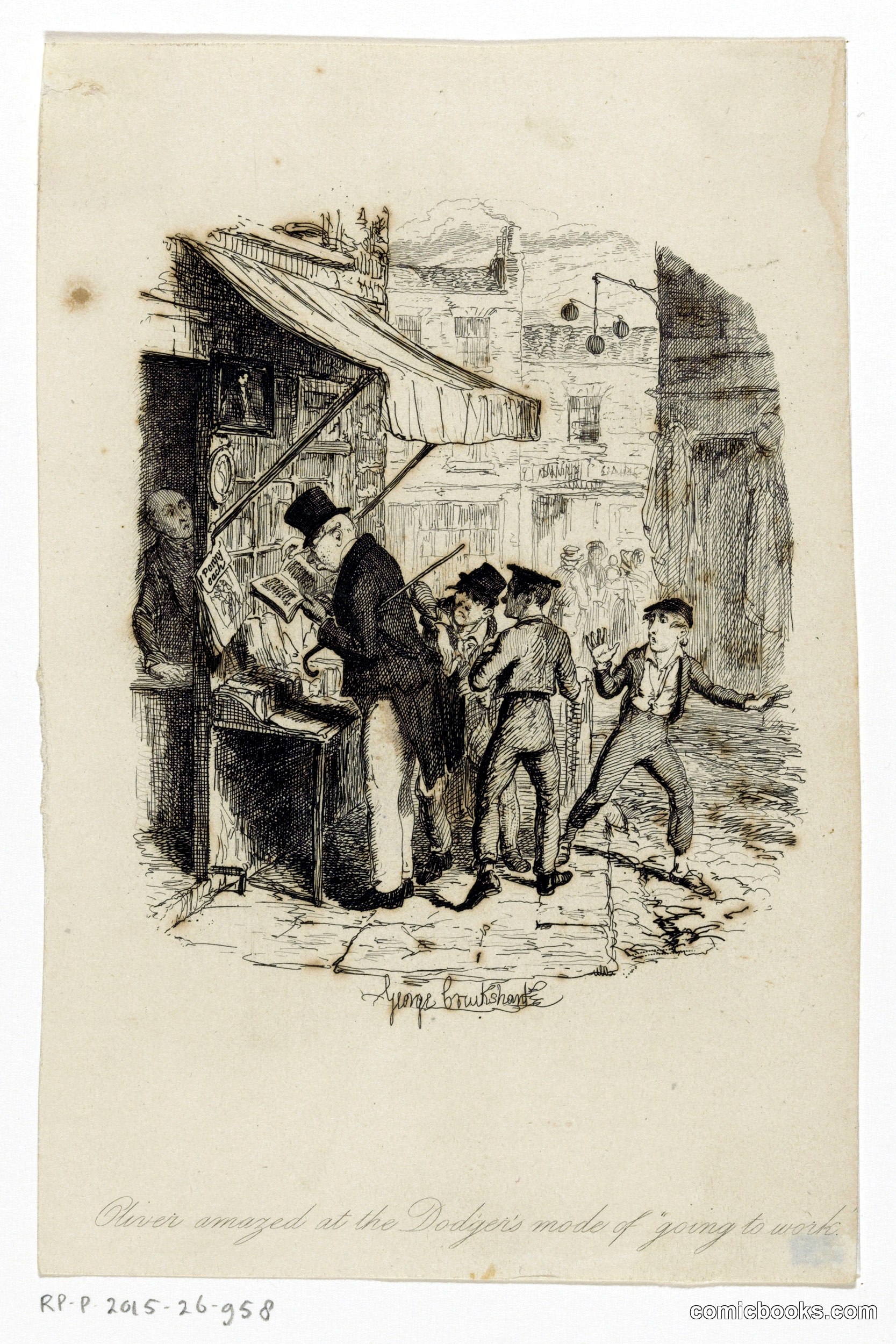
This steel engraving depicts a street scene where a well-dressed gentleman examines a book at a stall while children pick his pocket—a moment of satirical social commentary on urban crime and class vulnerability. The print descends from the 18th-century tradition of Hogarth and Rowlandson, who used sequential narrative and exaggerated character types to expose moral failings and social ills. By the 1830s, such satirical engravings had become mass-produced moral instruction, blending humor with social critique. The composition's theatrical staging and the visual contrast between the oblivious patron and the scheming urchins reflects the era's anxiety about poverty, criminality, and street life in rapidly industrializing cities. This tradition of visual storytelling—combining caricature, narrative sequence, and social observation—would evolve directly into the comic strip and graphic novel forms.
About this artifact
- Date
- 1838
- Rights
- Public domain — free to view, share, and reuse.
- Restoration
- Digitally restored and hosted by ComicBooks.com.
Part of our mission to preserve and restore the public-domain heritage of the medium.