
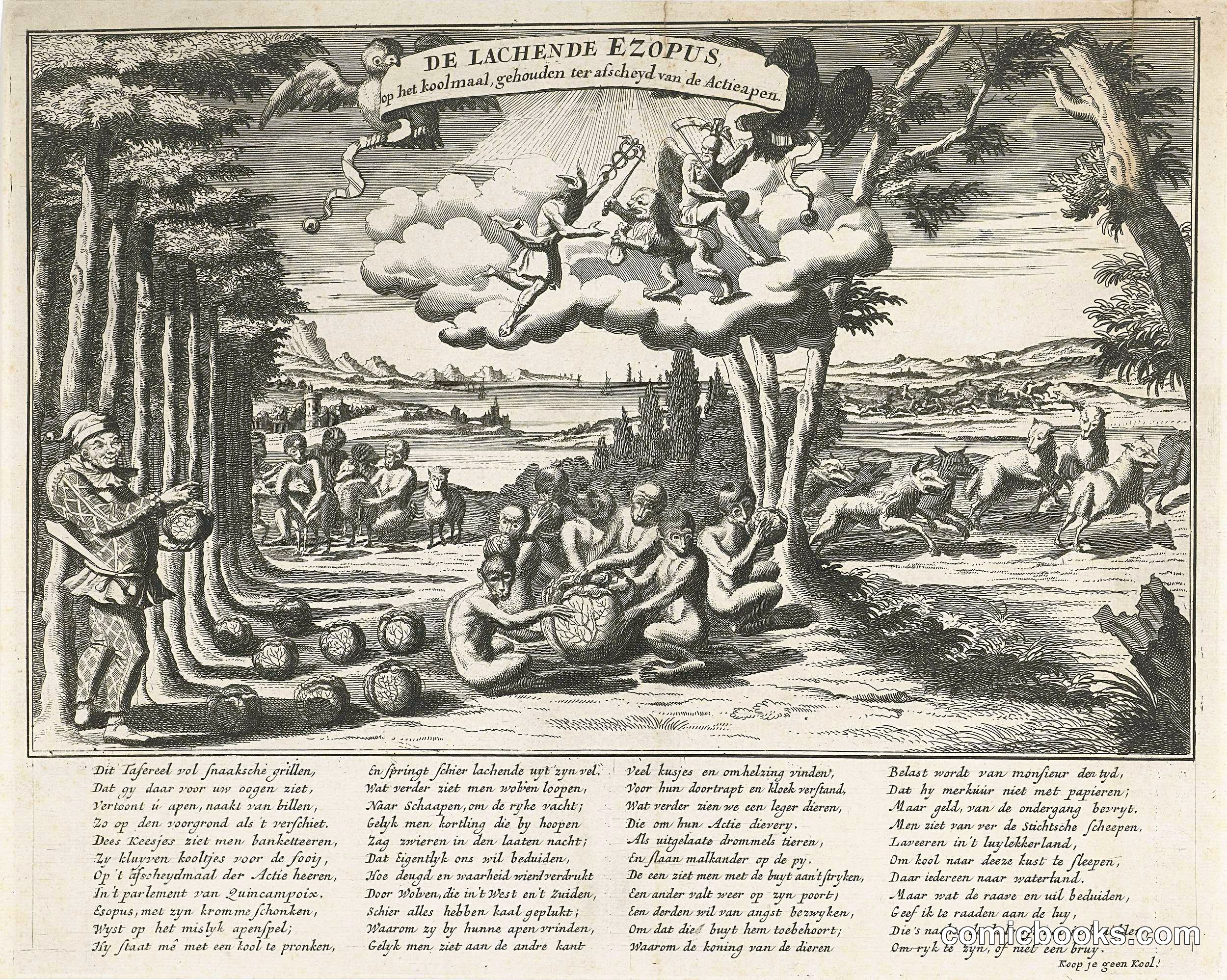
This Dutch engraving satirizes financial speculation during the South Sea Bubble crisis through Aesopian fable. Figures feast and revel in a landscape while cherubs overhead distribute coins—an ironic commentary on sudden wealth and moral folly. The composition employs classical allegory to mock contemporary greed, a rhetorical strategy common to Northern European print satire. The engraving's dense narrative and moralizing tone reflect the didactic traditions of Reformation broadsheets and emblem books, which shaped later satirical prints by Hogarth and his successors. Such works established the visual vocabulary—exaggeration, symbolic detail, narrative sequence—that would eventually flow into newspaper cartoons and sequential art, connecting Renaissance morality plays to modern comics through the print medium itself.
About this artifact
- Date
- 1720
- Rights
- Public domain — free to view, share, and reuse.
- Restoration
- Digitally restored and hosted by ComicBooks.com · high-resolution version available.
Part of our mission to preserve and restore the public-domain heritage of the medium.